
- The Social Media Addiction Verdict
- Two Brutal Developments
- Fed Court Tells Trump: Hands Off Public Broadcasting
- The Kill Chain
- Long Form Documentaries Head for Youtube
- CBS News Online Workers Down Tools
- Jane Ain’t Fonda Media Mergers
- Unions and Tech Power
- The AI Cold War
- ChatGPT and the Humanities
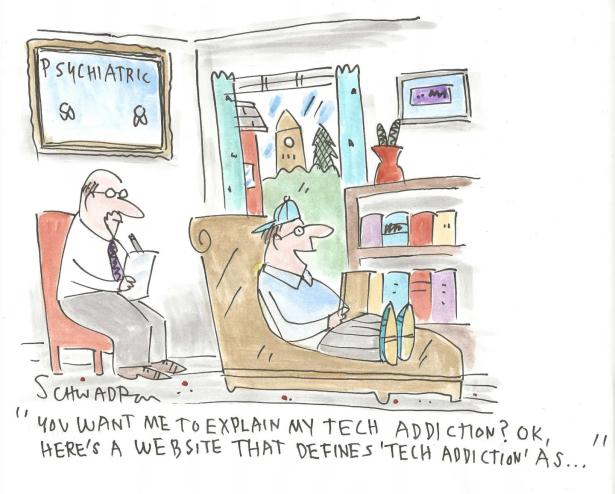
The Social Media Addiction Verdict
By Mitch Jackson, Uncensored Objection
A California jury found Meta and YouTube negligent for the way they designed their platforms and determined that both companies caused direct harm to a young woman who started using their products as a child. The jury ordered them to pay a combined six million dollars. The liability verdict is correct and important. But the dollar amount is an insult.
By Margaret Sullivan, American Crisis
The awful new management at CBS News — under the thumb of Trump-friendly CEO David Ellison and his handpicked editor Bari Weiss — decided to completely shutter CBS News Radio. Pro-MAGA Nexstar is positioned to own more than 250 local TV stations around the country and through them would reach 4 of every 5 American households.
Fed Court Tells Trump: Hands Off Public Broadcasting
By Todd Spangler, Variety
A federal judge ruled that President Donald Trump‘s executive order last year to end funding for PBS and NPR public media violated the First Amendment. The judge wrote that the First Amendment right to free speech “does not tolerate viewpoint discrimination and retaliation of this type.”
By Bappa Sinha, Peoples Dispatch
The traditional process of military targeting, what the Pentagon calls the “kill chain”, historically required teams of thousands of intelligence analysts poring over imagery, cross-referencing reports, and building target packages over days or weeks. Now it’s done in seconds.
Long Form Documentaries Head for Youtube
By Julian Wyllie, Current
PBS is expanding its already sizable YouTube footprint through a partnership with ITVS, the San Francisco–based producer of Independent Lens. The organizations have jointly launched PBS Documentaries, a new YouTube channel that serves as a hub for long-form documentary filmmaking.
CBS News Online Workers Down Tools
By Chris Walker, Truthout
Workers within CBS News’s online streaming division began a 24-hour bicoastal walkout, one week after their contract with the company expired. The workers provide content for CBS News 24/7. The union alleges management’s offers to renegotiate the contract are unacceptable, with terms worse than those offered in the past.
Jane Ain’t Fonda Media Mergers
By Ted Johnson, Deadline
Jane Fonda brought her Committee for the First Amendment to Washington, D.C. on Friday for a pre-No Kings Day rally that focused on Donald Trump’s attacks on the media and the pending merger between Paramount and Warner Bros. Discovery. The event denounced “political intimidation, institutional capture, and censorship across the arts, culture and media.”
By Carol Peters, Phys.org
Wide swaths of American workers are more meaningfully involved in organizing around and pushing back against artificial intelligence and data-driven technologies in the workplace, a Rutgers study has found. They found workers can push back through forming workers collectives around technology, developing more people-centered policies and forging solidarities with transnational labor.
By Jan Turowski, Rosa Luxemburg Stiftung
Both the first Trump administration and the Biden administration imposed significant restrictions on exports of the most advanced chips to China. There is an assumption in Washington that China cannot catch up with the US if it cannot import the most up-to-date semiconductors. However, Washington appears to have miscalculated.
By Rachele Dini, Los Angeles Review of Books
The collapse of the institutions where young people learn to make and critique art stands to greatly benefit companies like OpenAI, which, in the absence of human artists and critics, can both make the stuff and tell us it’s good. Efforts to promote AI’s creative potential have advanced in line with program closures, cuts to arts funding, and general public skepticism toward arts education.
Spread the word