
Trump’s Deadly Invasion of Memphis
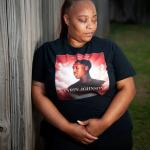
This story was co-published with MLK50: Justice Through Journalism.
Each time Brittany Johnson presses play, her son is alive and running.
He sprints down Ida B. Wells Street, a slight silhouette fleeing something that’s out of the frame.
“Oh, that’s the National Guard right there!” shouts the girl who is recording as he makes a right on Union, then quickly darts left after a black SUV cuts him off.
“Run! Run!” shout the young people filming, urging him on.
And then there are gunshots. First one, then five or six in quick succession.
The shouts are now screams. The phone tumbles to the ground.
In the days since her son Tyrin Johnson was killed, Brittany Johnson has watched this 19-second clip over and over, until it has made her nauseated.
According to the Tennessee Bureau of Investigation, at around 4 a.m. on July 5, Tyrin Johnson reportedly fired a weapon, was chased by Memphis police officers, and then was fatally shot by two National Guard soldiers.
But to Brittany Johnson, 39, the video she received through sheer happenstance from the teens who saw the pursuit and decided to record does not seem to match that account.
On this day, when she is supposed to go to see her child at the funeral home for the first time since his death, Johnson again puzzles over the video, looking for answers as to why these soldiers killed her son.
“I have moments where I just want to scream and holler,” she says. But the anguish is trapped inside her because she’s not quite sure where it would or should go. “How could you be angry about something that you really don’t even know the context of?” she says.
Containing the grief allows some part of her to resist what she already knows. It’s why she has waited weeks to plan Tyrin’s funeral. Seeing his body will make this inescapably real.
“I know he’s not physically here, but I think he might be gone, and I might lose him … but I know he gone,” she says, her voice trailing off.
This has been her state, one where she cannot make sense of what she thinks or how she feels.
Tyrin Johnson will be buried five days later. It would have been his 21st birthday.
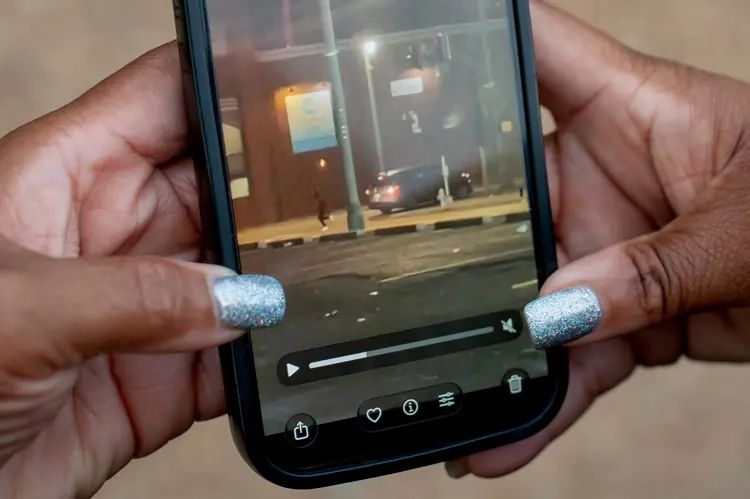
Brittany Johnson displays a video showing the moments leading up to Tyrin’s death. Photograph by Rory Doyle for Hammer & Hope.
Donald Trump created the Memphis Safe Task Force through presidential memorandum last September, citing “tremendous levels of violent crime that have overwhelmed its local government’s ability to respond effectively” and claiming that state and local leaders had requested federal assistance. Just days earlier, the Memphis Police Department had announced that crime had hit a 25-year low, with significant drops in all major categories. While Democratic leaders in Memphis and Shelby County objected to the deployment, Gov. Bill Lee, a Republican, stated the plan was the result of months of coordination with the Trump administration.
Memphis is 63 percent Black and one of the largest majority-Black cities in the United States. Trump had already targeted several other Black-led cities. He sent National Guard troops and Marines to Los Angeles in June 2025 and deployed the National Guard to Washington, D.C., in August 2025. Trump threatened similar action in Chicago, New York, Baltimore, and Oakland — all Democratic-led cities with Black mayors at the time. Although he invoked different rationales from crime to immigration enforcement, Trump portrayed their leaders as incapable of maintaining order.
Memphis was an escalation. The task force is a sprawling multiagency operation that includes officers from 31 federal, state, and local agencies, including the Drug Enforcement Administration, Tennessee National Guard, Department of Homeland Security, Department of Defense, and Tennessee Highway Patrol, and it arrived in a city that has long been overpoliced.
The Department of Justice put it plainly in a December 2024 report: “Memphis police officers regularly violate the rights of the people they are sworn to serve.”
The same DOJ report states that Memphis’s Black residents are the primary target of the police department’s abuses, which include “flooding neighborhoods with traffic stops” and using excessive force even when people are restrained.
The DOJ investigation followed the Jan. 7, 2023, killing of Tyre Nichols, a 29-year-old Black man who died three days after being severely beaten by five Memphis police officers following a traffic stop. Three were acquitted of all state charges in 2025, and two agreed to plead guilty. All five were convicted of or pleaded guilty to separate federal felonies related to the beating and its cover-up. In August, a judge granted three of the defendants new trials in their federal cases, a ruling that prosecutors have challenged.
After Nichols’s death, local organizers pushed to get six ordinances passed. One banned pretextual traffic stops: police pulling people over for minor infractions like cracked windshields as an excuse to search for more serious violations. Tennessee’s Republican-led legislature quickly passed a bill to undo it. The other ordinances, including one stipulating that officers had to use vehicles that clearly identified them as law enforcement, are ostensibly still in place.
The DOJ report recommended sweeping changes to the Memphis Police Department’s use-of-force practices and pretextual stops, and called for greater transparency and civilian oversight. The DOJ said it was prepared to sue Memphis for an injunction if necessary to force reforms.
But Trump took office the month after it was published, and then the DOJ closed the investigation and retracted the report’s findings. When he sent the task force to Memphis, it was with a very different mandate.
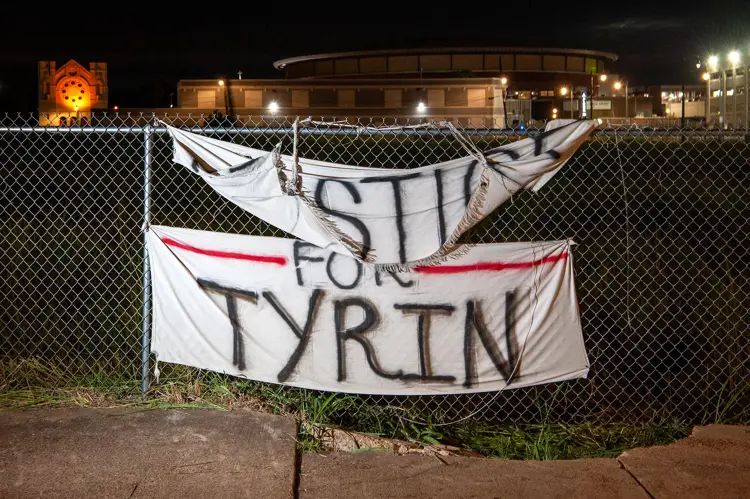
A “Justice for Tyrin” banner near where he was killed by the Memphis Safe Task Force, Aug. 27, 2026. Photograph by Rory Doyle for Hammer & Hope.
Trump promised that the task force would provide “hypervigilant policing, aggressive prosecution … and large-scale saturation of besieged neighborhoods with law enforcement personnel.” He has delivered as promised.
According to a White House press release, as of Sept. 15, 2026, the task force has arrested 12,747 people. Records covering May 14 to Aug. 6 show that prosecutors dropped or courts dismissed more than half of the charges from those arrests.
MLK50: Justice Through Journalism found that only 6 percent of the 3,000 people arrested by the task force in October and November 2025 appear to be white.
In the first five weeks of the task force’s deployment, an analysis of arrest records showed that out of 75 high-speed chases, some for infractions as minor as failing to dim headlights, 43 percent ended in accidents. At least two people have died in collisions connected to task force pursuits.
The Safe Task Force also fatally shot four men between May 13 and July 8, all of them Black. Tyrin Johnson was the third.
David Moss, counsel for the Justice in Public Safety Project at the NAACP Legal Defense Fund, said that the task force’s pretextual traffic stops are being used against Black residents and for immigration enforcement. He said the task force has intensified Memphis’s longstanding problems with discriminatory policing, describing it as “this stripping of a majority-Black city in the South of its right to manage its own public safety.”
Memphis was supposed to learn from Tyre Nichols’s death but instead has a federal-state policing operation using the very tactics criticized by the DOJ to terrorize Black and brown residents. The task force is not bound by the ordinances that local advocates worked so hard to pass.
“One of the reasons the occupation is here is because they’re doing what our police department can’t,” says Amber Sherman, a Memphis community organizer.
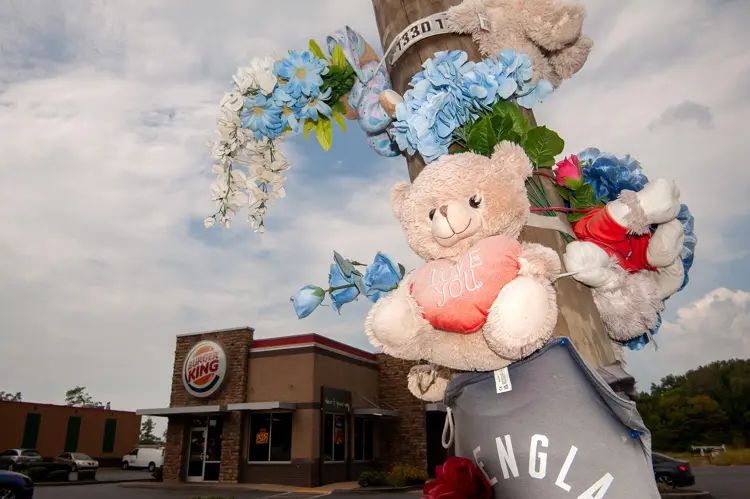
A memorial for Darrin Pigram outside the Burger King where he worked and was killed by the Memphis Safe Task Force, Aug. 26, 2026. Photograph by Rory Doyle for Hammer & Hope.
Darrin Pigram, 41, was the first to be killed by the task force, shot by a DEA officer on the morning of May 13 at the Burger King where he worked.
Pigram’s family called him Darnell. He was the oldest of six children — “First one came in my life and the first one to leave my life,” says his father, Louis Jamison.
In the weeks since his son was killed, Jamison has sought solace at the same lake where he was fishing on May 13 when he got a call from his son Louis telling him he needed to come home. Jamison knew when he saw the number of cars in his yard that something devastating had happened.
“I have my days right now I don’t believe it. I think it’s just a dream,” he says. “I don’t really want to believe that it is happening.”
The DEA agents had gone to Pigram’s workplace to serve an arrest warrant for a pending aggravated assault case. The agents said while initially compliant, Pigram became “visually and verbally aggressive,” according to records received from the office of District Attorney General Steve Mulroy of Shelby County through a public records request.
The records include a letter from Mulroy to Gadyaces Serralta, director of the U.S. Marshals Service, stating that DEA Agent Levy Blandon fired at Pigram only after he saw Pigram reach for a gun in his waistband. Blandon shot Pigram five times.
It is hard to see what transpired in the video footage released by the DA’s office. The letter notes that the video is grainy, has no audio, and is incomplete. It also states, “The camera footage of the physical activity between Mr. Pigram and Agent Blandon does not support these claims of aggressive action at the doorway.”
Mulroy did not respond to questions about why, given this discrepancy, he relied on the agents’ accounts in determining that there was insufficient evidence to bring criminal charges. But during a previous interview, he said that while he has sympathy for Pigram’s family, “the officers involved say that Mr. Pigram was reaching for the gun in his waistband. We have no evidence to affirmatively disprove that. And it is our burden to affirmatively disprove it beyond a reasonable doubt if we’re going to pursue charges.”
Jamison feels the agents could have done something to de-escalate but saw Pigram’s alleged criminality rather than his humanity.
“They knew what they came to do,” says Jamison. “They didn’t come to arrest him. They came to kill him.”
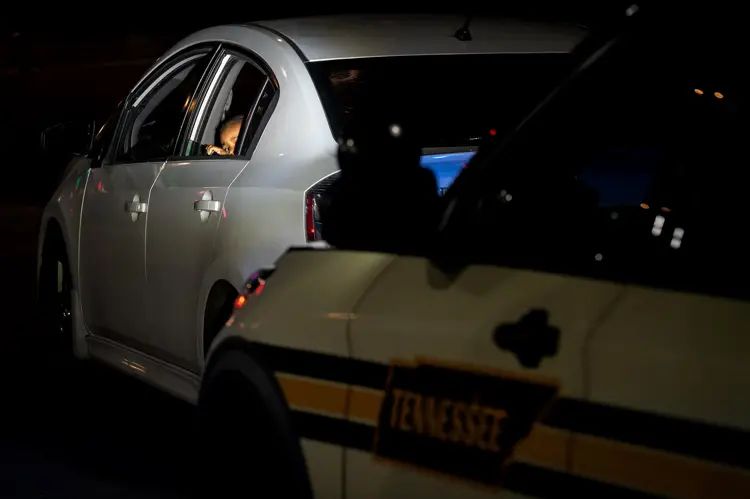
A 3-year-old child peeks out the back window during a traffic stop by Tennessee Highway Patrol and Department of Social Services agents, Memphis, Oct. 17, 2025. Photograph by Kevin Wurm/MLK50/CatchLight Local/Report for America.
When the task force arrived in Memphis, it focused its work mainly on Hickory Hill, a neighborhood that is about 80 percent Black and about 10 percent Latino, and Berclair, where Latinos account for about 40 percent of the population, making it the largest Latino neighborhood in Memphis.
Immigration and Customs Enforcement has been targeting families in Memphis since January 2025, says Maria Oceja, who co-founded Vecindarios 901 (V901) with Hunter Demster as a rapid-response network to track ICE activity and support immigrants during the first Trump administration. The organization’s name is a nod to the city’s area code.
The ACLU has filed a lawsuit against U.S. Attorney General Todd Blanche, Serralta, Mulroy, and other government officials on behalf of Demster and three other plaintiffs in response to retaliation he says he has faced for documenting the task force’s activity. It claims that residents of Hickory Hill and Berclair typically encounter task force members at least once a day, if not more.
While Mulroy says that the stops for moving violations and assistance with serving warrants has helped with public safety, he adds, “I think when we blanket high-crime-slash-minority neighborhoods for non-public-safety-related things like equipment violations — one broken taillight, tinted windows, expired tags — it can lead to a disproportionate effect on poor people and people of color that is probably not justified from a public safety perspective.”
He calls the immigration arrests “worse than useless, because what we’ve done is we’ve terrorized neighborhoods, communities, Latino immigrants, those who love them, and made them less willing to cooperate with law enforcement regarding ordinary, regular crimes that we really do care about.”
The task force quickly escalated to more than traffic stops.
William Arnold lives in Beltline, a historically Black neighborhood, and says that just after midnight on Dec. 17, 2025, the sound of banging on his front door woke him up. He opened it to find an officer wearing a military fatigue–patterned bulletproof vest over plain clothes. There were about 10 law enforcement vehicles on the street, lights flashing.
The officer asked Arnold if he had heard gunshots. When he said no, he said she and other officers went door to door, asking his neighbors the same thing.
The next day, Arnold called a neighbor who is an immigrant to check up on him. The neighbor said that the task force coming to the door had frightened his son, but they left without incident. The next day, however, the son recorded about 11 people dressed in military uniforms, armed with machine-style guns, surrounding another neighbor’s house.
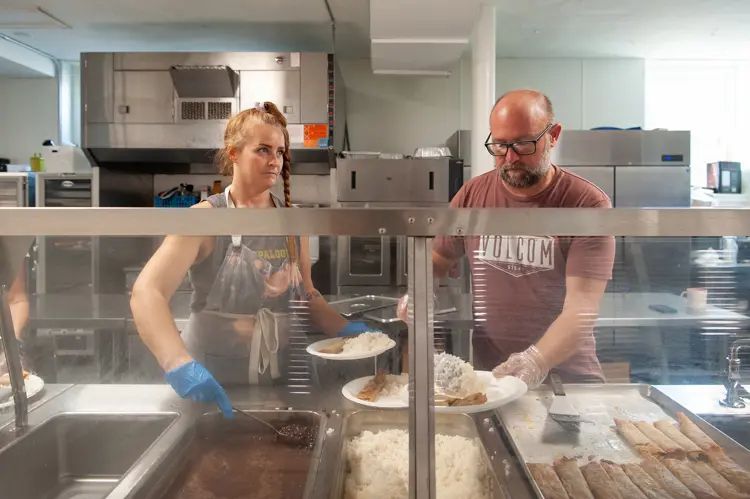
Lucci Chambless (left), a community organizer, and Hunter Demster, co-founder of a rapid-response network to track ICE activity, serve free lunch at the First Congregational Church, Aug. 27, 2026. Photograph by Rory Doyle for Hammer & Hope.
“I saw it as harassment,” says Arnold, 54. “To see this level of military force in your neighborhood the day after they were intermittently knocking on doors, waking people up, it made me ask: Has this happened in other Black neighborhoods around town?”
When Arnold saw the news that the National Guard had killed Tyrin Johnson, he wondered how that could be. Memphians had been told that the National Guard would not be armed and was there simply to assist MPD. Governor Lee had announced on Sept. 26, 2025, “The Guard will not be armed except and unless the local law enforcement makes requests for that,” and the City of Memphis website says that “Guardsmen and women will not make arrests or issue warrants.”
“How is it the two of them were able to shoot a guy?” says Arnold. “It was suicide by cop, because they claimed he raised his gun to them. But we also know that the National Guard are not wearing body cameras, right? Where’s the video to show that this is what happened?”
Lee’s office did not respond to multiple requests for comment, but the U.S. Marshals Service, which oversees the task force, said that the National Guard has been armed since October 2025.
Brittany Johnson says that Tyrin would not have pulled a gun on the National Guard soldiers, as was reported by the Memphis Police Department. Her son wanted to live. He had a 1-year-old son.
At about 5 feet 5 inches and 120 pounds, Tyrin was “little” — his mother’s word — and seemed to be in a constant state of capricious delight. Johnson has hundreds of other videos of Tyrin — with his son on a Chicago beach, singing old R&B songs to his son’s mother, dancing, jokingly provoking Brittany as she is lying in bed, trying to rest.
“See, he play too much!” says Johnson. “He gon’ do some goofy stuff!”
It bothers her that Tyrin has been portrayed as a criminal. He was a musician who had turned his bedroom into a studio. Though he’d been shy as a child, he started doing door-to-door sales, and “he could sell you a dream,” says Johnson. Tyrin was also a sharp dresser who loved suits and often “borrowed” his mother’s new sneakers to complete his outfits.
Even if Tyrin had a gun, Johnson says that didn’t make him dangerous. In Tennessee, many adults can legally carry a handgun without a permit. Tyrin had gotten one, she explains, because he was being targeted by a gang whose members had on more than one occasion physically assaulted him, to the point where he had moved to another state.
Johnson was told it would take at least a month, likely more, to get an autopsy report or other information about her son’s death. She believes that she has not been given information because the National Guard soldiers are in the wrong but are military, and therefore protected.
Hammer & Hope filed 25 public records requests with the support of MLK50 to understand the task force’s actions, particularly pertaining to the deaths of the four men killed by its agents. Many requests were declined because the investigations are ongoing.
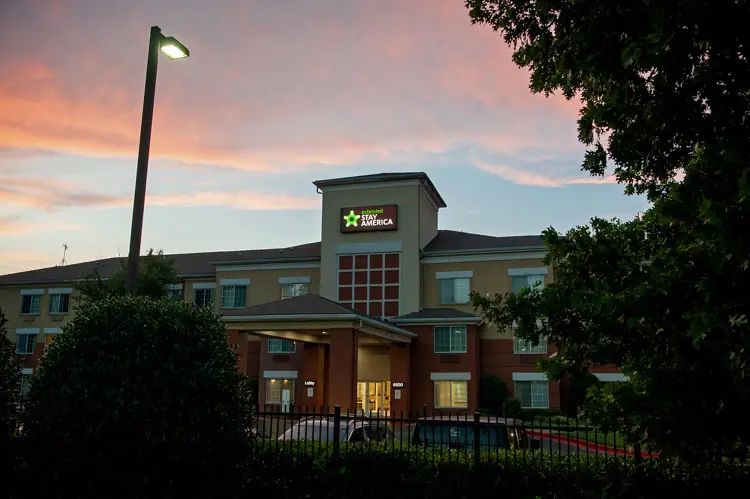
The hotel where Alfonso Ivy was shot by the Memphis Safe Task Force, Aug. 27, 2026. Photograph by Rory Doyle for Hammer & Hope.
There has been little reported about the death of Alfonso Ivy, 47, who was killed by a DEA agent at a motel on July 8. His autopsy results, received from the Office of the State Chief Medical Examiner through a public records request, are that he died from multiple gunshot wounds. The investigator narrative on the autopsy report states he was shot by law enforcement who were serving a warrant after Ivy drew his gun. No next of kin is listed on the report.
While the White House has used the task force’s high arrest numbers as an indication of its success, records received from the DA’s office show that during the first month of the DA’s reports, prosecutors dropped 27 of 36 charges initiated by the task force. In the six reports covering prosecutorial actions from May 14 through Aug. 6, 99 of 192 ended in nolle prosequi, meaning prosecutors dropped the charge, and another seven were dismissed.
Some charges fell apart for reasons that raise questions about whether the arrests were lawful. In one drug case, prosecutors cited the Fourth Amendment — the constitutional protection against unreasonable searches and seizures and arrests without probable cause — in dropping the charges.
A U.S. Marshals spokesman said it does not track the disposition of the arrests and did not comment on the fact that so many charges were dismissed.
“We measure the arrests as our performance because that is what the task force was created to do,” he wrote in an email. “The goal, which we are accomplishing, was to lower crime in Memphis. We will continue that mission until we are told by the Administration to reduce or end.”
Local officials had warned that the number of arrests would overwhelm an already strained system. On Oct. 9, 2025, Lee Harris, then the mayor of Shelby County, declared a state of emergency, stating that the task force deployment could lead to a 200 percent increase in arrests and severe overcrowding at the Shelby County jail. There were already issues with overcrowding at the jail. The task force arrests made it worse.
“They were very generous in providing law enforcement resources on the front end, but not so much with the resources we needed on the back end — courts, prosecutors, clerk’s office to manage the dockets, the jail itself,” says Mulroy.
Mulroy says that most of the arrests were for minor infractions as opposed to violent crimes, and that about 20 percent were related to immigration — unlawful presence in the country, not a criminal charge.
Local officials’ responses to the task force have been mixed. On Oct. 17, 2025, Harris and six other elected officials sued Gov. Bill Lee and other state officials to stop the deployment of the National Guard. A judge granted them a temporary injunction in November, but in April 2026 the Tennessee Court of Appeals reversed that ruling, finding that the officials lacked standing to sue.
Mulroy, who has served since 2022 as Shelby County’s first elected Democratic DA of the modern era, has also fought the state in court. On May 26, he sued to block two new Tennessee laws that imposed additional oversight on his office, including one requiring it to file a report every 10 business days showing when charges arising from task force arrests are dismissed or settled. Mulroy argued that the requirements were duplicative and unconstitutionally singled out Shelby County.
Mayor Paul Young of Memphis, also a Democrat, initially said that he did not request the National Guard’s assistance and didn’t believe it was the right way to decrease crime. But in his Sept. 19, 2025 newsletter, Young wrote, “For Memphis, I choose to view this as an opportunity,” explaining that he had visited Washington, D.C., to learn more about its experience with the National Guard being deployed. “The Guard there served as ‘eyes and ears on the streets,’ more like a large-scale neighborhood watch than frontline police officers. This extended police capacity brought a sense of calm.”
Young’s office did not respond to multiple requests for comment about the task force’s activity, including the killing of four Memphians.
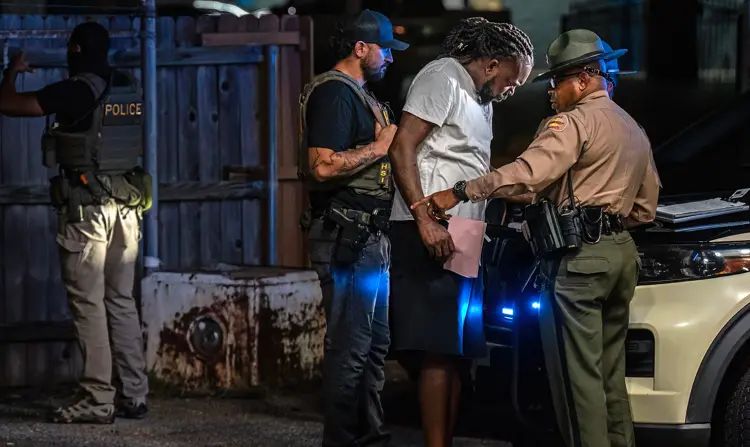
Tennessee State Police, the FBI, Homeland Security Investigations (a division of ICE), U.S. Marshals, ATF, and Memphis police conduct a traffic stop. Photograph by John Partipilo/Tennessee Lookout.
As has often been the case in Memphis, ordinary people have organized against the institutions they believe have failed them.
In February 1968, more than 1,100 Black sanitation workers walked off the job after two workers, Echol Cole and Robert Walker, were crushed to death by a malfunctioning garbage truck. They demanded safer working conditions, better pay, and recognition of their union. Martin Luther King Jr. came to Memphis in March to support the strike. He was assassinated there the following month.
Six decades later, Sherman, Oceja, and Demster are part of a coalition of more than 30 organizations, Free the 901, defending Memphis against what they call “the invasion.”
Many of the organizations started working together after Tyre Nichols was killed, often meeting at the First Congregational Church (“First Congo”), which was founded in 1862 by its antislavery members.
Their work got the ordinances passed. Sherman says that the drop in crime was in part due to organizers pushing Young to invest in workforce development and therapy for young Memphians, and to develop a new policy on 911 response, so that a nonviolent team including a social worker would respond to calls involving mental health crises. Young’s office did not respond to questions sent about this and the task force. Lee’s office also did not respond to numerous emails requesting comment.
One of Free the 901’s main initiatives is a boycott/buyout list of businesses that serve the task force to boycott and those that don’t to support. It also asked business owners to post signs indicating that they would not serve members of the task force.
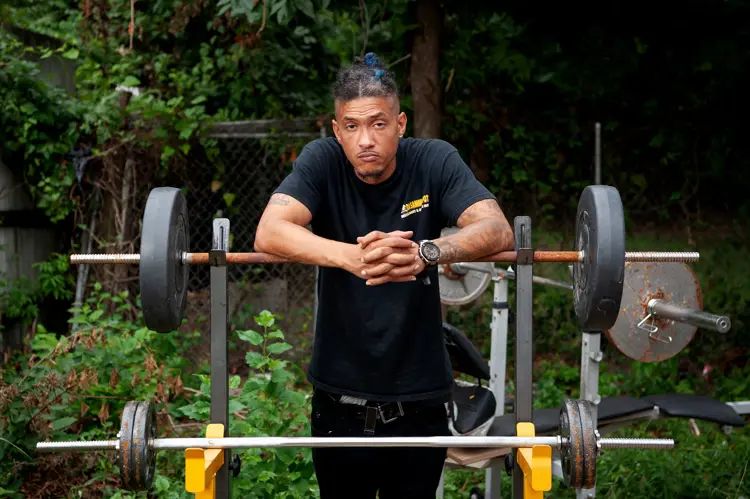
Rob Brown, owner of Da Sammich Spot Restaurant and Resource Hub, outside his shop, Aug. 26, 2026. Photograph by Rory Doyle for Hammer & Hope
Rob Brown, the owner of Da Sammich Spot Restaurant and Resource Hub, was the first business owner to post one of the signs and says he was targeted as a result. He says the agents came to his businesses, which are in the historically Black neighborhood of Orange Mound, and stood outside, asking for people’s IDs. Brown went inside his shop, locked the door, and three or four officers still tried to force their way inside, he says. On July 26, Brown says FBI agents entered his shop and started questioning customers. Brown told them they had to leave.
Through the rapid-response network V901, Free the 901 has also been tracking task force agents and alerting residents. Its team of about 40 dispatchers receive tips about task force and ICE activity, and send out warnings by text and Facebook Messenger. V901 volunteers also film and photograph the task force traffic stops.
On a Saturday afternoon, in an upstairs room at First Congo, V901 is holding a training for new dispatchers. On the wall is a picture of Martin Luther King Jr. with the quote “Freedom has always been an expensive thing.”
The experienced dispatchers say that in the early days of the task force’s deployment, they sent out 400 alerts in a single week. The volume has dropped in part because, one says, “they were deporting people at such a rate that it really feels that there’s just fewer people for them to target.”
One dispatcher grew up in a border town in Texas, where ICE raids were regular occurrences. But Memphis, she says, “is not a border town. This is not normal. They’re trying to normalize the military. They’re trying to normalize these things.”
To the Free the 901 organizers, Memphis is a Trump administration experiment to see how much militarized policing of Black and brown cities people will tolerate.
“We’ve already been overpoliced here, and the response to that is we send more police,” says Rachael Spriggs, director of power building at the Equity Alliance, a local nonprofit. “It’s a testing of public acceptance of expanding policing.”
On June 3, the Justice Department announced that it is offering $300 million to two to four cities willing to adopt its “Model Cities” approach — Memphis Safe Task Force–style policing that would require cooperation with federal immigration enforcement and alignment with the Trump administration’s priorities. Many city leaders balked. Mayor Steven Reed of Montgomery, Ala., said he reviewed the grant and decided not to apply. “Everybody wants a quick fix, and no one wants to invest in the root cause of the issue,” he told The Guardian.
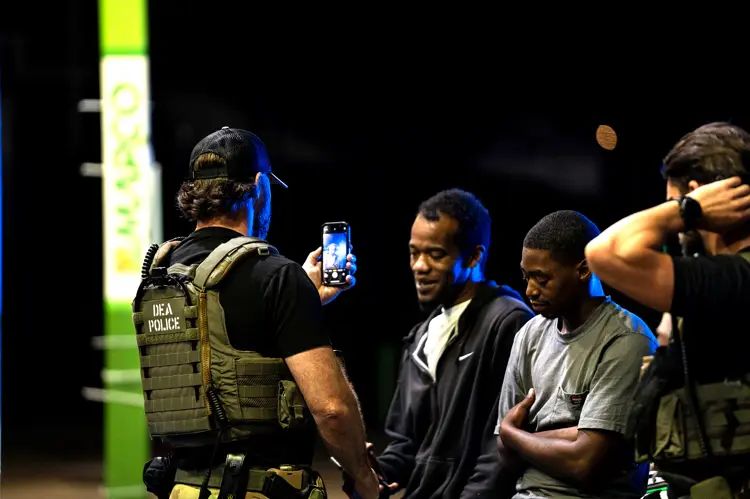
A DEA agent takes photographs of two men with his cell phone during a traffic stop on Summer Avenue, Memphis, Nov. 18, 2025. Law enforcement did a full search of the car and held the men for nearly an hour before releasing them. Photograph by Andrea Morales/MLK50.
Yet Young said he would consider applying, telling WMC/Action News 5, “It looks like it supports some of the things that we are interested in supporting.”
The work of resisting the task force carries serious risks, according to the plaintiffs in the ACLU lawsuit. Demster says he has been stopped and given tickets for broken taillights that were not actually broken, all in retaliation for filming task force agents. According to the lawsuit, on Oct. 24, 2025, an unmarked SUV driven by a masked agent swerved directly at Demster, missing him by only two inches. Attorneys representing the task force argue that Demster has violated state law by intentionally coming within 25 feet of law enforcement performing their official duties even after being ordered to stop. On Sept. 23, a federal judge heard arguments on the ACLU’s request for a preliminary injunction to prevent task force agents from retaliating against Demster and three other plaintiffs for filming their activities.
Demster says it has all taken a psychological toll. “It is terrifying going up against an entire paramilitary force with long guns and armed to the teeth, barking at you,” he says. “Every time I do it I am full of fear and I push through it. But in the background, I’ve doubled up on therapy. I am terrified when I’m home alone and I hear sounds. I have come home to federal agents sitting outside of my house.”
Oceja says that in the past, fear has kept her from being as outspoken as she might have wanted to. Mobilizing so many people through Free the 901 has made her less afraid, but there is something chilling in the calculus: Her confidence comes partly from knowing that the work no longer depends on any one person.
“We have mobilized so many people that are interested in building this power together that I don’t necessarily have to be afraid,” says Oceja. “Because if I get taken out, it don’t matter because I trained Rachael, and Rachael can keep it moving. If Rachael gets taken out, it don’t matter because Rachael trained another 10 people. If those other 10 people get taken out, it don’t matter ’cause Amber trained another 20 people. That to me is what gives me hope, and that to me is a win.”
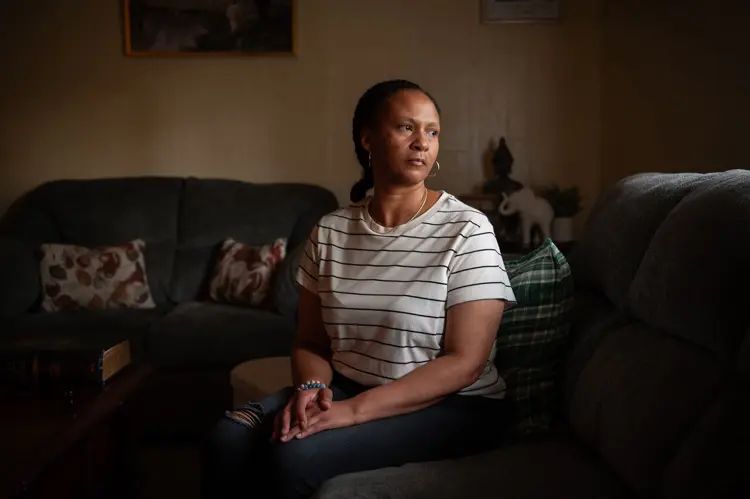
Jessica Neal, mother of the late Jonah Neal, at her apartment in Memphis, Aug. 26, 2026. Photograph by Rory Doyle for Hammer & Hope
Every morning, after Jessica Neal says her prayers, she talks to her son, Jonah. She asks him to watch over his two younger sisters. “I always tell him I'll be OK, you know. I’ll figure it out. Eventually,” she says.
Neal, 45, lives in a two-bedroom apartment that is the mirror image of the one where her son was shot. She has moved the photographs of Jonah from her bedroom to the living room, because her therapist said that her bedroom should be a place where she might find some relief. Jessica has adorned her bedroom walls with Paris-inspired paintings instead. She hopes to visit the city someday. It hasn’t helped her sleep. She now needs a night light, and her dreams are often flashbacks to the day her son was killed.
On May 20, Neal came home to find Jonah, 25, with her gun, saying he was going to kill himself. She went outside and called 911 for help. Homeland Security Investigations agents responded and entered the apartment.
Neal said that she heard an agent shout something, and then a single gunshot. She closed her eyes and covered her ears. “I didn’t really want to see anything,” she says.
One of her neighbors later said that after the sound of the gunshot, the overcast sky turned orange.
Neal sat in an officer’s car outside her apartment for about four hours and says she was not allowed to call anyone. Two officers eventually told her they wanted to ask her some questions.
“I told them, ‘If something did happen to my son, I don’t want to know by myself. I want somebody here with me,’” she says.
The officer asked, “What do you mean if something happened?”
“I was like, ‘Well, if he got shot or something,’ and then she was like, ‘Well, unfortunately there was a gunshot incident and your son didn’t make it,’” says Neal.
The TBI’s initial report said that it was not clear whether Jonah Neal had died from self-inflicted knife wounds or the agent’s gunshot.
In 1988, Memphis was the first city to create what became known as the “Memphis Model”: specially trained police officers who would respond to mental health crises and de-escalate encounters. It remains unclear why Homeland Security Investigations agents responded when Neal called 911 because she feared her son might harm himself.
On Aug. 25, Neal received Jonah’s death certificate, showing that he was killed by a gunshot wound to his neck. The manner of death is homicide. She and her attorney have also viewed body-camera footage that she says indicates that Jonah did not have a gun in his hand. As the agent who shot him shouts, “Put the gun down,” Neal says a second agent is heard telling the first that Jonah is not holding one.
“He was doing everything that she said to do. And even when she was told that it was not a gun, she shot. There’s no way she could have feared for her life,” says Neal.
On Aug. 30, Jonah’s birthday, Neal drove to his grave at the cemetery in Kentucky where he is buried next to his great-grandfather. She took a cake and a stuffed elephant, an echo of the Dumbo theme she had used to decorate Jonah’s crib.
Around that same time, Brittany Johnson received Tyrin’s autopsy results from the West Tennessee Regional Forensic Center. At the end is the investigator’s narrative, the account that was shared the day that Tyrin was killed: “Law enforcement officers saw the unknown male draw a firearm. Law enforcement officers then shot at the unknown male, striking him once in the chest.” At the top is the truth of how Tyrin Johnson died. He was killed by a bullet that entered the right side of his back, piercing his lung, spine, and rib.
The day after Tyrin’s autopsy results became public, National Guard patrols in Memphis were paused. A U.S. Marshals Service spokesperson said the troops were instead doing “administrative work.”
About a month after Tyrin’s funeral, Johnson watched as her grandson tried to figure out a way down from her bed, which is high off the ground. One of her sisters worried he would fall. They watched as he tightly gripped the bedsheets and gingerly lowered himself to the floor. Johnson burst into tears.
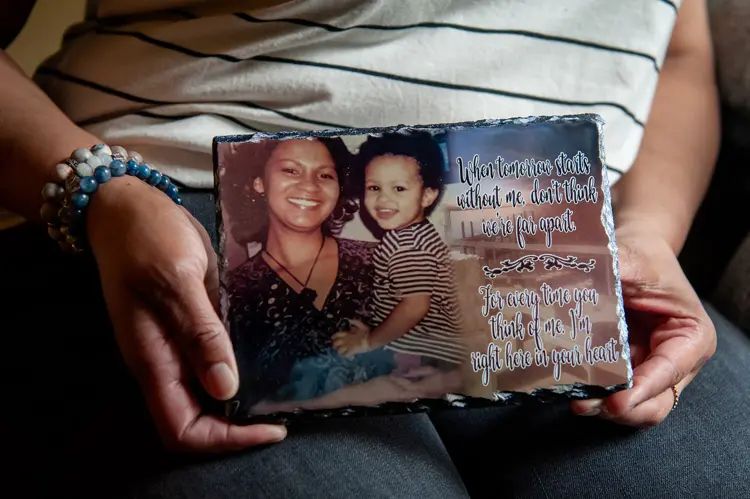
Jessica Neal, mother of the late Jonah Neal, holds a photo of her son inside her apartment in Memphis on Aug. 26, 2026. Jonah, 25, was shot by the Memphis Safe Task Force in May 2026. Photograph by Rory Doyle for Hammer & Hope.
“His daddy told him how to get down without falling,” she says.
Tyrin and his son would practice. Every time the toddler found his way down, Tyrin would put him back on the bed and say, “Come on, try it again.”
The autopsy results answered one question for Johnson — how Tyrin died — but left her with several others. Why did officers say Tyrin had turned toward the soldiers with a gun when he was clearly shot in the back? Why does the security camera footage she viewed in the prosecutor’s office become blurry only in the seconds that captured Tyrin being shot?
Johnson is still wrestling with the unknown. But her grief has made space for anger.
“Right now the fight is all in me,” she says. “Every time I look at my grandson and I see my son ain’t coming back, I’m like, You know what? Somebody got to pay for something.”
Lisa Armstrong is a journalist and professor at the University of California, Berkeley, Journalism School. Her reporting examines inequality and the resilience of people navigating systems of state power.
Hammer & Hope is free to read. Sign up for our mailing list, follow us on Instagram, and click here to download this article.