
Global Left Midweek — February 11, 2026
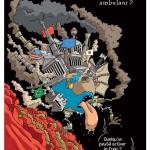
- Neoliberalism, Neo-Fascism and War
- Cuba’s Stand
- Mediterranean Dockworkers’ International Strike
- Inside Myanmar’s Armed Resistance
- When Arabs Protest in Tel Aviv
- The Task for Nigerians
- Russians Against Putin’s War
- Czechia Outlaws Communism
- Labor in Canada 2026
- The Legacy of the Popular Front
__________
Neoliberalism, Neo-Fascism and War
Christian Laval / Verso (London)
Neoliberalism, as a particular policy of capitalism since the end of the twentieth century, has been a political enterprise ready to use all means available to transform society in the interests of capital, by way of state coercion. Neo-fascism is an exacerbated continuation of what neoliberalism intended to do in more roundabout ways, subjecting all society to the logic of private interests.
__________
Cuba’s Stand
• Emergency Measures Victor Miranda / teleSUR (Caracas)
• Díaz-Canel Speaks Miguel Mario Díaz-Canel Bermúdez / Granma (Havana)
• Mexico’s Dilemma David Marcial Pérez / El País (Madrid) [Use incognito window mode or reading mode]
__________
Mediterranean Dockworkers’ International Strike
Ana Vračar / Peoples Dispatch (New Delhi)
Dockworkers in more than 20 ports across the Mediterranean marked a historic moment today, launching an international strike day to protest against war and rearmament. Dockers also protested the privatization and militarization of port infrastructure. Unionists involved in preparing the action described it as the result of a long and complex process.
__________
Inside Myanmar’s Armed Resistance
Robin Tutenges / The Guardian (London)
In the Tanintharyi region, thousands of young people from various ethnic and religious backgrounds, fuelled by hatred of the junta – which has indiscriminately committed war crimes and massacred civilians – left the key regional cities to join the bush and learn to handle weapons. In 2026, as Myanmar enters its fifth year under military dictatorship, the resistance faces numerous challenges.
__________
When Arabs Protest in Tel Aviv
Samah Watad / +972 (Tel Aviv)
Tens of thousands of people (organizers estimated as many as 100,000) had come to demand the most basic and urgent right to live without fear. And yet, even here, at a march against our own deaths and abandonment by the government, naming ourselves as Palestinians felt disruptive, something in need of correction.
__________
Omole Ibukun / Africa is a Country (New York)
Nigeria’s insecurity cannot be solved by foreign airstrikes or a failing state, but by rebuilding democratic, community-rooted systems of collective self-defense.
__________
Morten Hammeken / Jacobin (Brooklyn)
The Russian state has forced many antiwar leftists into exile, cutting them off from ordinary Russians. But activists are well aware that change in Russia must come from within, mobilizing ordinary people around their own interests.
__________
Dmitry Pozhidaev / Links (Sydney)
As of 1 January, being a Communist in Czechia can make you a criminal, carrying a prison sentence of up to five years. With a recent amendment to the Criminal Code, the state has written the “equalization” of Communism and Nazism into language that actually matters: punishment. Movements are targeted for inciting “class hatred.”
__________
Labor in Canada 2026
• Making Gains in Alberta Andrew Stevens and Angèle Poirier / The Conversation (Toronto)
• The Year Ahead Tom Sandborn / rabble.ca (Toronto)
• Wake-Up Call Alex Passey / Canadian Dimension (Winnipeg)
__________
The Legacy of the Popular Front
Kasper Braskén / Rosa Luxemburg Stiftung (Berlin)
The Popular Front proved crucial in establishing bulwarks against fascism’s further rise, but its left-wing components failed to advance their long-term goal of socialism. With the far right once again on the rise, what can the contemporary Left learn from the Popular Front’s ambivalent legacy?