
Obituary for Yanar Mohammed Feminist Icon Murdered in Iraq
https://portside.org/2026-03-04/obituary-yanar-mohammed-feminist-icon-murdered-iraq
Portside Date:
Author: Julia Neumann
Date of source:
Taz
“I am so proud to be ‘just’ a feminist,” Yanar Mohammed said in the documentary I Am the Revolution. “Because what revolution could they possibly make that is stronger than the revolution of women?” On Monday, the Iraqi feminist was shot dead outside her apartment in Baghdad.
According to her Organization of Women’s Freedom in Iraq, two armed men on motorcycles opened fire on her at around 9 a.m. She died later in hospital. It remains unclear who killed her. So far, no group has claimed responsibility, and Iraqi authorities have not commented.
Yanar Mohammed was born in Baghdad in 1960. She studied at the University of Baghdad until 1984 and earned a master’s degree in architecture in 1993. That same year, she left Iraq with her husband and young son. They moved to Canada.
Beginning in 1998, she founded the Defense of Iraqi Women’s Rights (DIWR) in Canada, which she led in 1998, 1999, and 2002. The organization opened a women’s shelter in Iraq that, according to her, saved hundreds of women from so-called “honor killings.” After the U.S. invasion and the fall of Saddam Hussein, Mohammed returned to Iraq. In June 2004, her group was renamed the Organization of Women’s Freedom in Iraq (OWFI) and began working on the ground. She opposed both the U.S.-British occupation and sectarian Islamist groups, advocating for secular democracy.
One of the 100 most influential women in the world
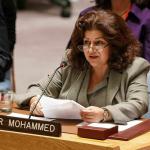
Mohammed viewed the government formed in 2003 critically, arguing that it was “based on divisions along confessional, ethnic, and gender lines.” In a speech before the UN Security Council in 2025, she warned against handing power to extremists. Supporting women, she argued, is a form of preventing extremism.
Her organization supported women with disabilities as well as Afro-Iraqi, Turkmen, and Yazidi families. Mohammed stood in solidarity with queer people and was active in leftist circles, serving until her death as a member of the Central Committee of the Communist Alternative.
“In Iraq, I see myself as an important voice for the rights of Iraqi women,” Mohammed once said. In 2018, the BBC included her on its list of the 100 most influential women in the world.
She repeatedly received death threats. In 2004, she received two explicit threats from the Islamist group Jaish al-Sahaba in connection with her work on gender equality.
First defamation, then murder
The Iraqi government tried several times to shut down her organization. In Iraq, she worked as editor-in-chief of the newspaper Al-Mousawat (Equality). After just three issues, she said, she received a summons because she had rejected the mandatory veiling of women in Baghdad. At one point, she had to leave the country after an arrest warrant was issued against her on allegations of human trafficking—an accusation she rejected.
In 2022, she said: “The government begins with defamation campaigns, then follow court proceedings, and if that doesn’t work, they abduct and kill them.” Human rights researcher Raz Salayi wrote that the lack of prosecution of previous assassination attempts had enabled such violence.
Corruption in Iraq allows militias to carry out political murders. According to reports, the feminist had returned from Canada only days before her killing. This has led to speculation that she was under surveillance and that the attack was targeted.
The director of I Am the Revolution wrote: “They killed the woman, but not the movement. The revolution lives on in every woman you saved.”