
This Week in People’s History, Mar 11–17, 2026
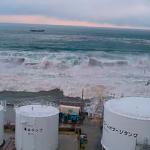
When Willful Negligence Kills, It’s No ‘Accident’
MARCH 11 IS THE 15TH ANNIVERSARY of a magnitude-9 earthquake off Japan’s east coast and resulting tsunami that caused the world’s second largest nuclear “accident” when three Fukushima Daiichi nuclear reactors melted down, causing an enormous, uncontrolled release of highly radioactive material into the environment.
The 2011 catastrophe, which is frequently characterized as an accident, was not accidental. The meltdown-causing tsunami had been widely predicted. Only its timing, not its magnitude, was a surprise.
The decision to build the Fukushima reactors mere yards from the Pacific Ocean and 33 feet above sea level flew in the face of detailed, irrefutable, geological and historical knowledge.
As one of the most earthquake-prone regions on earth, all construction in Japan must be designed on the assumption it will someday need to withstand a large earthquake. In addition to the need to withstand intense shaking, anything built near the Pacific (on the east) or the Sea of Japan (on the west) must be built to either withstand a large tsunami or far enough above sea level to avoid inundation.
Exactly how far above sea level is difficult to predict, but there was no question when Fukushima Daiichi was built in 1967, that it should have been at least 100 feet (not 33) above sea level.
The knowledge that it could not be safely built at such a low elevation was not speculative. It was based on recent historical experience. Coastal Japan is subjected to tsunamis so often that Japanese authorities keep detailed records of tsunami locations and height above sea level. It happens that along the stretch of coast where Fukushima Daiichi was located, a 1933 tsunami inundated land as high as 95 feet, killing thousands of people.
The warnings embodied by the records of past tsunamis were not legal bans on construction, but surely the knowledge that a 95-foot tsunami had hit the region in 1933 was more than sufficient information to prevent the government from approving the construction of three nuclear reactors just 34 years after the region was inundated by a flood three times higher than the Fukushima Daiichi site. https://www.nucnet.org/news/fukushima-was-man-made-disaster-caused-by-wilful-negligence-report-finds
Tom Paine, Heroic Journalist
MARCH 13 IS THE 235TH ANNIVERSARY of the publication, in London, of Tom Paine’s book, Rights of Man, a detailed defense of the ongoing French Revolution and all that it represented – democracy, an end to hereditary government, free public education, progressive income tax, and a collective responsibility for public welfare.
Paine’s 1791 book was enormously popular and quickly became a foundation text for the growing working class movement in Britain. As a result, the government banned it and attempted, without success, to suppress it. When Paine was charged with having committed seditious libel, he fled to France, but he was tried in absentia and sentenced to death.
Paine, who never returned to England, died of natural causes in Manhattan when he was 72. https://jacobin.com/2015/03/thomas-paine-american-revolution-common-sense
‘God Is Germany’s Only Judge!’
MARCH 14 IS THE 90TH ANNIVERSARY of Adolf Hitler’s delivery of a speech to some 300,000 Germans in Munich in 1936.
During the speech, Hitler said, "Germany acknowledged as judges of her actions only herself and God," and "If in London or elsewhere men meet to sit in judgment upon us, then I can only say that above every earthly judge stands Almighty God. He is the eternal judge. He alone has the right to decide what is right and wrong, and God's voice is in this case the voice of the people."
In 2006, three mental health professionals asked five historians who had written about Hitler’s life to use what each of them knew about Hitler to fill out a tool designed to assess personality disorders (the Coolidge Axis II Inventory) as if Hitler had been their significant-other. When the assessments were correlated, Hitler scored very high for four personality disorders: paranoid, antisocial, narcissistic and sadistic.
When the researchers published the results of their investigation, they wrote, “Tolerance and enlightened acceptance of various peoples has been heralded as one of the major accomplishments of modern societies in the last 50 years. With this advancement, it has often been taken for granted that a leader of Hitlerian proportion could never again attain such power and influence. However, we know now that there are many who threaten world peace and stability (emphasis added).”
The complete observational assessment of Hitler’s personality is here: https://agingandmentalhealthlab.uccs.edu/sites/g/files/kjihxj1911/files/2020-07/DSM-Assessment-of-Hitler-IDR-2007.pdf
Bad Blood Between U.S. and Iran Has a Long History
MARCH 15 IS THE 75TH ANNIVERSARY of an event that lies at the root of the decades-long deadly antagonism between the U.S. and Iran, which is once again resulting in hundreds of deaths and threatening to turn into an unmitigated catastrophe.
On March 15, 1951, the democratically elected legislature of Iran voted to take over the British-owned Anglo-Iranian Oil Company. The Iranian decision had been a long time coming.
Nearly half a century earlier, Iran had agreed to allow the British to drill the country’s first oil wells and to keep most of the profits from refining and selling the extracted oil. At first, the Iranians considered the arrangement to be a good deal, because the British were putting up all the capital needed to drill the wells and refine the oil, but as the industry grew and the British needed to spend less and less, the Iranians said they wanted a bigger percentage of the industry’s profits.
Despite the fact that the Anglo-Iranian Oil Company was enormously profitable, it would never agree to alter the original bargain. The struggle over the division of the profits dragged on for years until finally the Iranian government decided to exercise its sovereign authority and take the company over.
As soon as the nationalization took place, all of the world’s oil markets boycotted Iranian oil. The boycott was almost totally effective, with the result that the Iranian economy was deeply depressed. As the economic crisis grew, the U.S. State Department and the Central Intelligence Agency began to plan to stage a coup that would install a new regime that would give up the nationalization program.
The successful coup took place in August 1953 and installed a new government, one that would agree to a new division of the profits from the sale of Iranian oil, not to give Iran a bigger share, but to cut the U.S. in on the deal. Few people in the U.S. know or care anything about this history, but it is not nearly so obscure to its Iranian victims. https://nsarchive.gwu.edu/sites/default/files/media_mentions/2019-10-30_the_united_states_overthrew_irans_last_democratic_leader_mohammad_mosaddeq.pdf
A Catastrophic Day in Court
MARCH 17 IS THE 140TH ANNIVERSARY of the premeditated 1886 attack by a large mob of white men on a smaller group of people of color who were attending a trial in the Carroll County Courthouse in Carrollton, Mississippi.
At least 23 people of color were killed and many more were wounded. None of the whites was hurt. No one involved was ever charged with a crime. https://calendar.eji.org/racial-injustice/mar/17
For more People's History, visit
https://www.facebook.com/jonathan.bennett.7771/