
Fantasy Dismantled
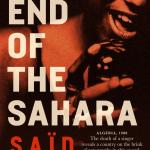
The End of the Sahara
Saïd Khatibi
Translated by Alexander E. Elinson
Bitter Lemon Press
ISBN: 9781916725225
THE DESERT ROMANCE that E. M. Hull’s 1919 novel The Sheik and its 1921 film adaptation starring Rudolph Valentino gave the Western imagination was a fantasy of liberation—a lawless space where passion could override convention and the Arab sheikh embodied a masculinity undomesticated by civilization. Saïd Khatibi’s 2022 novel The End of the Sahara, newly translated from the Arabic by Alexander E. Elinson, returns this fantasy to its geographical origin only to dismantle it piece by piece. In Khatibi’s Algeria, the desert offers no theater for transcendence. It is a landscape littered with unfulfilled dreams—a place where a body can be found and a life erased without ceremony. Khatibi’s book, the first Algerian crime novel translated from Arabic by Bitter Lemon Press, adopts the tropes of detective fiction only to set them aside, conducting not an investigation but an autopsy of a society on the brink of upheaval.
Set in the months before Algeria’s bloody 1988 October Riots—a pivotal uprising of economic and political protest against a corrupt, authoritarian, patriarchal state—the novel unfolds in a provincial town where the lives of a disparate group of characters intersect. When the body of a young woman is discovered in the desert, Inspector Hamid is called in to investigate. The victim, we learn, was known to some as Zakia, but she lived and worked under another name, Zaza, as a singer at the Sahara Hotel. Hamid methodically questions those who knew her—a video store owner, a factory accountant with literary aspirations, the hotel staff—but the novel quickly shifts its focus away from the whodunit mechanics of the genre. The investigation does not so much conclude as recede, gradually displaced by the voices of characters whose memories and reflections come to occupy the space where clues and alibis might otherwise appear. The question is not simply who killed Zaza but how the social, legal, and economic conditions of her world conspired to create the circumstances of her life and, ultimately, her death. The murder becomes less a central mystery than a prism, refracting the complex forces that shape love, marriage, gender, and authority in contemporary Algeria.
Khatibi structures his narrative as a polyphonic tapestry, weaving together multiple perspectives. The technique reinforces the conclusion that no single story can fully account for a life, because lives are embedded in a shared web of legal codes, family pressures, and implicit social contracts. Private memory and public rumor, personal reflection and collective judgment, all accumulate to create a rich, textured, and deeply ambivalent portrait of a community.
At the heart of this web is Ibrahim, who studied translation but, unable to find a suitable job, ended up borrowing money to start a video shop. His education and business place him at the intersection of global culture and local experience. Among the films he circulates is The Sheik; his copy of Hull’s novel, discovered at a pavement stall, still bears a municipal library’s faded stamp—mute testament to a state whose institutions leak into the informal economy. Ibrahim’s fascination with The Sheik becomes one of the novel’s most potent motifs. As the narrative moves through the inner lives of its characters, the story of the desert romance reappears, offering an ironic counterpoint to the constrained realities they inhabit. It is a fantasy that haunts their imaginations, a measure of the gulf between romantic ideal and lived experience.
Yet Khatibi’s engagement with The Sheik begins before Ibrahim enters. The End of the Sahara opens with a line adapted from Hull’s 1925 sequel The Sons of the Sheik, in which Ahmed ben Hassan—a.k.a. the little Sheik—confronts the limits of desire. Raised between European and Arab culture, he cannot pursue his love for Yasmin, an Arab dancing girl, because tribal law forbids it. “He realized that his own brief romance was over,” Hull writes, “that he was outside and beyond this desert drama.” By using this line as an epigraph, Khatibi performs a striking inversion, invoking the most famous desert romance only to reverse its basic premise. Hull’s The Sheik belongs to a colonial fantasy tradition in which the desert, the domain of tribal leaders and sheikhs, is imagined as a space promising the liberation of passion, while Arab women appear largely as submissive figures or objects of male desire. Khatibi reverses this perspective, focusing instead on ordinary Algerians navigating precarious lives and desire shaped by law, reputation, and economic constraint.
The Algerian Family Code of 1984 forms the legal bedrock of Khatibi’s characters’ personal struggles. By formalizing male guardianship in matters of marriage and divorce, the code institutionalized patriarchal authority, codifying inequalities long shaped by social practice. This tension is embodied in Hassina, a brilliant and cynical Marxist lawyer known as much for her corruption as for her activism, defending women caught in the code’s trap while navigating her own complicated life. The law’s influence, however, is not always so explicit. It seeps into the everyday through figures like the feminist lawyer Noura’s father, who embodies a blend of formal law and informal custom. He abandoned his first wife to enter a series of unstable marriages, one annulled because of the wife’s failure to conceive, another arranged when the woman was underage and left legally unregistered. These histories shape Noura’s experience even as she achieves professional success as a lawyer—a success her mother sarcastically acknowledges by calling her “the Godmother of Divorced Women.”
Noura’s own life illustrates how social law’s shadow extends beyond the courtroom. She begins a tender, hesitant relationship with Ibrahim, yet neither of them seriously considers marriage. It is not a lack of affection that holds them back but the customary, deeply internalized social barriers they both recognize. Ibrahim’s mother would never approve of a son marrying an independent woman who is also older than him. The law, in this case, doesn’t need to intervene; its patriarchal logic has already been absorbed into the fabric of family expectation, making a formal union unthinkable from the start. At Ibrahim’s suggestion, Noura rewatches The Sheik, admiring Valentino’s charisma while instinctively rejecting his coercion of the heroine. This internal conflict mirrors her own delicate negotiation: she is drawn to passion but refuses patriarchal dominance, seeking an autonomy that the world she inhabits is not structured to allow.
The men in Khatibi’s world discover that their freedoms are also circumscribed, though in different ways. Bachir, a factory accountant who dreams of becoming a writer, nurses a hesitant, nostalgic love for the murdered Zaza. At one point, he compares himself to Valentino’s heroic desert prince, imagining he once “stole Zakia’s heart.” The fantasy is painfully ironic, highlighting his own paralysis. Where the sheikh acts boldly, Bachir hesitates, constrained by his mother’s disapproval and Zaza’s socially scrutinized profession.
Kamal, an elegant and charismatic hotel receptionist, experiences a different form of limitation. Upon learning that Noura is the cousin of a close friend, he withdraws, subordinating personal longing to the unwritten codes of male loyalty. Whereas Bachir’s restraint stems from fear and social judgment, Kamal’s reflects allegiance and the careful negotiation of relationships within his social world.
Yet even within these constraints, moments of genuine, transformative feeling emerge. Kamal’s relationship with Hassina offers one of the novel’s rare hints of personal evolution. Relatively free from familial ties—an orphan raised by his sister, whose influence never quite equaled that of a mother—Kamal initially embodies a familiar posture of masculine conquest, his affairs not lasting more than “a day or two.” Hassina, with her fierce independence and political convictions, disrupts this pattern entirely. She refuses the submissive role his past relationships have assumed. Kamal is irritated by her career and her outspokenness, yet their intimacy unsettles his certainties. When he quits smoking hashish to please her, a small but significant act, we witness a reluctant but genuine openness to change. He remains unsure if he truly loves her, but even this uncertainty marks a departure from his former certainties, a subtle emotional shift suggesting that desire, however constrained, can still carve out space for growth.
If Kamal and Hassina suggest that desire can still subsist within strict parameters, the novel’s most marginal figure tests that possibility’s limits. Ibrahim recalls that Hull’s heroine, Diana, is something of a transgender figure—a tomboy whose masculinity is, in the colonial romance, ultimately subsumed into heterosexual love. The description resonates with Fouzi, the coachman who, like the murdered Zaza, appears only through others’ descriptions. Understood as intersex, Fouzi occupies a position neither law nor custom can categorize. Never granted narrative voice, he exists on the margins. Yet Fouzi is not merely passive. In wearing kohl and removing body hair, small acts of self-fashioning, he embraces an identity the world refuses to acknowledge—measures of resistance against erasure. Fouzi’s silence powerfully dramatizes the limits of legal and social recognition, yet in denying him narrative voice, Khatibi risks making him an emblem of marginalization rather than a fully realized presence—raising the question of whether critique can inadvertently replicate the exclusion it condemns.
Where Diana’s gender nonconformity was a prelude to romance, Fouzi’s body admits no such resolution. He is left without a partner, mocked by other men, and discarded by his own sisters. If Diana’s story reassures us that deviant bodies can be folded into normative love, Fouzi’s silence suggests otherwise: some bodies remain illegible to law and custom, but illegibility does not mean nonexistence. His marginal position, maintained through wordless self-assertion, exposes both their limits and their violence.
This question of whether critique can avoid replicating the exclusion it documents finds one kind of answer in Khatibi’s earlier work, where marginalized figures speak more directly. This investment in marginalized bodies extends beyond Fouzi, reaching back to such figures as the masculinized Sufi Lalla Fatma and the cross-dressing Isabelle Eberhardt in Khatibi’s earlier Forty Years Waiting for Isabelle (2017). These characters form a kind of historical archive of unruly bodies—figures who live on the margins of normative masculinity and femininity and resist easy categorization within colonial or postcolonial frameworks. Lalla Fatma, in particular, complicates the colonial imaginary of passive Arab femininity that Hull’s novels helped cement. She appears not as an object of the colonial gaze but as a subject who actively negotiates and challenges social norms, reminding readers that the desert societies imagined in texts like The Sheik already contained women whose authority and autonomy exceeded the bounds of European fantasy.
Nonetheless, for a novel so insistent that love cannot transcend constraint, The End of the Sahara harbors its own longing for transcendence. The tenderness between Kamal and Hassina, and Bachir’s memories—these themes suggest that desire reaches beyond boundaries. Yet the novel never decides whether this aspiration marks a genuine possibility or a persistent illusion. Khatibi’s critique leaves little room for the consolations it seems to want to offer. The result is emotional austerity: we see that intimacy matters but not what flourishing might look like. This may be the point—fantasy dismantled—but it leaves diagnosis where we might have wished for hope.
The murder is solved in a scene where lovers, criminals, and conspirators gather, their conflicts surfacing into revelation. No lone culprit, no innocent bystander—guilt and desire circulate among them all. What remains is the persistent effort to find intimacy within visible and invisible rules. The desert romance returns as its opposite—a reminder that love is always shaped by law, history, and custom. Yet Khatibi’s achievement is not merely negation. He transforms the desert into a mirror—a space where desire confronts its limitations, and the dream of escape gives way to the more difficult work of trying to live, and love, within it.