
This Week in People’s History, May 6–12, 2026
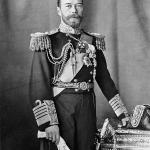
The Czar Saved His Neck, but Not Forever (1906)
MAY 6 IS THE 120TH ANNIVERSARY of the enactment of the Russian Constitution of 1906, which was the country’s first-ever constitution. It replaced a legal code that had been created by royal edict, and which could be, and was, amended at the Czar’s whim. The constitution’s adoption marked the end of the world’s largest autocracy.
The constitution created Russia’s first elected legislature, the Duma, which was the national government’s only law-writing body. The Czar retained complete authority to veto laws written by the Duma, as well as complete authority to appoint and to dismiss the heads of administrative departments responsible for enforcing the laws, but the Czar was forced to give up the centuries’-old power of ruling by decree.
By agreeing to ratify the Constitution and give up a portion of his authority, the Czar intended to stem a 16-month revolutionary pro-democracy tide. In that he was only partially successful.
The forceful advocacy for greater democracy continued until February 1917, when the Second Russian Revolution overthrew the Czar, and then the Bolshevik Revolution overthrew the Russian Provisional Government in October.
The reforms of 1906 and the experience gained by Russian radicals in 1905-1906 had a large influence on the events of 1917. As the Bolshevik leader Lenin wrote in 1920, “Without the ‘dress rehearsal’ of 1905, the victory of the October Revolution in 1917 would have been impossible.” https://www.peoplesworld.org/article/the-russian-revolutions-1905-and-1917/
Major Demonstrations Need Lots of Planning, but Not Always (1970)
MAY 9 IS THE 56TH ANNIVERSARY of a huge, and unusual, protest demonstration in Washington, D.C.
The 1970 event was unusual because it happened with almost no planning; it was organized in just eight days in response to two events: the U.S. invasion of Cambodia on April 30 and the murderous Ohio National Guard assault that killed four Kent State students on May 4.
Approximately 100,000 participants gathered in front of the White House to demand the immediate withdrawal of all U.S. troops from southeast Asia. https://www.smithsonianmag.com/history/suffrage-civil-rights-war-and-puppets-when-and-why-americans-have-marched-washington-180961809/
If Ending Slavery Was Hard, Why Was Woman Suffrage Even Harder? (1866)
MAY 10 IS THE 160TH ANNIVERSARY of a National Women’s Rights Convention in New York City. The meeting, which took place a little more than a year after the end of the Civil War, was held in a time of political ferment, because the rights of both African-Americans and the rights of women were being sharply debated.
The end of slavery in the U.S. had a somewhat disruptive effect on the Women’s Rights Convention movement and on other women’s rights organizations, because there was an overlap, both in membership and in political and financial support, among advocates for the abolition of slavery and advocates for the rights of women. Once the Civil War ended, some prominent and influential abolitionists, such as William Lloyd Garrison, withdrew their active support for women’s rights. At the same time some activists in the women’s movement were lukewarm, if not downright hostile to support for the rights of African-American women.
One of the high points of the 1866 meeting was a powerful speech against racial discrimination by Frances Ellen Watkins Harper, who had devoted most of her adult life to support for abolition and was distressed that even after the Civil War, heroic Black women such as Harriet Tubman were being victimized solely because of the color of their skin.
As Harper forcefully put it, “While there exists this brutal element in society which tramples upon the feeble and treads down the weak, I tell you that if there is any class of people who need to be lifted out of their airy nothings and selfishness, it is the white women of America.”
You can read all of Frances Ellen Watkins Harper’s speech here: https://blackpast.org/african-american-history/1866-frances-ellen-watkins-harper-we-are-all-bound-together/
A Big Step Down the Slippery Slope in Vietnam (1961)
MAY 11 IS THE 65TH ANNIVERSARY of President Kennedy’s secret decision to send 400 U.S. Special Forces counter-insurgency troops to South Vietnam to create a counter-insurgency arm of the South Vietnamese Army.
At the same time, Kennedy secretly called for a campaign of clandestine warfare against North Vietnam, to be conducted by South Vietnamese agents directed and trained by the Central Intelligence Agency and U.S. Special Forces troops.
Within weeks, the North Vietnamese Government made repeated protests to the International Control Commission that its airspace and territory were being violated by foreign aircraft and that South Vietnamese troops were invading the demilitarized zone along the border between the two Vietnams.
It was the beginning of a major expansion of the U.S. military commitment that soon morphed into a full-scale war. https://www.nybooks.com/articles/1971/07/22/a-special-supplement-kennedys-private-war/
For more People's History, visit
https://www.facebook.com/jonathan.bennett.7771/