
This Week in People’s History, Jun 3–9, 2026
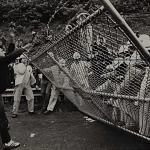
On the Way to a Major People’s Victory (1979)
JUNE 3 IS THE 47TH ANNIVERSARY of the largest protest demonstration ever staged on Long Island, part of an eventually successful 13-year campaign to prevent the completion of what would have been Long Island’s only nuclear-fueled power station.
Opposition to the plant’s construction in Shoreham, New York, had been at a low boil for years, but the meltdown of a nuclear power reactor at Three Mile Island in Pennsylvania two months earlier galvanized the protesters. An unprecedented crowd of more than 15,000 militant environmentalists and anti-nuke activists–more than 600 of whom were arrested–demonstrated that they meant business.
Widespread opposition to the plant was largely inspired by the knowledge that a serious nuclear malfunction would put the safety of hundreds of thousands of Long Island residents at risk, particularly because it was impossible to safely evacuate the area. https://nvdatabase.swarthmore.edu/content/us-anti-nuclear-activists-and-community-members-force-closure-shoreham-nuclear-power-plant-1
An Ideological Earthquake (1956)
JUNE 4 IS THE 70TH ANNIVERSARY of the publication by the U.S. State Department of an English translation of “On the Cult of Personality and Its Consequences,” a speech that had been delivered by Nikita Khrushchev, the leader of the Communist Party of the Soviet Union.
The June publication of the speech was big news because when Khrushchev had first delivered it 14 weeks previously, he had done so during a closed, secret, session of Party’s annual conference in Moscow; in the days following Khrushchev’s presentation, the speech was read to hundreds of meetings of Soviet Communist Party members, but its text was not released, so the exact details of its contents hard to pin down.
Within three weeks of Khrushchev making the speech, the fact that he had done so and a general description of what he had said were available to anyone who sought the information, but the text released by the State Department was the first authoritative version that could be read by anyone who was interested.
The speech contained an enormous amount of information, which would take pages to summarize fairly. Its overarching point was that under Joseph Stalin, the Soviet Communist Party had violated the norms of collective leadership and had come to depend on repression, persecution and falsification instead of principled discussion and democratic decision making.
Eventually, Stalin immeasurably overestimated himself and came to believe he was infallible, which became the justification for major violations of socialist law and grave acts of repression.
The speech was a repudiation of the basis for a great deal that the Communist Party had done over the course of decades, but it was, at the same time, a defense of many other things it had done, and a defense of the party’s leadership that was in place in 1956, three years after Stalin died.
As such, it was an ideological earthquake, which reverberated for years throughout every institution that had any connection to the international communist movement. For a detailed collection of reactions to “On the Cult of Personality and Its Consequences” published in 1956 by communist parties in the U.S., the U.K., France, Italy click here: https://archive.org/details/the-anti-stalin-campaign-and-international-communism/page/n7/mode/2up
The Novelist ‘Who Started the Civil War,’ Sort Of (1851)
JUNE 5 IS THE 175TH ANNIVERSARY of an abolitionist newspaper’s publication of the first chapters of Uncle Tom's Cabin, or Life Among the Lowly, by Harriet Beecher Stowe.
After The National Era serialized the entire anti-slavery novel in 40 installments, it was published as a book that became the 19th century's No. 2 best seller (after the Bible).
Abraham Lincoln is reputed to have said "So this is the little lady who started this great war," when he was introduced to Stowe in 1862. https://newenglandhistoricalsociety.com/harriet-beecher-stowe-little-lady-started-civil-war/
Standing Up for Civil Rights Isn’t Easy (1966)
JUNE 6 IS THE 60TH ANNIVERSARY of an attempt to murder civil rights activist James Meredith, who had just started a planned 3-week march from Memphis, Tennessee, to Jackson, Mississippi.
Meredith, who had once defied a huge racist backlash to become the first African-American enrolled at the University of Mississippi in 1962 (he graduated in 1963), decided to stage what he called the March Against Fear in June 1966. He identified two objectives, “to challenge all-pervasive fear that dominates the day-to-day life of the Negro United States, especially in the South, and particularly in Mississippi;” and to “encourage the 450,000 unregistered Negroes in Mississippi to go to the polls and register.”
As Meredith conceived it, there would be only a handful of marchers, who would walk 220 miles across the Mississippi Delta, where the threat of racist violence prevented most of the area’s Black population from registering to vote.
On June 6, the second day of the march, Meredith and six companions were confronted by a man who stepped out of the underbrush with a shotgun. He fired three times hitting Meredith with about 60 pellets of birdshot. Eyewitnesses to the event report that none of the numerous local and federal police on the scene made any attempt to prevent the shooting, and only arrested the shooter after he surrendered.
Meredith was quickly taken by ambulance to a hospital where surgeons removed the pellets and said his condition was satisfactory. Over the next several days, while Meredith recuperated, the march became a mass event, with scores, then hundreds, and on the last day, some 15,000 participants, including Meredith, who had recovered sufficiently to help lead the group into Jackson. https://calendar.eji.org/racial-injustice/jun/6
Municipal Workers Flex Their Muscles, But It Doesn’t Help (1971)
JUNE 7 IS THE 55TH ANNIVERSARY of an unprecedented, New York-City-wide, day-long traffic jam caused by a municipal worker strike. As dislocating and alarming as the strike had been, it had zero impact on the underlying contract dispute.
The striking workers were members of the Teamsters union, employed by the city as bridge-tenders and truck drivers. The contract dispute concerned a pension increase for them and more than 100,000 other municipal workers. The increase, which had been agreed upon by the union and by the city government, could not go into effect without the approval of the New York State legislature and the governor.
When the legislature turned the pension deal down, the workers had very little recourse but to vent their dismay, which they did on June 7. The bridge-tenders opened the vast majority of the city’s 29 drawbridges, many of which carried arterial traffic, and left them open (and impassable) in ways that made it impossible (or very difficult) for anyone to close them. The truck drivers created vast barricades of stalled trucks on the city’s major thoroughfares and walked away with the keys.
With so many bridges and arterial roads impassable, gridlock set in over a wide area for more than a day. When it became apparent the legislature was not going to budge, the strike was called off. Once the bridges had been returned to normal and the roads cleared, traffic started moving, city-dwellers were left with the memory of how much havoc a relatively small number of workers could create. https://libcom.org/article/new-york-city-municipal-workers-strike-1971-steven-johns
For more People's History, visit
https://www.facebook.com/jonathan.bennett.7771/