
“Forced Labour” Rationale for Trump Tariffs Met With Bewilderment
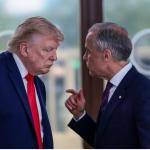
Donald Trump has once again inspired anger and confusion in US allies and trading partners as he imposed a wave of tariffs on more than 80 countries, replacing an expiring global duty introduced earlier this year.
The new measures effectively replace blanket 10% tariffs that Trump imposed in February. The US supreme court ruled many of those were illegal. The new levies come in at between 10% and 12.5% on countries including the UK, Mexico, Canada, Australia, India, China and the 27 countries that make up the EU.
The imposition of the new tariffs led to Asian stock markets taking a hammering overnight.
The Japanese Nikkei 225 fell 3.1%, while the Chinese SSE Composite dropped 1.4%.
Hong Kong’s Hang Seng index was the most heavily hit, down 11.4%, while the South Korean Kospi, which is dominated by its major semiconductor companies, slumped 6.2%.
It was more of a mixed picture in Europe as trading began on Friday, with the Stoxx 600, which tracks the biggest companies on the continent, dropping 0.7% before steadying to a fall of 0.1%.
France’s Cac 40 initially fell almost 1% before moving into positive territory, up 0.12%.
Similarly, Germany’s Dax fell 8% before erasing losses to climb 0.51%.
In the UK the FTSE 100 index rose 0.28% in early trading.
For many officials digesting the news on Friday, the US rationale was hard to swallow.
“You can’t say that for the European Union,” its foreign policy chief, Kaja Kallas, said on the sidelines of the Asean meeting in Manila.
The EU’s chief diplomat Kaja Kallas speaks to reporters in Manila on Friday. Photograph: Eloisa Lopez/Reuters
“If you compare our labour laws to the ones of the United States, I mean, we have paid vacations, we have very good labour conditions for our employees, so it’s not really grounded.”
Kallas said the EU would seek clarification from Washington, adding that the bloc had honoured commitments under a transatlantic trade agreement reached in 2025 and viewed the new tariffs as a shock.
“We had a deal with America, and we have kept to that deal, that side of the deal,” she said. “That’s why this is a negative surprise that this agreement is not kept.”
Australia and Brazil described the new tariffs as unjustified and said they would seek to have them removed. Norway’s foreign minister said there was no basis for the tariff against Norway because the country already had “clear rules that are intended to prevent trade in goods produced using forced labour”.
The Chinese foreign ministry spokesperson Lin Jian said: “We oppose all forms of unilateral tariff measures. Tariff wars and trade wars are not in the interests of any party.”
New Zealand’s prime minister, Christopher Luxon, called them “extremely disappointing” and said the US had not provided “meaningful evidence to support claims in relation to forced labour”.
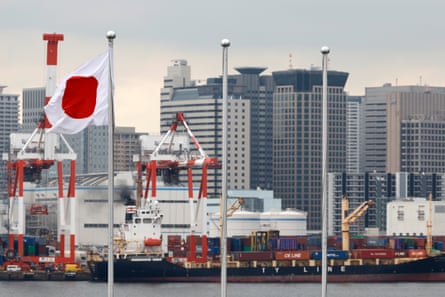
A container ship berths at a port in Tokyo. Photograph: Franck Robichon
On announcing the tariffs on Thursday, the US trade representative, Jamieson Greer, said the US had rigorously policed its own forced labour import ban for almost a century, adding: “It’s well past time for our trading partners to do the same.”
However, critics argued the measure was an effort by the Trump administration to rebuild the president’s tariff wall after the supreme court struck down many of his duties in February.