
This Week in People’s History, Jul 29-Aug 4, 2026
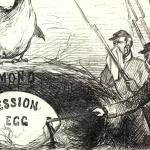
Rebels Aren’t the Noble Warriors They Would Like to Think They Are (1861)
ONE HUNDRED AND SIXTY-FIVE YEARS AGO, ON JULY 29, 1861, Abraham Lincoln signed the law that authorized him to conduct the Civil War: “An Act to provide for the Suppression of Rebellion against and Resistance to the Laws of the United States.”
The act was not a declaration of war because Lincoln and his supporters in Congress were adamant that no state had a constitutional right to unilaterally secede from the Union. Therefore, the rebellious states were rioting and not making war. The Union was doing nothing more than attempting to enforce federal law everywhere it had been enforcing the law before the rebellion began. https://www.govinfo.gov/content/pkg/STATUTE-12/pdf/STATUTE-12-Pg281.pdf#page=1
The Civil War Was Over, but Not the Bloodthirsty Racism (1866)
ONE HUNDRED AND SIXTY YEARS AGO, ON JULY 30, 1866, a mob of white racists in New Orleans, Louisiana, attacked a peaceful and unarmed group of both Whites and Afro-Americans, many of whom were veterans of the Union army, who were demonstrating to demand a state constitutional convention that could eliminate the many Jim Crow provisions of Louisiana’s existing legal framework.
The fighting was instigated by the racists, not merely to frighten the anti-racists but with the explicit objective of murdering as many as possible. Uniformed members of the New Orleans police department helped commit the deadly attack.
According to an official report on the clash, 38 anti-racists were killed, 35 of whom were Black. Unofficial reports put the number of dead at more than 200. For a detailed account of the event and also the very strong and effective reaction in the northern states to the killings in New Orleans, visit https://blackpast.org/african-american-history/new-orleans-massacre-1866/
Take Your Fugitive Slave Law and Shove It! (1836)
ONE HUNDRED AND NINETY YEARS AGO, ON AUGUST 1, 1836, Eliza Small and Polly Ann Bates, two formerly enslaved women from Baltimore, were arrested in Boston and charged with being fugitives who had emancipated themselves in violation of Maryland’s law the made it possible for one person to enslave another.
When a judicial hearing took place on August 1, a large number of abolitionists, both Black and White, attended to monitor the proceeding. The Massachusetts judge ruled that the warrant under which Small and Bates had been arrested was defective, and ordered the pairs’ release, but before they were released, the agent of the Maryland slaveholder who claimed they were his property requested that the judge issue a new, corrected, arrest warrant.
At that moment many members of the courtroom audience rose from their seats, surged forward, and hustled Small and Bates out of the courtroom before anyone was able to stop them. The two immediately boarded a waiting carriage and sped away. They reached Canada, where slavery was no longer legal, before the authorities could apprehend them. For a more detailed account of the rescue of Eliza Small and Polly Ann Bates, visit https://www.zinnedproject.org/news/tdih/formerly-enslaved-eliza-small-and-polly-ann-bates-escape-to-boston/
Killing Anti-Eviction Protesters Isn’t a Good Look (1931)
NINETY-FIVE YEARS AGO, ON AUGUST 3, 1931, police in Chicago were more violent than usual when they killed three Black anti-eviction activists during a very large demonstration of practical eviction-resistance.
The demonstrators, who were shot to death, were part of a crowd of at least a thousand members and supporters of one of the many local Unemployed Councils organized by the Communist Party U.S.A., who were practicing a regular Unemployed Council tactic: picking up the furniture and belongings that had just been dumped on the sidewalk by eviction agents and returning them to the flat where they belonged.
In this particular case, the police violence – which was front-page news coast-to-coast – was particularly unproductive because it focused so much critical attention on the Great Depression’s social-welfare crisis, which was exceptionally intense in Chicago, where unemployment exceeded 40 percent, and where, at that moment in August, no government agency had provided any relief to the increasingly destitute proletariat.
The day after the killings on Dearborn Avenue, Chicago Mayor Anton Cermak ordered a moratorium on court-mandated evictions until further notice. Two days later, Cermak called on the Illinois state legislature to impose a tax on the sale of luxury goods to provide funds that the government could distribute to the hordes of hungry and homeless Depression victims. https://sites.evergreen.edu/ccc/foodhousing/the-chicago-unemployed-movements-protests-for-food-and-housing/
For more People's History, visit
https://www.facebook.com/jonathan.bennett.7771/