
This Week in People’s History, Aug 12–18, 2026
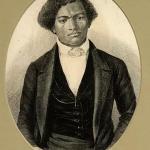
Young Frederick Douglass Shows Off His Silver Tongue (1841)
ONE HUNDRED AND EIGHTY-FIVE YEARS AGO, ON AUGUST 12, 1841, Frederick Douglass began his long career as an eloquent advocate of the abolition of slavery and leader of the struggle for the civil and political rights for all, especially African-Americans and women.
At the time, Douglass was only 23 years old. Fewer than three years had passed since he emancipated himself by escaping enslavement in Maryland. Yet here he was on Nantucket Island, off the coast of mainland Massachusetts, eloquently describing his experience as an enslaved person who had taken the very dangerous step of taking flight from involuntary servitude in Baltimore.
On August 12, 1841, Douglass was speaking to a rapt audience of more than a thousand members and supporters of the Massachusetts Anti-Slavery Society at their annual convention. In the same place, on the previous day, he had, for the first time in his life, spoken to an audience consisting mostly of White people, and he had been very anxious because his experience led him to expect a hostile reception.
He recalled later that he had spoken “reluctantly,” because “I felt myself a slave, and the idea of speaking to white people weighed me down. I spoke but a few moments, [and then] when I felt a degree of freedom, and said what I desired with considerable ease.”
When Douglas sat down after making his remarks, the famous White abolitionist William Lloyd Garrison stood to ask the room, “Have we been listening to a thing, a piece of property, or a man?” The audience heartily responded, “A man! A man!”
On the next day Douglass was asked to speak to the convention again. By then, he was so effective and at ease that he was immediately asked to join the staff of the anti-slavery society as a speaker and organizer, which he did.
For a quarter-century thereafter Douglass devoted his very substantial intellect and energy to bringing about the abolition of slavery by whatever means necessary. After the war, he was a founder of the American Equal Rights Association, the purpose of which was "to secure Equal Rights to all American citizens, especially the right of suffrage, irrespective of race, color or sex.” The struggle was his life’s work, which he continued until his dying day. https://archivesfoundation.org/newsletter/an-orator-for-the-ages-frederick-douglass
The Brownsville Raid: The Story of America's Black Dreyfus Affair
ONE HUNDRED AND TWENTY YEARS AGO, ON AUGUST 13, 1906, a crowd of about 20 men on horseback suddenly rampaged through Brownsville, Texas, for 10 minutes, firing hundreds of shots, more or less at random, killing one bystander and badly wounding another before seeming to vanish into the night as abruptly as they had appeared.
That outburst of shocking violence came to be called “The Brownsville Raid”, which led to an extraordinary case of a mass, racist, miscarriage of justice against 167 men, all troops in the U.S. Army’s 25th Infantry Regiment (Colored).
Two hundred members of the 25th Infantry had been newly stationed at Fort Brown, on the outskirts of Brownsville, in late July 1906. Brownsville being a thoroughly Jim Crow town, the 25th Infantry troops had little reason to leave the fort, and no opportunity to do so armed with their service rifles and pistols, all of which were locked in the fort’s armory, along with all of their ammunition. Nor did any of them, as infantrymen, have access to horses.
Nevertheless, some Brownsville citizens who had seen (or claimed to have seen) the rampage, said they were sure that the culprits were the newly arrived Black troops. There was no physical evidence to confirm that the troops had anything to do with the so-called raid, and there was the clear testimony of the 25th Infantry’s White officers that all the suspect troops had been within the Fort’s confines at the time of the violence, and that the infantry’s weapons and ammunition had been locked away at the time.
But the hue and cry from Brownsville’s White citizens reached the White House, where President Theodore Roosevelt ordered an Army Inspector General to go to the far south of Texas and do his duty.
The I.G. and his staff heard the clear but inexplicably contradictory testimony of the townspeople and the 25th Infantry’s officers. Their interviews with the troops themselves puzzled the investigators no end.
All the Buffalo Soldiers insisted they had been in camp at the time of the rampage, doing what soldiers do when they are off-duty and in camp. Nothing remarkable. The I.G. decided he must have been targeted by a GI conspiracy of silence, and reported as much to POTUS Roosevelt.
On the basis of that “information,” Roosevelt ordered that 167 of the 25th’s enlisted men immediately receive dishonorable discharges, leaving them with no pensions, no veterans’ benefits, and the equivalent of a scarlet letter on their resumes, which made them close to being unemployable.
Roosevelt also ordered a court-martial for the 25th Regiment’s responsible officer (a major) on the charge of "neglect of duty, to the prejudice of good order and military discipline". The court-martial acquitted the major, because there was neither testimony nor evidence that he. nor any of the men under his command, had done the slightest thing wrong.
But there was no hearing, and no appeal, available for the 167 who were arbitrarily discharged without honor by Teddy Roosevelt’s order.
The story of the 25th regiment’s sacrifice only came to light 65 years later in 1971, when W. W. Norton published investigative reporter John D. Weaver’s The Brownsville Raid: The Story of America's Black Dreyfus Affair. The evidence martialed by Weaver shamed the Army brass into reopening the case, and concluding, in October 1972, that the 167 were victims of a miscarriage of justice.
The saddest thing, perhaps, was that only one of the 167 was still alive in 1972.Dorsie W. Willis, had, thanks to his dishonorable discharge, spent most of his adult life shining shoes and sweeping floors. When the 87-year-old Willis was asked about what happened to him, he explained, “None of us said anything, ‘cause we didn't have anything to say. It was a frameup straight through. They checked our rifles, and they hadn't been fired. And we was infantry. We never had any horses to ride.”
The entire episode is far worse than the Dreyfus Affair, because of its magnitude, its duration, and its lack of an Emile Zola to bring it home.
U.S. Jets, U.S. Bombs, but No U.S. Consequences (2016)
TEN YEARS AGO, ON AUGUST 15, 2016, a jet fighter-bomber attacked a civilian hospital in Abs, Yemen. The hospital was operated jointly by Yemen’s Ministry of Health, Doctors Without Borders, and UNICEF.
The explosions killed at least 19 people and wounded at least 24, all of them civilians. The bomber and the payload that destroyed the hospital were both manufactured in the U.S. and sold to the Royal Saudi Air Force by the U.S. government.
It was not by any means the first, nor the last attack by the Royal Saudi Air Force on a purely civilian target in Yemen.
Soon afterwards, United Nations secretary general Ban Ki-moon condemned the attack. https://www.hrw.org/news/2016/08/18/congress-needs-press-pentagon-saudi-arabia-abuses-yemen-war
Oh! What a Lovely War, for ‘Our’ Side (1846)
ONE HUNDRED AND EIGHTY YEARS AGO, ON AUGUST 18, 1846, about three months after the U.S. attack on Mexico that began the Mexican-American War, the U.S. Army took control of what is now New Mexico without firing a shot.
When the Mexican authorities saw that the invading U.S. force was too large and heavily armed to be resisted, they fled south to central Mexico without attempting any resistance. The U.S. takeover of New Mexico was perhaps the least bloody episode in the 21-month-long war, during which U.S. troops killed at least nine thousand Mexicans, including at least four thousand civilians, compared to about 1,750 U.S. fatalities.
For a critical analysis of the reasons for, and results of the Mexican-American War, visit https://www.truthdig.com/articles/american-history-for-truthdiggers-the-fraudulent-mexican-american-war-1846-48/
For more People's History, visit
https://www.facebook.com/jonathan.bennett.7771/