
America’s Most Divisive Historian Gets a New Biography
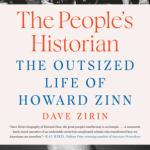
The People's Historian: The Outsized Life of Howard Zinn
Dave Zirin
Penguin Publishing Group
ISBN-13: 9780593473658
Few, if any, American historians have been more celebrated and reviled than Howard Zinn (1922-2010). His “A People’s History of the United States” is praised in the Oscar-winning movie “Good Will Hunting” and featured in episodes of both “The Sopranos” and “The Simpsons.” Officials in two states tried to ban the book. Donald Trump has attacked “propaganda tracts, like those of Howard Zinn.” The right-wing firebrand David Horowitz compared “A People’s History” to “Mein Kampf.” The books about Zinn range from the journalist Dave Zirin’s admiring new biography, “The People’s Historian,” to bitter attacks (“Debunking Howard Zinn”) and an attack on the attackers (“Zinnophobia”).
There are good reasons Zinn’s “A People’s History” has sold more than four million copies since it was first published in 1980. It introduced readers to figures like the socialist activist and presidential candidate Eugene Debs, the labor organizer Big Bill Haywood, the anarchist Emma Goldman, the abolitionist Frederick Douglass and the slave revolt leader Nat Turner who were mentioned only briefly or not at all in the ponderously upbeat textbooks of half a century ago.
The book sees Columbus’s arrival through the eyes of the Arawak Indians. It attacks Columbus’s biographer Samuel Eliot Morison for emphasizing the explorer’s devout faith and skipping quickly over his massacres. It sharply questions whether World War II was entirely a “good war,” given Allied bombings of civilians, a Jim Crow U.S. military, American support for restoring the British and French colonial empires, and more.
“A People’s History” has been criticized, in part correctly, for many things, including not keeping up with new scholarship, idealizing Native Americans, seeing Christianity mainly as a tool of conquest, being too tough on Abraham Lincoln and, more generally, for viewing all of U.S. history as struggles between oppressors and oppressed.
Zinn cites Albert Camus to the effect that in a world of victims and executioners one must choose sides. True, but most people and groups don’t fit neatly into one of those categories. Nonetheless, “A People’s History” has left its mark for the better on many an American textbook written since.
In “The People’s Historian,” Zirin, who knew and worked with Zinn in his last years, does a lively job of portraying the historian’s deeply engaged life. Zinn’s politics came not from books — there were none in his immigrant parents’ cold-water tenement flat — but from his life.
He was born into the now shrinking Jewish working class. At 18, he became a union laborer in a Brooklyn shipyard. He saw combat as a bombardier in World War II, and went to college on the G.I. Bill, loading trucks at night. After completing graduate school at Columbia, he received a single job offer, from Spelman College, for Black women, in Atlanta. It was 1956, the civil rights movement was underway, and from that point on he would mix teaching and writing with activism.
Zinn was arrested many times, at both civil rights protests and demonstrations against the Vietnam War. He helped plan the curriculum for the Freedom Schools that friends of his in the civil rights movement set up in Mississippi in 1964 and taught at the schools and in prisons. He helped the fugitive antiwar priest Daniel Berrigan find a hiding place. He and his wife stashed in their home some of the Pentagon Papers secretly copied by their friend Daniel Ellsberg before Ellsberg made them public.
Moreover, Zinn was forced out of Spelman, which wanted to produce well-mannered, closely chaperoned middle-class women, not the future civil rights activists Zinn mentored — who included Alice Walker and Marian Wright Edelman. At Boston University, where he later taught for more than 20 years, he clashed with the conservative president, John Silber, who was horrified that this outspoken radical had somehow gotten tenure on his faculty.
Zirin’s book evokes these battles well but falls short of being a judicious assessment of his subject. In Zirin’s eyes, Zinn was always right, and he energetically rebuts fellow historians on both the right and left who criticized his work. The biography also tends toward clichés and overstatements. Zinn’s bomber crew had to “wake up before the crack of dawn” and in his late 80s, Zinn was still — Zirin uses the phrase three times — “sharp as a tack.” And can it really be said that Boston in the 1970s “reeked of provincialism and prejudice”?
Whatever Zinn’s shortcomings, he had an enormous positive impact on his readers — and in an age when there are ever fewer serious readers. He and his collaborators found creative ways to spread their message, including in an anthology of voices from American history’s underdogs, and in a widely seen play and film based on that material.
The immense popularity of “A People’s History” revealed an embarrassing vacuum in the way American history has long been taught — something that will still be worth pondering and repairing long after the fractious commemoration of our 250th birthday is behind us.
Adam Hochschild’s most recent book is “American Midnight: The Great War, a Violent Peace, and Democracy’s Forgotten Crisis.”