
This Week in People’s History, Aug 26-Sep 1, 2026
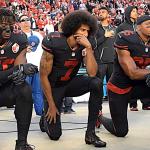
Kaepernick Can’t be Cancelled (2016 and 2026)
TEN YEARS AGO, ON AUGUST 26, 2016, Colin Kaepernick, a quarterback on the San Francisco 49ers football team, made a silent protest when he sat down while “The Star-Spangled Banner” was being played before the game. It was not the first time he had made a similar protest, but was the first time he did so when he was in uniform, so no one had mentioned noticing his earlier actions.
On this occasion, when a reporter asked Kaepernick about it, he replied: “I am not going to stand up to show pride in a flag for a country that oppresses Black people and people of color. To me, this is bigger than football and it would be selfish on my part to look the other way. There are bodies in the street and people getting paid leave and getting away with murder.”
That was the beginning of Kaepernick’s decade-long struggle to be both an outspoken anti-racist and a successful professional athlete; he has never stopped being an anti-racist, but the National Football League has sabotaged his professional athletic career by refusing to hire him, not because of a lack of athletic talent, but apparefntly because the owners of NFL teams refuse to employ players who are outspoken anti-racists.
When it became clear that the NFL team owners had blacklisted him, Kaepernick filed a grievance stating the owners "have colluded to deprive Mr. Kaepernick of employment rights in retaliation for Mr. Kaepernick's leadership and advocacy for equality and social justice and his bringing awareness to peculiar institutions still undermining racial equality in the United States." Under the NFL contract, grievances are resolved by arbitration, but before the arbitration took place, the owners and Kaepernick reached a confidential settlement, the details of which remain secret.
In less than a month from now, on September 15, 2026, Kaepernick’s memoir of his struggle, The Perilous Fight will be published by Legacy Lit. According to the publisher, The Perilous Fight is “equal parts memoir and manifesto, [which] traces the off-the-field battles that turned a single act of protest into a movement that changed American sports and culture forever.” https://portside.org/2016-08-30/insulting-colin-kaepernick-says-more-about-our-patriotism-his
You Don’t Need Official Permission to Adjudicate Crimes Against Humanity (1966)
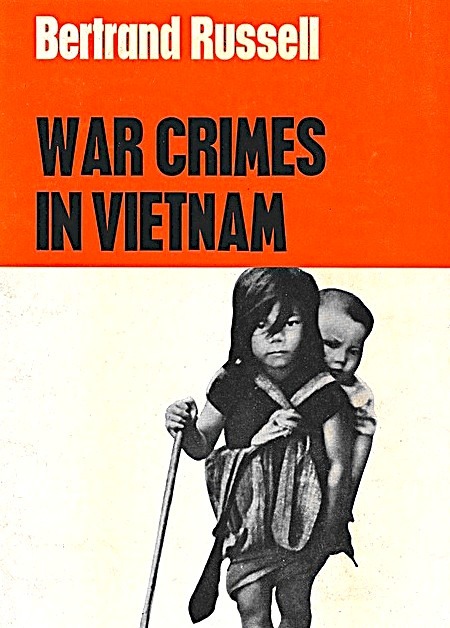
SIXTY YEARS AGO, ON AUGUST 28, 1966, the U.S. war against Vietnam was growing bigger and bloodier every day.
On that day, more than 250,000 U.S. troops were stationed in South Vietnam; for more than four years U.S. forces had sprayed massive amounts of Agent Orange defoliant on the forests and farmland of Vietnam; for more than 17 months the U.S. had bombed both civilian and military targets in northern Vietnam.
Hundreds of thousands of people in cities and towns all over both the U.S. and Europe had participated in massive, peaceful, demonstrations against the war; on that day Nobel-prize-winning philosopher Bertrand Russell joined the protests by asking President Lyndon Johnson to testify in his own defense before an International War Crimes Tribunal in order to rebut the charge that the U.S. was committing war crimes.
Russell wrote that “Within living memory only the Nazis could be said to have exceeded in brutality the war waged by your Administration against the people of Vietnam, and it is because this war is loathed and condemned by the vast majority of mankind that demands are heard throughout the world for a formal international tribunal to hear the full evidence."
LBJ ignored Russell’s letter, but after the Tribunal heard the testimony of more than 35 witnesses, on May 10, 1967, its 16 members unanimously found that the U.S. had violated international law by committing acts of aggression against Vietnam, and by bombarding purely civilian targets such as hospitals, schools, medical establishments and dams, and that the governments of Australia, New Zealand and South Korea were accomplices in the illegal aggression against Vietnam. For more information, see Against the Crime of Silence: Proceedings of the Russell International War Crimes Tribunal at https://archive.org/details/againstcrimeofsi0000unse
You Can Trust Us, We’re Landlords (1966)
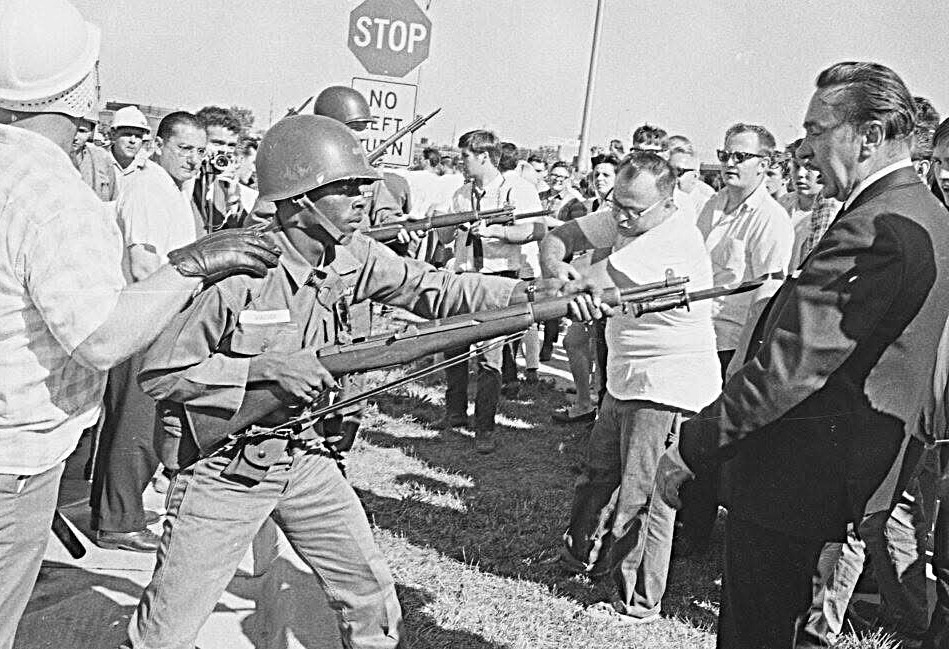
SIXTY YEARS AGO, ON AUGUST 29, 1966, a possible showdown loomed in Chicago between two groups of civil rights advocates, some of whom were committed entirely to non-violent tactics and others of whom advocated the right to defend themselves when violently attacked.
A march had been planned demanding an end to the housing policies that prevented any people of color from living in Cicero, a suburb that shared a border with Chicago. But then some of the planners called the march off because they had reached an agreement with Cicero authorities on a way to end the suburb’s total ban on Black residents.
The cancellation of the march was opposed by the more militant open-housing advocates, who argued that it was impossible to gauge the good faith of Cicero landlords before the agreement had even gone into effect. If the landlords and Cicero officials were sincere in agreeing to relax the color line, surely they had no reason to object to a demonstration in support of what they had agreed to.
The more militant of the civil rights supporters, which included the Chicago chapter of the Congress of Racial Equality (CORE), the Association of Community Teams, the Student Nonviolent Coordinating Committee, the Oakland Committee for Community Improvement, and Deacons for Defense and Justice, announced they planned to march through Cicero on Sunday, September 4.
The next edition of This Week in People’s History will include a complete description of what happened in Cicero, Illinois, on September 4, 1966.
Dying in the Desert? Don’t Expect any Help from ICE (2006)
TWENTY YEARS AGO, ON SEPTEMBER 1, 2006, before the Homeland Security mafia had taken over, a federal judge in Tucson, Arizona, told the Border Patrol it should never have arrested two humanitarian aid workers on charges of conspiracy and human smuggling when the two had been, in fact, rushing three desert travelers, who were strangers to the aid workers, to a clinic for treatment of multiple life-threatening conditions.
The two aid workers were facing the possibility of 15 years in prison and a $500,000 fine when the judge dismissed their indictments.
The two aid workers, Shanti Sellz and Daniel Strauss, were volunteering with southern Arizona-based non-profit organization No More Deaths, a ministry of the Unitarian Universalist Church of Tucson, which focuses on reducing the number of fatalities from dehydration and heat stroke that occur every year among unprepared travelers in the Sonora Desert.
On the day when Seliz and Strauss were arrested in July 2005, they had come upon three individuals who were in imminent danger of dying from heat-related illnesses. Seliz and Strauss were following a protocol the No More Deaths had used for years, of which the Border Patrol was fully aware. Under the protocol, if the life of anyone in the desert was in danger, giving them transportation to a medical facility was viewed as a humanitarian necessity, regardless of the individual’s immigration status.
Fortunately, the judge in the case agreed with two arguments put forward by the defense: (1) The defendants were following a medical emergency protocol that No More Deaths had previously established and shared directly with the Border Patrol to ensure legal compliance, and (2) because the organization had openly practiced this medical transport protocol for years without prior legal interference or warning, the prosecution was a violation of the defendants' due process rights.
Six months after the charges against Seliz and Strauss were dismissed, the Rothko Chapel in Houston honored them with the Oscar Romero Human Rights Award. https://scholarship.law.unc.edu/cgi/viewcontent.cgi?article=1036&context=nccvlrts
For more People's History, visit
https://www.facebook.com/jonathan.bennett.7771/