
Mark Ruffalo Is Right: Calling Out Power Doesn’t Make You an Antisemite
The accusation arrived with remarkable speed.
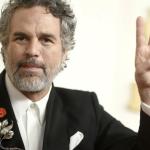
It all started when actor Mark Ruffalo criticized the proposed merger of Paramount Skydance and Warner Bros. Discovery. He warned that the merger would concentrate extraordinary economic, cultural and political power in the hands of the Ellison family. Paramount responded by accusing him of invoking "antisemitic tropes" for mentioning that Oracle, co-founded by Larry Ellison, was connected to the Israeli military.
Then came an open letter from The Brigade, an invitation-only network of entertainment and media leaders that says it exists to elevate Jewish voices and counter antisemitism. The letter accused Ruffalo of "singling out Jewish executives" and invoking "centuries-old antisemitic conspiracy theories."
We should take accusations of antisemitism seriously. But the Ellisons are not being criticized because they are Jewish, but because of their attempt to acquire one of the largest media companies in the world, putting enormous cultural and informational power under the control of a single family.
The merger would combine Paramount's CBS and CBS News with Warner Bros. Discovery's CNN, among other major assets. Critics, including members of Congress, have warned that it would reduce competition and concentrate too much power in the hands of one family.
The Oracle connection is not incidental: David Ellison's father, Larry Ellison, co-founded Oracle and has pledged billions of his personal wealth, including Oracle holdings, to fund the Warner Brothers aqcuisition. Meanwhile, Safra Catz, Oracle's former CEO and a Paramount board member, has publicly discussed Oracle's support for Israel and its military. Ruffalo was naming an existing relationship, not inventing one.
The Center for American Progress, the American Economic Liberties Project and the Democracy Defenders Fund have warned that the merger could put CBS News and CNN under owners willing to suppress critical reporting, while concentrating two major news organizations under one corporate roof could further erode democratic safeguards. There is also an antitrust lawsuit, filed by the attorneys general of a dozen U.S. states. Their argument is that the merger would reduce competition and harm audiences.
Academy Award-winning documentary director David Borenstein has also spoken out against the merger, warning that less competition means fewer places for filmmakers to sell their work and less incentive to take risks.
The concern is not only economic. David Ellison is a major Hollywood executive; his father is one of the world's richest people and a major political donor. The family's ties to Donald Trump have attracted scrutiny as the merger moves forward.
There is, however, a crucial line to draw. It is antisemitic to connect Jews to Israel simply because they are Jewish, or to treat Israel as a surrogate for Jews. But when people publicly make their relationship to Israel part of their business, political or philanthropic lives, naming that connection is not antisemitic.
Many American Jews have deep ties to Israel. That reality should not become taboo to discuss simply because the people involved are Jewish. In this case, the connection between the Ellisons, Oracle, Israel and the Israeli military is part of the public record and part of the substance of the criticism. Naming it is not an antisemitic trope.
The Nexus Project, an American organization devoted to combating antisemitism while protecting liberal democracy, makes the distinction explicitly: criticism of Israeli government policy, even harsh criticism, is not necessarily antisemitic. Using accusations of antisemitism to suppress legitimate criticism can itself undermine meaningful debate.
That distinction is especially important when it comes to Ruffalo's description of the catastrophe in Gaza as "genocide." The term is fiercely contested, but it is also used by Israeli human-rights organizations and genocide and Holocaust scholars. One can strongly disagree with the characterization. But disagreement over that characterization is not, in itself, evidence of antisemitism.
This brings us to the central problem. Ruffalo's accusers posit a simple formula: if you mention a Jewish person alongside criticism of Israel, that's automatically antisemitism. But this formula makes meaningful criticism of powerful Jewish people nearly impossible whenever Israel enters the conversation. It also flattens the distinction between attacking Jews because they are Jews and holding particular people accountable for particular actions.
American democracy is experiencing an extraordinary concentration of wealth, political influence and media ownership. The people acquiring our news organizations should be scrutinized for what they do, not protected from scrutiny because of their religious identity. Jewish Americans should not have to choose between being protected from antisemitism and being treated like everyone else.
We should be able to say, simultaneously: antisemitism is real; Jewish people should not be targeted because they are Jewish; Israel is not synonymous with Jews; and Jewish executives, billionaires and political actors are not exempt from criticism because they are Jewish. Indeed, insisting on that last point is not an attack on Jews. It is an affirmation of Jewish equality.
The question before America is not whether David Ellison is Jewish. It is whether any one family should acquire this much control over American culture, entertainment and news. That question would be no less urgent if the owners were Christian, Muslim, Hindu, atheist or anything else.
If we care about fighting antisemitism, we should fight the real thing. If we care about democracy, we should defend the right to scrutinize power. And we should not confuse the two.
[Libby Lenkinski is founder of Albi, an organization promoting culture for change.]