
A Nation Divided on Sentencing Reform
Across the country, 2026 is shaping up to be a defining year for sentencing reform, but not in the way many advocates had hoped.
This is not a moment of steady progress. It is a moment of divergence.
In some states, policymakers are advancing reforms grounded in evidence, second chances, and a more complete understanding of public safety. In others, leaders are doubling down on rigid sentencing structures that prioritize punishment over fairness, even when decades of research show those approaches do little to make communities safer.
The question facing the country is no longer whether reform is possible. It is whether policymakers are willing to follow the data or retreat from it.
Where Progress Is Moving Forward
In states like Maryland, Michigan, Washington, New Jersey, and New York, momentum is building behind policies that allow courts to revisit long sentences, expand parole eligibility, and strengthen pathways to second chances.
In Maryland, lawmakers advanced a broader set of reforms this session spanning youth justice, sentencing review, and civic reintegration. The Youth Charging Reform Act limits the automatic prosecution of young people as adults, addressing long-standing racial disparities in the youth system. Lawmakers also strengthened implementation of the Maryland Second Look Act to expand access to sentence review for some individuals convicted as young adults, and passed automatic voter registration for people returning from incarceration. Taken together, these measures reflect an emerging consensus that rehabilitation, youth development, and community reintegration are central to public safety.
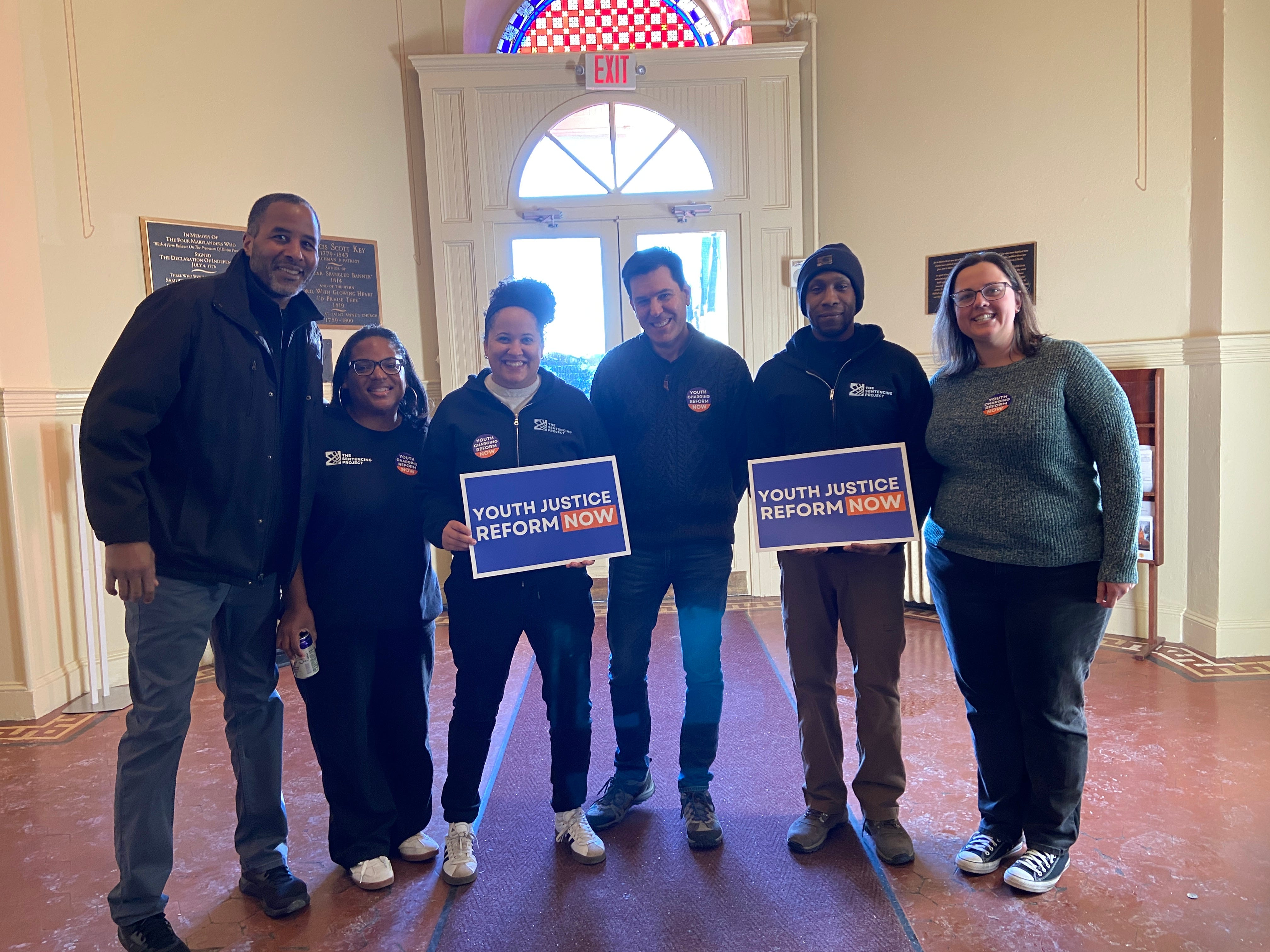
The Sentencing Project staff at Youth Justice Lobby Day in Annapolis, Maryland
These reforms are grounded in a growing body of evidence around the inefficacy of extremely long sentences, according to recent research from The Sentencing Project. People who have served long sentences, especially those over 50, pose minimal risk to public safety, and recidivism rates decline sharply with age and time served. The reforms also reflect a broader understanding of justice, one that recognizes rehabilitation, accountability, and the role of trauma and victimization.
Just as importantly, successful reform states have invested in narrative change before legislation is introduced. Advocates have paired data with stories of transformation, elevated survivor voices that prioritize prevention and healing, and built broad coalitions capable of sustaining reform efforts over time.
Long-term investment in education, coalition-building, and public engagement helps create the conditions necessary for reform to move.
Where States Are Backsliding
But this is only half the story.
In states like Georgia, Alabama, Iowa, and Missouri, lawmakers are advancing proposals that move in the opposite direction, including efforts to expand mandatory minimums, eliminate parole eligibility, and lengthen already excessive prison terms. In Virginia, reform efforts have stalled under similar political pressures and public safety narratives.
What is driving this divide is not simply policy disagreement. It is a narrative rooted in fear and an unhealthy attachment to punishment.
Where reform has stalled, a different narrative dominates. It equates safety with punitive measures, amplifies fear, and treats severity as the only form of accountability. In those environments, even evidence-based policies struggle to gain traction. These approaches also continue to disproportionately harm Black communities, which remain significantly overrepresented in prison populations across many of the states advancing or defending the harshest sentencing policies.
Fortunately, in Georgia, advocates successfully opposed legislation that would have expanded mandatory minimums and eliminated parole eligibility across a wide range of cases. In Delaware, advocates defeated efforts to restrict compassionate release for elderly and medically vulnerable people. These victories reflect a growing recognition that public safety is undermined, not strengthened, by policies that ignore rehabilitation and human capacity for change.
Where Reform Efforts Are Stalling
Even where reforms are enacted, another challenge remains: implementation.
Too often, access to relief is constrained by procedural barriers, lack of legal representation, and inconsistent application of the law. The result is a persistent gap between what reforms promise on paper and what people actually experience in practice.
This implementation gap risks undermining public confidence in reform itself. Laws designed to create meaningful release and second chances cannot succeed if the systems responsible for carrying them out continue to operate according to outdated punitive assumptions.
In Maryland, for example, implementation of the new parole law has been slowed by delays in developing the necessary regulations and by gaps in the reentry infrastructure. As a result, many individuals serving long sentences have not yet fully benefited from the law’s expanded opportunities for release. For those granted medical parole, securing appropriate post-release placement remains a significant barrier to realizing the law’s intended impact. Maryland’s experience underscores an important lesson for other states pursuing parole and long-sentencing reforms, legislative change must be accompanied by adequate implementation and reentry resources to achieve its intended outcomes.
The Defining Question for 2027
If 2026 has made anything unmistakably clear, it is that sentencing reform in the United States is no longer moving along a single trajectory. The country is being pulled in two different directions.
One vision, guided by evidence and human dignity, recognizes that accountability and rehabilitation are both essential to community safety. The other, driven by fear and partisanship, continues to cling to the idea that more punishment equals more safety despite overwhelming evidence to the contrary.
The states making real progress have demonstrated what is possible when policy is grounded in research and shaped by people directly impacted by the system. They have shown that accountability and rehabilitation are not competing values, but complementary ones, and that communities are stronger when the justice system recognizes the human capacity for growth and change.
The path forward is clear. Policymakers must close the gap between reform and implementation, invest in public understanding before fear-based narratives take hold, and reject policies that trade long-term safety for short-term political gain.
At a moment when punitive policies are resurging in many states, preserving existing reforms and preventing harmful rollbacks is itself an important measure of progress.
But meaningful progress will not happen automatically in 2027. It will require lawmakers, advocates, directly impacted leaders, survivors, and community organizations to work together now to build durable reform strategies rooted in evidence and public education.
The Sentencing Project stands ready to support state leaders and advocacy partners working to advance evidence-based sentencing reform, expand second chances, and promote policies that strengthen both accountability and community safety. As states prepare for the next legislative cycle, the opportunity remains open to build systems that reflect what decades of evidence already show: people are capable of change, and communities are safer when justice systems recognize that truth.
Sentencing reform has always been a question of values. In 2026, the choice is clear: whether policymakers will follow evidence, invest in safety strategies that work, and recognize the human capacity for change, or continue repeating punitive approaches that history and research have already shown to fail.
Keith Wallington is a Senior Campaign Strategist at The Sentencing Project. His work centers on advancing policies to abolish life without parole, expand second-look sentencing reviews, cap excessive sentences at 20 years, and eliminate mandatory minimums.