
Tidbits-Sept. 17: Reader Comments: Supremes Rebuff Trump on Mail Voting; What Kind of Candidates Dems Run in Future; Reader Offers Advice to Rural Alaska Minimum Wage Fight; Resource for Fair, Free Elections; Special Event in Honor of the UN Charter
-
Justice -- Cartoon by Clay Bennett
-
Re: How Status Quo Democrats Could Create Another Trump (Bernard Moore)
-
Evolution of the Republican Party -- Meme
-
Bad Bot -- Cartoon by Steve Sack
-
Re: Trump Took Control of Another Country’s Oil Fortune. Where the Hell Is the Money? (Velva Spriggs)
-
Vote Republican to Stop Socialism -- Meme (Occupy Democrats)
-
Re: The Teenage Girls Behind a $25 Minimum Wage Fight in Rural Alaska (Buzz Davis; Chabeli Carrazana)
Resources:
-
Hold the Line is a practical guide for everyday people to ensure our elections are free, fair, respected, and safe.
-
The American Crisis - Responding to times that try our souls
Announcements:
-
"We Shall Not Be Moved" - A Special Event in Honor of the UN Charter - New York - September 21 (The Government of South Africa)
-
Webinar: Who Owns Appalachia? Property, Extraction, and Land Liberation - September 30 (Natural History from the Other Side, a virtual programming series organized by Red Natural History Fellows with The Natural History Museum)
.
.
Justice -- Cartoon by Clay Bennett
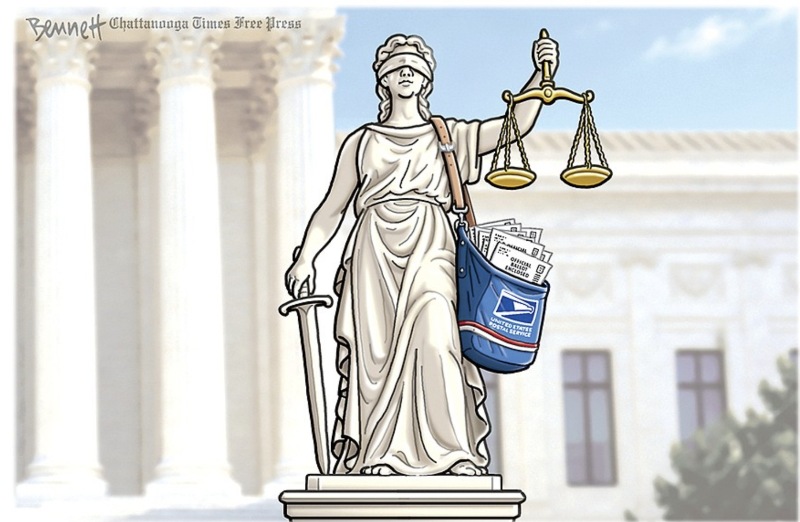
Clay Bennett
September 16, 2026
Chattanooga Times Free Press
Re: How Status Quo Democrats Could Create Another Trump
We need an all hands on deck united front to smash the right-wing extremists and upend authoritarians in power. We must also strive to transform this broken, rigged system. Let's not act as if Trump and his movement is an anomaly when it is a predicable result of both parties putting corporations and the wealthy elite above the people.
"...the Democratic Doom Loop — a party that overpromises when it is out of power, then underdelivers (for everyone other than its donors) when it is in power — prompting voters to then angrily vote for a GOP that promises to destroy the whole system."
Bernard Moore
Post on Facebook
Evolution of the Republican Party -- Meme
This is progress?

Bad Bot -- Cartoon by Steve Sack
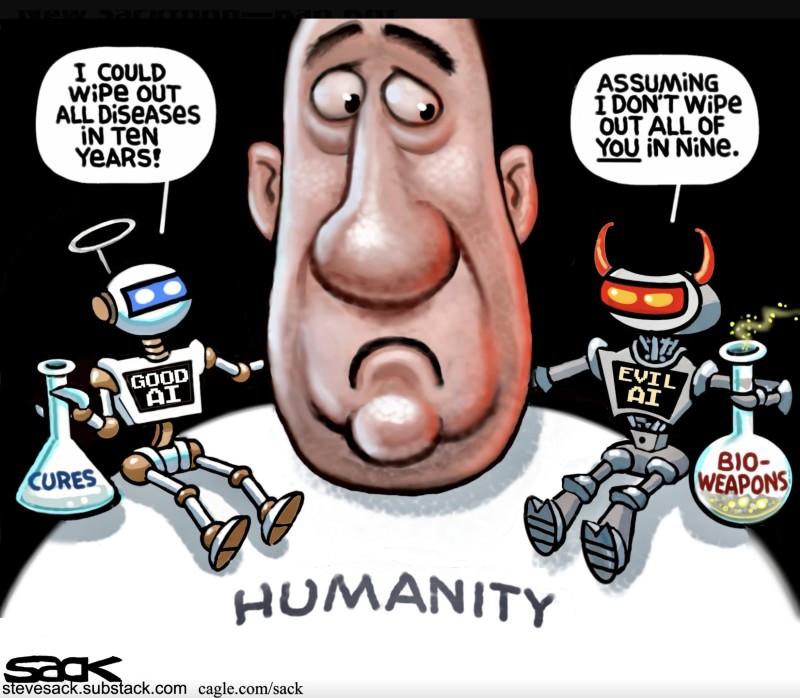
Hang on...it’s gonna get bumpy…
Steve Sack
September 15, 2026
The Art of Sack
Re: Trump Took Control of Another Country’s Oil Fortune. Where the Hell Is the Money?
Where is the oil?
Velva Spriggs
Vote Republican to Stop Socialism -- Meme
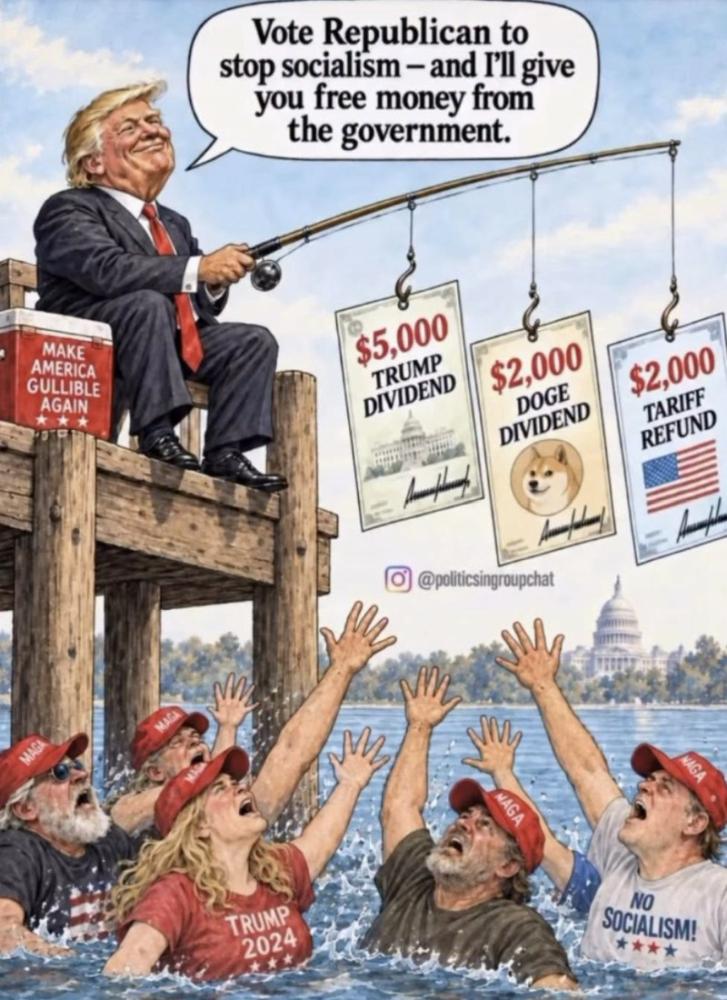
Somehow, his gullible cult STILL continues to fall for his snake-oil promises…
Occupy Democrats
September 13, 2026
Occupy Democrats
Re: The Teenage Girls Behind a $25 Minimum Wage Fight in Rural Alaska
Hello! Would you pls. forward this message to reporter Carrazana? And let me know you have done so.
Thank you!
Hello Chabeli! This is Buzz Davis from Tucson, AZ an old organizer.
During the early 2000's in Dane Co. WI which is the county that the capitol Madison is in, a group of anti war folks,
conducted referendum petition drives in a good number of cities and counties.
In some cities after the referendum wording was approved by the clerk of the city or village or county, we would then try to gather more than the required number of signatures.
But a good number of times we finished the time period and did not have enough signatures. Or we were nearly finished and realized we were not going to have time and effort to get all the signatures needed.
HERE IS WHAT WE DID. We would ask the clerk to put the referendum issue on the city, village or county agenda. If we failed to get the min. number, we would ask that the governing body (city council, village board, co. board) would use their own authority to put the refer. question on the ballot.
My memory is we were always successful in getting them to put the ref. on the ballot the next time people voted.
There will be some one on the governing body who is against the issue and thus argues that this is a nation or state question not a community issue. Another will say it is a valid issue and they collect X% of the signatures required so that shows many people think it is important so I an in flavor of placing the refer. on the next ballot. The clerk usually has to explain to the board that yes the ordinances or state law allows the governing body the power to place refer. questions on the ballot.
Now for the public comment period have the young circulators speak and some business owners, and so old folks.
If an old person says I have my family and my grand children and I can hardly ever see them because our young people always have to leave the area or the state to get good paying jobs. We think young people should be able to stay and live in the community they were raised in if they wish BUT they certainly should not have to live in poverty just because they choose Nome to live in.
Also before the week of the meeting with the refer. issue on the agenda, the young people and older people could write letters to the newspaper about the need for higher wages is, want their kids to be near them, etc. etc. etc.
With luck and a bit of talking to the elected officials on the council or board ahead of time the youth will probably be successful.
Then a group of people need to organize a Vote Yes campaign with town halls with speakers on how raising the min. wage impacts a community, etc. and also you can register here tonight to be able to vote if you never have, etc.
Thank you for the efforts and I say bravo to the women for doing this effort!!!
Peace! Buzz
=====
This is fantastic, Buzz, thank you for sending this over. I'll forward it to the students.
All my best!
Chabeli
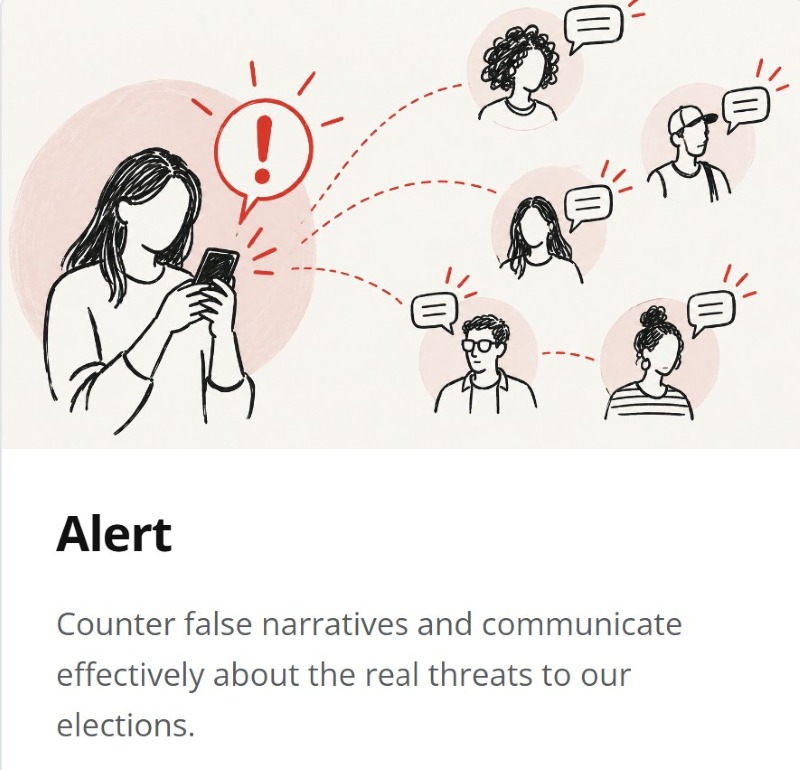
We Have Power Together
Our freedom to vote and our elections are under attack. Each of us must play a role in pushing back.
Hold the Line is a practical guide for everyday people to ensure our elections are free, fair, respected, and safe.
Whether you are a political newcomer, an experienced community advocate, or anywhere in between, the goal of Hold the Line is to help you and members of your community take action to ensure a successful election in 2026, and beyond.
The Problem
There comes a time when people from all walks of life must join together and stand united to protect their country, and then build a better future.
Now is such a time.
The stakes of this moment are clear. In the 2026 midterm elections, our freedom to vote, have our votes be counted, and have the results respected are all under threat. There are four red lines we are watching for:
- •Red Line 1: Voter disenfranchisement
- •Red Line 2: Election betrayal and disinformation
- •Red Line 3: Refusal to accept the valid results of the elections
- •Red Line 4: Incitement or enactment of political violence or political persecution related to the election
Read the guide to learn more about these threats to our election >>
Hold the Line was started in 2020 by Hardy Merriman, Ankur Asthana, Marium Navid, and Kifah Shah. Work on the 2020 guide was conducted in independent capacities. In 2026, Maxwell Love joined the team as Project Director.
Sign up and let us know how you want to plug in—we'll get you connected right away.
The American Crisis - Responding to times that try our souls
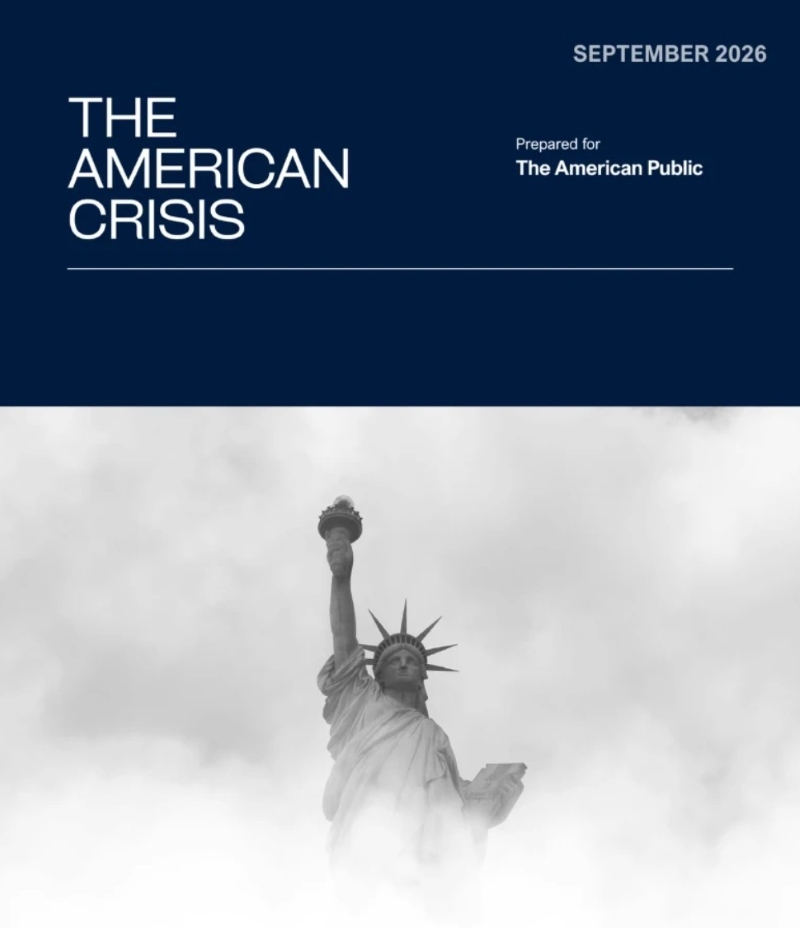
The American Crisis report is addressed to the great majority of people working and living in the United States and to community leaders and public servants. The goal of this report is to provide a timely and actionable resource to protect democratic processes and respond to the system failures of our time.
To our fellow Americans: This is not the time to look away. More than ever we need the kind of courage that history books heroize. We implore you to step forward and face the crisis.
READ THE REPORT - Click here for PDF

The Government of South Africa is honored to present an updated program for "We Shall Not Be Moved," a special celebration of the UN Charter to inaugurate High-Level Week of the 81st UN General Assembly.
- Opening remarks by renowned Professor David Harvey
- Discussion with the brilliant Mahmoud Khalil and the fearless Aber Kawas, NYC-DSA's candidate for NY Senate.
- Remarks by South Africa's Foreign Minister Ronald Lamola
- Keynote speech from Senator Bernie Sanders
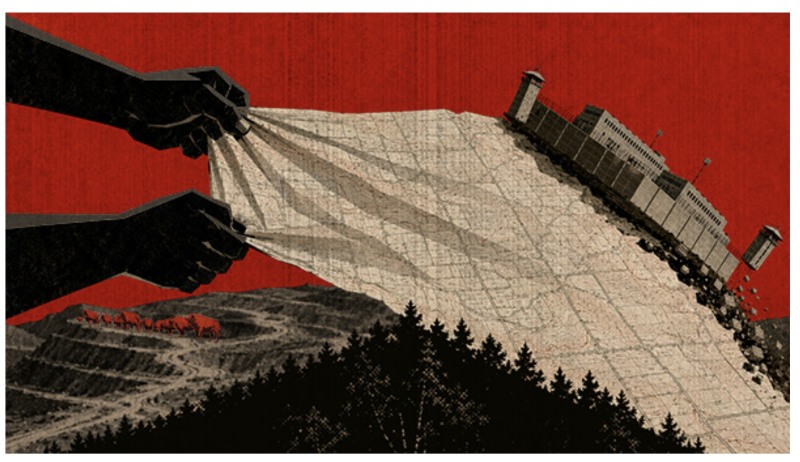
For generations, Central Appalachia has been subjected to one extractive project after another. As the coal industry has retreated, prisons and now AI data centers have gained new footholds on a terrain already ravaged by a long history of mining.
How did this region become a target for repeated cycles of dispossession, extraction, and abandonment? And what would it take to break this cycle decisively?
Who Owns Appalachia?
Property, Extraction, and Land Liberation
Wednesday, Sept 30 | 12pm ET / 9am PT
Join us for a roundtable on the concentrated patterns of land ownership at the root of Appalachia’s long history of extraction—and how understanding property relations can strengthen struggles for a world beyond them.
Curated by Red Natural History Fellow Lindsay Shade, the conversation brings abolitionist scholar and organizer Ruth Wilson Gilmore into dialogue with Sharon Fisher, Mary Cromer, and Tiffany Joy (Pyette), organizers and advocates confronting prisons, data centers, land dispossession, and extractive development across Central Appalachia.
Together, they’ll explore how communities are working not only to interrupt cycles of extraction and abandonment, but to build reparative and abolitionist futures in Appalachia and beyond.
*Please note: This roundtable will not be recorded.
Central Appalachia has been a key site of the extractive economy for two centuries. In recent decades, landscapes reshaped and abandoned by the coal industry have been repurposed for prisons and, now, AI data centers.
How did this region become a target for repeated cycles of extraction and abandonment? How are communities using land ownership data not only to stop new extractive developments before they take hold, but also to break with the property regime that underpins them? And what can these struggles teach us about resisting extractivism elsewhere?.
This roundtable conversation will explore how histories of dispossession and unequal land ownership shape what gets built, where, and for whose benefit. Featuring scholar-activists, lawyers, prison abolitionists, and environmental justice organizers with decades of experience in Central Appalachia and across the United States, speakers will confront the role of land ownership systems in perpetuating extractivism—asking how understanding property relations can strengthen our collective efforts to both resist new developments and build reparative futures in Appalachia and beyond.
SPEAKERS
Tiffany Joy (Pyette) is the founder and co-executive director of the Appalachian Rekindling Project, an Indigenous, women-led initiative based in central Appalachia (southeast Kentucky, southwest Virginia, and West Virginia) dedicated to ecological restoration, Indigenous land rematriation, and cultural revitalization.
Sharon Fisher is president of The Clinch Coalition, which fights for environmental justice in southwest Virginia. She is also a leader of SWVA Watch, a grassroots movement opposing data centers and harmful energy developments such as nuclear, natural gas, and blue hydrogen. Originally from West Virginia, Sharon's family includes five generations of coal miners.
Mary Cromer is an environmental lawyer and Deputy Director of Appalachian Citizens’ Law Center, Inc. (Kentucky) and resident of Wise County, Virginia, where her family has farmed since the 1840s. Her community-based environmental law work has focused on environmental justice issues from toxic waste, to clean drinking water, to landowner rights issues, and more.
Lindsay Shade is an environmental sociologist, Red Natural History fellow, convenor and co-founder of the Appalachian Land Study Collective, and creator of OpenLand, a people’s land records observatory.
Ruth Wilson Gilmore is Professor of Earth and Environmental Sciences, American Studies, and Africana Studies at the City University of New York Graduate Center. Co-founder of many grassroots organizations including California Prison Moratorium Project, Critical Resistance, and Central California Environmental Justice Network, Ruthie wrote Abolition Geography: Essays Towards Liberation (2022), and Golden Gulag: Prisons, Surplus, Crisis, and Opposition in Globalizing California (2007). Recent publications include an Introduction to Lenin’s Imperialism and the National Question (2024), and forewords to Making the World Clean by Françoise Vergès (2025), and Making Death and Life in Palestine, Tithi Bhattacharya and Sue Ferguson, editors (2025).
This event is part of Natural History from the Other Side, a virtual programming series organized by Red Natural History Fellows with The Natural History Museum, and made possible through the support of 4Culture and the Henry Luce Foundation.