
How Federal Agents Surveilled a Worker Assembly in Minneapolis
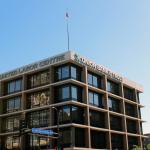
On February 15, during Operation Metro Surge and following the January 23 economic shutdown, around 400 people from the Twin Cities gathered at the United Labor Centre in Minneapolis for a workers’ assembly on building the movement against Immigration and Customs Enforcement (ICE). According to newly released documents in the case against the Minnesota 15, who were indicted in June and charged with conspiracy for alleged anti-ICE activity, undercover federal agents were present at the assembly, and reported on the minute workings of the gathering.
Two documents, both submitted to the U.S. District Court for the District of Minnesota as exhibits in the case, are transcripts of recordings between two special agents and two unnamed undercover agents surveilling the worker assembly. One is three pages long and one is eight pages, and they include summaries of the debate and discourse that took place, and pejorative remarks about the appearances of some speakers at the assembly. They also show that agents did not appear to have a deep understanding of some of the oppressed and exploited community members who were present at the assembly. I am not including these documents, or quoting the specific comments that were made, to protect the privacy of people who were monitored without their consent, and we only offer details where I have a response from the individual who was surveilled.
In one document, an undercover agent described entering the building and being asked about how they found out about it. Then they went on to describe what happened during the assembly, focusing mostly on some of the people who spoke at the meeting, and summarizing what was being said in their own words. Specific quotes from the undercover agents focus on the physical appearances of speakers, including hair color and estimated weight, and when referencing people of color, they make remarks about skin color and ethnicity.
Labor organizer Kip Hedges spoke at the assembly. In one of the documents, an undercover agent called him a “friendly grandfather” who seems to be a “folk hero,” and the documents also share that he talked about ground rules and resolutions.
I asked Hedges to respond to the descriptions of him. “Having been in the anti-war movement, and having been involved in political causes for a long time, having the government and the police, the FBI or the DHS, watching what you’re doing didn’t come as a big surprise to me,” he told Workday Magazine. “I don’t have any response to the particulars of what was said in the transcript, except the fact that the chart they got in discovery, they are very interested in things like Workers Solidarity Circle and assemblies and unions. They have their guns trained directly on working-class fighters and on the working class and union movement, and we should take this absolutely dead serious because it looks like a lot of what they’re up to is mapping of who and what and how it all fits together, and that’s completely none of their business. But it also shows you how seriously they take the labor movement as an opponent to authoritarianism.”
The assembly members, most of whom were rank-and-file workers from various unions and workplaces, proposed, debated, and voted on actions and demands, including extending the call for a day of “no work, no school, no shopping” for May 1, 2026, or May Day. The document shows how the agents intended to continue investigating assembly members. One of the agents described his tactics as follows: “And what I was doing was just trying to be friendly, have my face out there, get phone numbers just easily.”
That same agent stated, “You know, they’re super, they’re super proud of the January 23rd protest.”
After stating that there were “no real threats” to ICE, another agent said, “One of the things they voted on, they voted on their demands and it was to abolish ICE and DHS. And then they finished the meeting with a Fuck ICE chant. But nothing like we’re going to go harm ICE agents type shit.”
The assembly was organized by union members and solidarity caucuses within unions, and hosted by members of the Twin Cities Workers Solidarity Circle, one of the organizations that the DHS included in a network of alleged conspiracy. Hedges is one of the founders of the Workers Solidarity Circle, which he says emerged after the 2024 joint expiration week of action where thousands of union members and a coalition of community groups banded together to demand better contracts and policies for working people in Minnesota.
The federal government’s investigations into unions and workers has not been limited to Minnesota. The Graduate Employees’ Organization (GEO) Local 3550, which represents graduate workers at the University of Michigan, released a statement about the government serving the union with a federal grand jury subpoena. The union says the subpoena, like the case against eight pro-Palestine activists who were indicted on alleged conspiracy charges, is meant to criminalize protest and dissent.
Additionally, a Republican senator launched a formal inquiry into the International Association of Machinists and Aerospace Workers (IAM) for hosting a discussion on U.S. foreign policy with Cuba at a union hall.
“Anybody who is in a union or has any connection to wanting to build any kind of resistance to ICE, or wants to stop climate change, or data centers, or Flock, the government has you on the menu right now,” said Hedges. “They plan to feast on all of us if we don’t stick together.”
Amie Stager is the Associate Editor for Workday Magazine.
Workday Magazine holds the powerful to account while bringing the perspectives of everyday workers, and the organizations that defend their rights, to focus. We emphasize long-form investigative journalism to unearth the concealed and buried. Our publication is based in Minnesota and covers the greater Midwest, along with international issues that affect workers, like climate change and U.S. militarism.