
The Elusive Harold Cruse
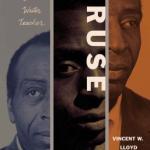
Harold Cruse: Critic, Writer, Teacher
Vincent W. Lloyd
Yale University Press
ISBN-13: 9780300280043
Like many another editor of a radical, eclectic journal of the 1960s, I received, without request, a copy of Harold Cruse’s Crisis of the Negro Intellectual. My own Radical America, more or less an SDS publication, had adopted the famed Pan-Africanist C.L.R. James as a sort of patron saint. We published documents and commentary around the League of Revolutionary Black Workers, based in Detroit, and for a moment in history, a hugely promising organization. This was all outside of the historic, Communist-led Left that still had a presence, through Freedomways magazine and Angela Davis. But if I had heard that Harold Cruse was a maverick, I had no idea of how angry and complicated his version of Black intellectuals, ideas and politics might be.
Wow! Never a leading figure in any sense but certainly part of the 1940s Harlem Left, Cruse had become a college professor on a mission of his own making. It was hard to understand all the targets of his criticism or to credit at face value the personal hurts that he had apparently suffered. But he was certainly erudite and in a 1960s world of collapsing certainties, he had something to add.
Vincent Lloyd, himself the African American son of a university professor and scientist, pursues the Cruse story with vigor and solid prose. Born in 1916 in the little town of Petersburg, Virginia, to parents—factory and domestic workers, respectively— who did not marry, he attended a high school whose students had later led the effort to break down the segregation in libraries and cafes. His aunt became an officer of the local NAACP chapter and the boy thought so much about becoming literary that he stole a typewriter. He was destined for prominence.
But he lived with different relatives and after a time, he shifted to an aunt’s home, in Queens, New York, lost to the Depression, to Harlem and his father. There, in 1930, at PS 139, where James Baldwin would study later, he learned something about Black history. At that time and place, he would also learn something about Karl Marx and Marcus Garvey. He heard Richard Wright give a lecture! And then, as he set out on his own, working at the Harlem YMCA that hosted other later-to-be celebrities, he received his draft notice,1941.
He tested high on the Army’s IQ exam, he became an administrator and would have been writing for Stars and Stripes except that they had no Black reporters. When the war began in earnest for the US, he spent time in Britain and North Africa. He met and worked with the Partisan underground in Algeria and in Italy, as the Americans moved north. He never trusted the radicals he met on campus decades later, regarding them as mere amateurs.
Cruse would not,by a long shot, be the only Black intellectual drawn to existentialism. It seemed to make more sense than the stiff rationality of Marxism and the hypocrisy of liberalism. But Cruse also recognized, and for a while became part of, the CP operation in the Black community. To do anything beyond writing demanded the connections that only the CP, on the Left, could manage. Especially if not only in New York.
He seems to have joined in 1946, took classes at the Jefferson School in Greenwich Village, also at its sister George Washington Carver School in Harlem. He worked with the famed Harlem dancer Howard “Stretch” Johnson in pressuring landlords to admit more black tenants and by 1947 became the educational director of his branch, the Nat Turner Club. He first became a published author at the Daily Worker, 1947-51, and lived within a world of interracial social and cultural activities. In 1950, artist Alice Neel, decades before her fame, painted his portrait.
Did he marry at this time, or not? The record is unclear, but he clearly “had trouble” with some women, including black women leaders, then increasingly common in Left circles. And angry at the Party proper. As repression tightened, so did Party views. Freedom newspaper, set up under the nominal leadership of Paul Robeson, seemed to be about everything but Harlem life. Global events, cultural uplift, and other events and interests of leftwing intellectuals seemed to grow larger as the circles of the Left, faced with a veritable offensive of the FBI, narrowed.
Distanced and bitter, a few years later, he refused to become an informer. Away from the Left, he was also marginal, working barely skilled jobs, drafting a novel about his time around the CP. He took up writing for the Pan Africanist French magazine Présence Africane, suspected of being a Communist front but exposed later as a child of the CIA-guided Congress for Cultural Freedom.
Cruse had not finished, yet, with active political organizing. At the dawn of the 1960s, as the political prospects reopened, he joined other prominent Black intellectuals,including Conrad Lynn and William Worthy. The Freedom Now Party, if on the ballot only in New York and Michigan, showed some promise. The Lyndon Johnson/Barry Goldwater election of 1964 finished off this independent move.
He read and (unsuccessfully) wrote plays about Black life. He might have made a splash in the Black arts movement and actually taught history at the Black Arts Repertory and Theater School, as the Repertory staged showings in neighborhoods from flatbed trucks…until the government’s anti-poverty funding dried up. Harlem itself threatened to go up in flames.
Remarkably and oddly, the editors of the early new left journal, Studies On the Left, that preceded my own Radical America, received a letter from Cruse asking if they would be interested in publishing a 47 page essay. Winnowed down and sharpened, the essay appeared in 1962, obviously at the right moment. “Revolutinoary Nationalism and the Afro-American” became an overnight sensation. Still working at the Post Office, Cruse offered himself for a much-advertised Manhattan social event. Cruse, who had a habit of sabotaging projects close at hand, had meanwhile joined the staff of a new black magazine, The Liberator, with a circle of noted Black authors. Frustrated by his fellow editors, he resigned in a rage in 1964.
Meanwhile, an editor at the publishing house William Morrow had spotted his work in The Liberator and offered him an advance large enough for him to quit his job. The Crisis of the Negro Intellectual appeared in 1967, a long and overwrought book expanding arguments he had been making for years. Christopher Lasch, then at his intellectual apex, hailed the volume in the New York Review of Books. It set off a firestorm of controversy not only about the ideas therein, but about Cruse himself. He was a discovery of sorts, a development that he seemed to appreciate and resent to equal degrees.
The most controversial of Cruse’s claims had its origins in his own personal experiences. The intellectuals, political and cultural leaders of African Americans, then very much in the spotlight, were middle class, with little understanding of the Black masses. Cruse saw his people as colonized in the US and needing resources more than ideology (including Marxism). He took seriously the nationalist movements, accommodationist (around Washington) or confrontational (around Marcus Garvey) because they had mass followings, whatever their politics.
It was a reasonable argument made in fairly unreasonable terms. This pleased liberals moving away from Marxism very much. It outraged the successor to the multi-racial Popular Front as anti-communist (again, in an era when anticommunism was revived by the Vietnam War). Some highly connected writers treated it as an anti-Semitic tract, in part because of careless phrases, eg., the “nationalistic aggresiveness” of Jews (quoted from p.90). The presence of some factual errors in The Crisis did not help.
A mega-conference on US culture and politics, held at Princeton in 1968, and sponsored by the institutional successor to the Congress of Cultural Freedom—exposed the previous year as CIA outlet—put him forward. A month later, speaking at Howard University, he had already become something of an embarrassment, criticized and heckled from the audience. He walked off the stage and, at least metaphorically, walked onto the campus of the University of Michigan. In the new African American Studies Program there, he could not escape controversy, some of it self-generated. Age 52, he would nevertheless remain in Ann Arbor for the rest of his life.
Or at least treat it as his home base. This is a key point because he traveled and lectured widely, through the US and beyond, with a certain relish. He served several times as the Director of Center for Afro-American Studies, but left the day-to-day work to others. He developed a resentment at younger Black colleagues, especially women, insisting privately and bit in public that they did not attain his standard of what Black Studies could or should be.
Strangely, given his bitter look at the past Left, he recuperated the atmosphere of the Jefferson School in the 1940s,the mixture of politics and scholarship, offering him the opportunity to abandon formal lectures for informal discussion. This was Cruse at his happiest, greeting and sometimes insulting Black notables passing through. Notably, he never made up with Jimmy and Grace Boggs, who emerged larger and larger on the Detroit scene (Grace would receive a commendation, on her death in 2016, from Obama.)
Cruse continued, until the end of his life, to navigate the space between racial integration and Black nationalism. Sometimes he supported groups on campus and beyond, sometimes he opposed them. He advised putting anger aside when dealing with ideas, but was frequently angry himself. He failed to finish his long studies of Afro-Americans and creative arts, above all the stage. He embarrassed himself and his friends by welcoming Ronald Reagan’s reduction in federal spending, and this was not the last time.
More successfully, he punctured assorted ideas that seemed to him half-baked. And even more successfully, he engaged with younger thinkings like Cornel West, he pushed them to clarify their ideas. At a 1994 symposium on “The Crisis of the Negro Intellectual Revisited,” hosted by critic-theorist Sylvia Winter at Stanford. Cruse dramatically announced, “Now I am ready to die.” (p.148). Others were taking up the work.