
This Week in People’s History, Oct 7–13, 2026
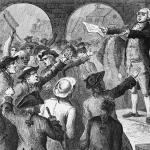
Demand for ‘No Taxation Without Representation’ Starts Colonists on the Road to Revolution
TWO HUNDRED AND SIXTY-ONE YEARS AGO, ON OCTOBER 7, 1765, elected representatives of most of the British colonies in North America began a 19-day meeting to organize resistance to the heavy-handed tactics that the British government was using against them.
The Stamp Act Congress in New York City took the radical step of rejecting the idea that the British Parliament had the power to tax the North American colonies, adopting the slogan, “No taxation without representation.” It was an early step on the road that led to the beginning of the Revolutionary War less than 10 years later.
By chance, the Stamp Act Congress’s decisions began to be carried out while the Congress was still in session, when, on Oct. 23, the first shipment of the printed tax stamps arrived in New York harbor.
When New Yorkers learned what the ship was carrying, they organized a mass demonstration that prevented unloading of the stamps. New York’s royal Governor took the cautious step of waiting until late at night to send a heavily-armed squad of Marines to whisk the hated stamps to the safe-keeping in nearby Fort George.
Then on Nov. 1, the day the Stamp Act went into effect, the Sons of Liberty began a highly illegal 4-day demonstration against the Stamp Act with a mass meeting on New York Commons. They hanged the royal Governor in effigy, then carried the effigy to the Governor’s residence, where they overpowered the guard, broke into the stable, and removed the Governor’s official coach.
They pulled the coach, with Governor’s effigy aboard, to nearby Bowling Green, where they reduced it to ashes. The Governor got the message; he turned the tax stamps over to the Mayor, who never put them to use. It would be only the first act of violent defiance to the Stamp Act.
Ten weeks later, when another shipment of tax stamps arrived in New York harbor, Sons of Liberty activists forced their way on board and destroyed the stamps by throwing them overboard. Before the Stamp Act had been in effect for four months, Parliament repealed it. The law had succeeded only in supplying the disaffected colonists with a target for their growing antagonism.
But the British attempted to increase the pressure on other fronts. Between 1766 and 1774 Parliament passed at least 13 laws intended to tax the colonists and force them into submission. In 1768, Britain increased the number of redcoats garrisoned in Boston and continued the troop buildup until it reached 4,000 in 1770.
The new laws and troops to enforce them were largely ineffective because the resistance, which had started with successful resistance to the Stamp Act, set the stage for a decade of mushrooming civil disobedience, always militant and sometimes violent, which repeatedly set back the British efforts. The highpoints of that struggle will be featured here in This Week in People’s History. https://www.nps.gov/articles/000/anger-and-opposition-to-the-stamp-act.htm
For more People's History, visit
https://www.facebook.com/jonathan.bennett.7771/