
Four Years After Mahsa Amini Died, the Resistance Is Quiet – but It’s There
There has been a lot of water under the bridge in the Middle East since that September 16 four years ago. A young woman, Mahsa Jina Amini, arrested by the morality police over the way she was wearing her headscarf, died in custody. Something in Iran has never gone back to what it was before that moment, even while the anniversary is greeted mostly with silence inside the country.
The movement born out of that killing, “Woman, Life, Freedom,” did not burn itself out in the months of protest that ran from one end of the country to the other in 2022. It left a mark that takes longer to measure, less conspicuous than a march broken up with rubber bullets and tear gas, but probably more lasting. It has changed the way Iranian society looks at power.
The events also opened a crack inside the academic and intellectual world that the Islamic Republic had spent decades patiently building. The theoretical project of reading society solely through an Islamic sociology, grounded in religious principles and in revelation and setting aside concepts developed in the West, showed its limits.
For years, in Iran’s universities at least, secular sociology had been treated as an alien instrument, an import, suspect on ideological grounds. The 2022 protests laid bare the limits of what that framework could not do. It is hard to explain, in the categories of Islamic sociology, a generation of young women who are taking off the veil in the street knowing they risk arrest, or a movement that speaks openly about individual autonomy and gender rights.
Sociologists trained in the secular tradition, more used to empirical analysis and less bound to an ideological frame, suddenly found themselves better equipped to read what was happening. This is not just a small detail: it is the sign of a fracture between one part of society, largely young, and the theocratic foundations on which the state has built its own legitimacy. Out of it came a question that remains at the center of everything: is it enough to change the rulers, or does the structure of power have to change?
The response from those in power took the form of repression, and repression did work, in the narrow sense of the word. There were arrests, heavy sentences, protesters killed, and the wave in the streets pulled back. But anyone who thinks this is a return to the way things were before is wrong.
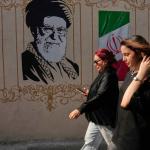
Many women still go without the compulsory hijab, and they do it every day, quietly, with no need for slogans. Civil resistance has turned into habit, a daily gesture more than a declared political act. Young people talk about freedom and choice with an ease they did not have before, or had only in private.
Then came the wars, and they changed the scale of the problem. The 12-day war of June 2025 and the conflict that followed it in 2026 dealt a brutal blow to an economy that was already fragile. The local currency has lost an enormous amount of its value, and inflation has gone beyond 70 percent on basic food staples.
The war revealed a divided country, perhaps more divided than before. Some hoped that American missiles would do what decades of protest had failed to do, while others saw every foreign bombardment as one more wrong to add to those already inflicted by those in power. The majority of the population was in between, caught between two wounds that do not cancel each other out.
Then came the images of oil installations in flames and of gutted neighborhoods in Tehran, and something cracked even in the people who had cheered the war on at the start. Watching the country’s industrial heritage burn turned out to be more than many had been prepared to pay for a change of system. Others, among the rubble of their homes, could only think about how to survive the next day.
With the most intense phase of the conflict on pause, the repression has not stopped – quite the opposite. Human rights organizations report a rise in executions. And yet women go on taking off the veil in the street, war or no war, as though that battle has become independent of everything else at this point. There are also people who reject both the foreign aggression and the narrative offered by the central authorities, and who are calling for a change that comes from below. But they remain a minority, crushed between those who want more war and those who reject it outright.
Four years on, in short, there has been no revolution but rather a slow change, while the state has become ever more rigid in response, in an arm-wrestling match that the war has only made more intense, and worse for the people who live under it every day.
The free Iran of the future, when it comes, will carry the mark of those who paid for it in person, above all the women of the “Woman, Life, Freedom” movement, who opened the way to that freedom millimeter by millimeter, often at a very high price.
The ones who were arrested, the ones who were killed, the ones who still take off the veil today. This is not a side detail in the greater story: it is the foundation on which that freedom will have been built.
Originally published at https://ilmanifesto.it/quattro-anni-dopo-mahsa-amini-in-iran-la-resistenza-e-silenziosa-ma-ce on 2026-09-16
Il manifesto was founded in 1969 on the idea that truth and freethinking are more important than everything else, including profit. The paper pays for its editorial idealism in the form of lost advertising. But we more than make up for this in the support of tens of thousands of subscribers who believe a better world is possible. There are no owners (il manifesto is a cooperative), and the editor and managers are elected every four years by the employees. We maintain a newsroom in Rome and correspondents around the world, filing dispatches from Paris, London, Berlin, Jerusalem, Havana, New York, Los Angeles and elsewhere.