
Mississippi’s Black Majority and the Fight for Political Power
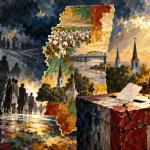
The future of the nation is in the South, the former Confederacy and ground zero of America’s civil rights struggles. We need only look to a place like Mississippi to understand the mess that is this settler colonial project called America, with its unaddressed and seemingly intractable internal contradictions. Mississippi has shown us the promise of Black power snuffed out by white supremacy, unjust laws and the Klan.
Today, Mississippi is an example of how Black people are once again so close to cracking the code and freeing ourselves and the nation in the process. The first time was during Reconstruction following the Civil War, when Black folks were a majority of the population, and had over 200 elected officials, including statewide offices, two U.S. senators, a lieutenant governor and secretary of state. A new state constitution provided for basic rights, including voting rights, and reforms such as public education. Then, the federal troops left and took with them their protection of Black people, leaving the white power structure to their own devices and allowing them to take back the Magnolia state.
The 1890 Mississippi convention - which had only one Black delegate, Isaiah Montgomery - was designed to enact a new state constitution to legalize voter suppression and strip Black people of their rights. Specifically, the new constitution included a poll tax and literacy test to wipe out Black power in the majority Black state, and was the death knell for Black power in that state. Black folks in Mississippi have not recovered to this day.
In a state of contradictions, the blackest state in the Union - about 40% - is among the reddest and most conservative states. Despite the gains of the civil rights movement and the legislation that it brought, there is now an effort in Mississippi to deprive Black voters of their voting rights through redistricting and other means. And the state has not had a statewide Black elected official since 1890. Welcome to America.
America is a place where they force you to fight for your basic rights, time and time again, and Mississippi is a prime example of this. Known for its Jim Crow-era lynchings and brutal violence - from the lynching of Emmett Till and those three civil rights workers, James Chaney, Andrew Goodman, and Michael Schwerner, to the assassination of Medgar Evers and Vernon Dahmer and others - Mississippi has been a hot mess for quite some time. And yet, today, with the sketchy and suspicious death of Nolan Xavier Wells, and the Black people found hanging from trees in 2026, it seems that the state never separated itself from its deadly past of racial violence and racially violent laws. Not surprisingly, Mississippi typically falls at or near the bottom of the list of key socioeconomic indicators such as health, children’s health and economy, reflecting a state with a legacy of slavery and Jim Crow, and placing a low priority on the well-being of people.
Nina Simone said it best - or sang it best - in her iconic song, “Mississippi Goddam”:
Alabama’s gotten me so upset
Tennessee made me lose my rest
And everybody knows about Mississippi Goddam
Can’t you see it
Can’t you feel it
It’s all in the air
I can’t stand the pressure much longer
Somebody say a prayer
Later in the song, Simone elaborates:
…Yes, you lied to me all these years
You told me to wash and clean my ears
And talk real fine just like a lady
And you’d stop calling me Sister Sadie
Oh, but this whole country is full of lies
You’re all gonna die and die like flies
I don’t trust you any more
You keep on saying “Go slow”
“Go slow”
But that’s just the trouble
“Do it slow”
Desegregation
“Do it slow”
Mass participation
“Do it slow”
Reunification
“Do it slow”Do things gradually“Do it slow”But bring more tragedy"Do it slow”Why don’t you see it?Why don’t you feel it?don’t know I don’t know.
Mississippi, the blackest state masquerading as a deep red state, has an opportunity to change course. In the race for U.S. Senate, Scott Colom, a Black Democrat, has a chance to unseat Cindy Hyde-Smith. And what a wondrous thing it would be. For many of these states in the South, white supremacy is living on borrowed time. Nakedly brutal violence and obscene Jim Crow laws will only get you so far, and when demographics catch up with you, that’s that. In states such as Mississippi, Louisiana, Georgia, Alabama and others, Black people can vote as a bloc and peel off a segment of white voters for a winning coalition, along with Latinx and Asian voters. Sooner or later, perhaps as early as November, Black Mississippians will put such a strategy to the test and win.
David A. Love, JD, is the Executive Editor of BlackCommentator. He is a lawyer and journalist based in Philadelphia, and a contributor to the Progressive Media Project, McClatchy-Tribune News Service, In These Times and Philadelphia Independent Media Center. He contributed to the book, States of Confinement: Policing, Detention, and Prisons (St. Martin's Press, 2000). His blog is davidalove.com.
The Black Commentator's core audience is African Americans and the African world and their allies in the movement for economic justice, social justice and peace. It is also important to share Black American and African world perspectives with the rest of the world, a mission uniquely suited to the Internet. Our focus is commentary, analysis and investigation, elements of political dialogue that are absolutely essential to the creation of movements for social change. Without regular forums for advocacy and debate, a people are at the mercy of their adversaries.