
This Week in People’s History, Nov 4–10, 2026
In 1841, When More than 100 Victims of Enslavement Freed Themselves, They Earned Much More Honor Than They Have Received
ONE HUNDRED AND EIGHTY FIVE YEARS AGO, ON NOVEMBER 7, 1841, the merchant ship Creole was off the east coast of Florida, carrying a cargo of at least 135 enslaved people from Virginia to the slave market in New Orleans, where they were to be sold to Louisiana plantation owners.
On that November night the ship’s enslaved cargo took matters into their own hands by overpowering The Creole’s crew and turning the ship toward Nassau in the Bahamas, where slavery had been abolished in 1834.
Madison Washington was the leader of the rebellion. Washington had the unusual distinction of having previously liberated himself from his Virginia enslaver and escaped to Canada. After he arrived in Canada, he decided to secretly return to Virginia so he could help his wife escape. Back in Virginia, but before he was able to liberate his wife, Washington was arrested and sold to a slave-trader who had arranged to ship him to New Orleans.
When Madison Washington was put aboard The Creole, his experience as someone who had once successfully escaped slavery made him a natural leader of The Creole’s human cargo. He and eighteen other men devised a plan to give the ship time to reach the waters off southeast Florida, wait until most of the crew was asleep, start a ruckus to draw a small group of waking, and very lightly armed, crew members to one part of the ship, and then overpower the divided crew before it could get organized. When the brief struggle was over, only one of the enslaved and one member of the crew had been killed, and the rebels were in full command.
They needed only two days to reach Nassau. When they arrived, they ceased to be anyone’s property.
Most of the formerly enslaved were allowed to go ashore and wherever they wished. The vast majority of the Bahamas population had been enslaved until 1834, so the refugees from The Creole were welcomed into an understanding and English-speaking community.
But Madison Washington and eighteen other rebellious former slaves were imprisoned because they were implicated in the death of a member of The Creole’s crew, the wounding of another, and the possibility they had committed mutiny.
They remained prisoners for five months while an admiralty court conducted an investigation to determine whether a crime had been committed and, if so, who might be charged. Eventually the chief judge determined that under the circumstances, no crime had occurred, and told the prisoners, “It has pleased God to set you free from the bonds of slavery; may you hereafter lead the lives of good and faithful subjects of Her Majesty’s Government.”
Sadly, at that point Madison Washington and his comrades disappear from the historical record. Did they remain in Nassau, or take ship to a larger settlement in the British West Indies, such as Jamaica? They would have been unlikely to return to the U.S., because doing so would expose them to the risk of arrest as fugitive slaves. Wherever they went, and whatever they did, there is unfortunately no known record concerning any of them.
Even in the absence of that information, there is no doubt that Madison Washington and those of his comrades whose names are known – Horace Beverly, Walter Brown, George Burden, Richard Butler, Pompey Garrison, William Jenkins, Ben Johnstone (or Johnson), Philip Jones, Robert Lumpkins, Elijah Morris, George Portlock, “Doctor” Ruffin, Peter Smallwood, Warner Smith, Addison Tyler and America (or American) Wordhouse – emancipated themselves when they played major roles in the largest successful rebellion of enslaved people in the U.S.
As such, it is regrettable that the names Madison Washington and the other heroes of the rebellion aboard The Creole are not more widely remembered.
Henry Highland Garnet, an abolitionist, educator and orator who, along with his family, emancipated himself in 1824, saluted Madison Washington in an August 1843 policy proposal to the National Convention of Colored Citizens in Buffalo, New York, which you can read here. The convention rejected Garnet’s proposal by a single vote.
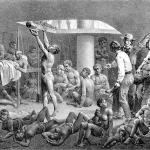
The illustration shows conditions similar to those experienced by the enslaved aboard The Creole, where they were confined to a merchant ship’s cargo hold.
For more People's History, visit
https://www.facebook.com/jonathan.bennett.7771/