
Historian Maurice Jackson Tells the Story of Black Washington in New Book
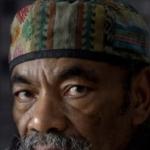
Washington, DC, is known around the world as the seat of American democracy. But for Maurice Jackson (G’95, G’01), a professor who teaches in the history, Black studies and performing arts departments, the nation’s capital tells another story: one of the African Americans who built the city, fought for their freedom and continue to struggle for the right to call it home.
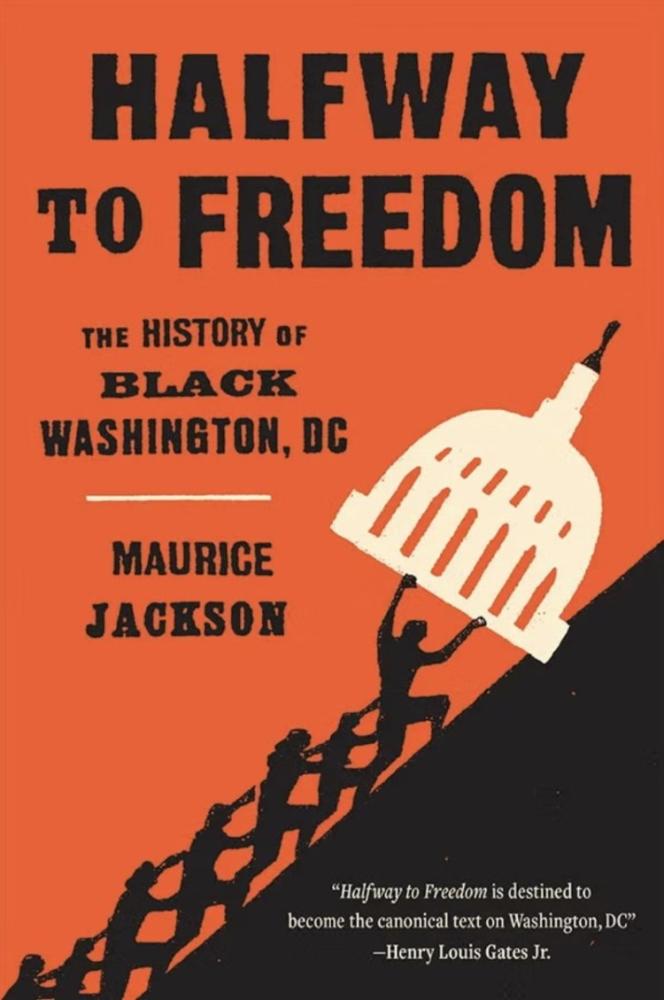
In his forthcoming book, Halfway to Freedom: The History of Black Washington, DC, Jackson traces more than two and a quarter centuries of Black history in DC and showcases how the people who built the nation’s capital have shaped the city, the country and the world. He has written two other books and co-edited three more.
The new book is set to release on Dec. 8 and is dedicated to Jackson’s wife, Laura Ginsburg, and to President Emeritus John J. DeGioia (C’79, G’95). The foreword is written by Lonnie G. Bunch III, the 14th secretary of the Smithsonian Institution. Bunch received an honorary doctor of humane letters from Georgetown in 2017.
Halfway to Freedom, Jackson said, is a history of the United States itself told through the experiences of those who have long fought to make its democratic promises a reality.
“If you study this book, it is the history of the nation,” he said.
Beyond the Nation’s Capital
Jackson traces inspiration for the first chapter of the book, in part, to the Broadway musical Hamilton, particularly its depiction of the political negotiations that determined the location of the nation’s capital.
Behind that moment, Jackson saw a history that often goes untold of the enslaved African Americans whose labor helped build Washington’s most recognizable institutions, including the Capitol and the White House, even as they were denied the rights those institutions were supposed to represent.
He began asking how Washington’s history of slavery, emancipation and resistance fit into the broader history of political and social transformation.
“I wanted to see how DC fit in the midst of this,” Jackson said.
Having studied revolutionary movements in China, Vietnam, Ghana, Russia, Grenada and Cuba, Jackson was able to bring an international perspective to his examination of Washington. He found that the city’s Black residents had played influential roles in struggles extending far beyond the District.
From supporting Ethiopia against Italian aggression in the 1930s to participating in the struggles to decolonize and win national independence for nations in Africa and the Caribbean to joining in the international fight against apartheid in South Africa, Black Washingtonians connected their own struggles for equality to movements for freedom around the world.
“I saw all these local and national, international things, and I wanted to put them together,” Jackson said.
Halfway to Freedom
The book’s title carries both a personal and a historical meaning for Jackson.
Drawing on the ideas of abolitionist Frederick Douglass, Jackson uses Halfway to Freedom to explore the distance between formal emancipation and the realities of everyday life.
“You [are] emancipated, but you’re not fully free to make a living. You’re not free to support your family,” Jackson said. “Theoretically you have freedom, but are you truly free if you are not given the right to make a decent living?”
For Jackson, freedom encompasses more than legal rights. It also means having access to housing, employment, education and the resources necessary to build a stable life.
These questions are particularly urgent in Washington, a city that became majority Black in 1957 but in recent decades has experienced significant demographic changes as rising housing costs and gentrification have displaced longtime residents.
Jackson described the loss of communities that once defined the city’s neighborhoods, not only among African Americans but also among Chinese and Latino residents. These changes raise a difficult question of what freedom means if residents can no longer afford to remain in the city they helped build. DC residents, he added, still do not have the right to elect a full voting member of Congress and have voted and called for statehood for Washington, DC.
“They just want the right to be able to stay, to get a good job, to provide for their children, to get the education for their children,” Jackson said.
Georgetown’s History
Georgetown University has a complicated but important place in Jackson’s account of Black Washington. While acknowledging the university’s historical ties to slavery and racial exclusion, Jackson also recognizes its contributions to education, employment and community engagement in the District.
As Georgetown expands its Capitol Campus, Jackson hopes the university will deepen its connection to the broader city by creating more educational, training and employment opportunities, including apprenticeships for local residents.
Jackson emphasized that universities can contribute to their surrounding communities not only through academic or short-term programs, but also by making their educational resources, professional expertise and employment opportunities more accessible to local residents.
“It’s not just having a physical presence in the city,” Jackson said. “It’s much more than that. It’s going and looking at the least of these and paying attention to the plights of people and their cries.”
Jackson also plans to bring Halfway to Freedom into the classroom through a course exploring Washington’s history through politics, culture, music, sports and everyday life, emphasizing how Black history is inseparable from American history.
Ultimately, he hopes readers will gain a deeper appreciation of the city and those who built it.
“I think the first thing is that people should understand that it’s a great city, and it’s a city that African Americans built,” Jackson said.