
SACP’s Historic Electoral Breakthrough
https://portside.org/2026-11-14/sacps-historic-electoral-breakthrough
Portside Date:
Author: News Desk
Date of source:
Left Views
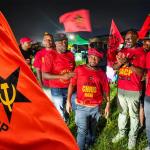
Johannesburg, South Africa: The South African Communist Party (SACP) has recorded a significant breakthrough in the 2026 municipal elections, establishing an independent electoral presence across several provinces after contesting separately from its long-time alliance partner, the African National Congress (ANC), for the first time in democratic South Africa.
The party secured approximately 2.4% of the national vote, winning 271 seats in municipal councils across the country. With a total of 708,712 votes, the result marks an important milestone in its political journey, demonstrating its ability to attract electoral support beyond the traditional ANC-led Tripartite Alliance.
In the Eastern Cape, traditionally an ANC stronghold, the SACP emerged as one of the strongest parties, securing more than 6.29% of the vote and winning 97 seats. It finished third behind the ANC and the Democratic Alliance (DA), outperforming both the United Democratic Movement (UDM) and the Economic Freedom Fighters (EFF).
Limpopo proved to be another stronghold for the party, where it secured 54 seats with 4.35% of the vote. In Mpumalanga, the party won 27 seats with 3.68% of the vote. The North West province returned 32 seats with 4.21% support, while the Northern Cape contributed 13 seats, with the party securing 2.96% of the vote. The SACP also secured 18 seats in the Free State, with 2.59% of the overall vote.

SACP Province wise result Source : Election Commission of South Africa
In urban and coastal areas, the party's performance was more modest. Gauteng voters returned 16 for the SACP, with 1.1% support. KwaZulu-Natal and the Western Cape each delivered 7 seats, with the party recording 0.53% and 0.96% of the vote, respectively.
A closer look at local municipalities shows how these figures translated into grassroots support. In Limpopo, for instance, the SACP achieved strong results in specific municipalities, such as Blouberg (LIM351), where it won four seats with 8.19% of the vote. It also secured four seats in Thulamela (4.47%) and two seats each in Musina (5.41%) and Makhado (2.04%). Maruleng (LIM335) contributed one seat, with 2.18% support.
By contrast, the party faced greater challenges in other municipal areas. In Greater Tzaneen (LIM333), the SACP received just 0.75% of the total vote, which was insufficient to secure a seat on the council. Across individual wards and voting districts within Greater Tzaneen, support generally remained below 2%, with voting district 76141201 recording 1.42% and voting district 76140581 recording 1.06%. Ward-level results showed similarly modest levels of support, with Ward 93303007 recording 3.57% and Ward 93303002 recording 2.05%.
Reflecting on the outcome in Greater Tzaneen, Tzaneen Revolutionary District Elections Coordinator Molebatsi Masedi remained optimistic about the long-term journey ahead. Masedi noted that although the party had not secured direct representation on the council this time, a firm foundation had been laid to build socialism and advance working-class struggles across the municipality.
ANC Faces Crushing Defeat
Meanwhile, South Africa's ANC recorded its worst-ever performance in local elections since Nelson Mandela led the country out of apartheid and into democracy more than 30 years ago. The party described the outcome as "catastrophic".
Although it remained the country's largest party in terms of votes, the ANC secured just 31% of the overall vote and won 3,282 seats. This represented a significant decline from the 46% it received in 2021 and was a far cry from the 65% it secured two decades ago.
The party's decline was also evident across the provinces and major cities. The ANC secured a majority in just one of the country's nine provinces, Limpopo, compared with six provinces in 2021. It also emerged as the largest party in only two of the country's eight metropolitan municipalities, compared with six in the previous local elections.
The Democratic Alliance (DA) came second nationally, securing 25% of the vote and 1,722 seats, while retaining majority control of the City of Cape Town. Former president Jacob Zuma's uMkhonto weSizwe (MK) Party finished third overall, with 10% of the vote and 799 seats, unseating the ANC as the leading party in the city of Durban.
The Economic Freedom Fighters (EFF), led by Julius Malema and once considered a serious challenger to the ANC, finished fourth, securing 6.22% of the vote and 592 seats.
"This has been a very catastrophic outcome for the ANC," said Secretary-General Fikile Mbalula on Saturday. "We knew this disaster was coming; we were staring at it. As we entered the elections, the cost of living for our people was too high. The middle class have turned against the ANC in big numbers."
South African President and ANC leader Cyril Ramaphosa acknowledged the party's declining electoral fortunes when he entered the counting centre on Sunday night.

Partywise performance in South African Municipal Election Source : Election Commission of South Africa
"We accept the will of the people, however concerning it might be. We accept that this is how the people of South Africa, in our towns, in our cities and in our metros, have spoken. This is their verdict, and we accept it with humility. It is a decline that is concerning; that is how I characterise it," he said.
SACP leaders welcomed the outcome, describing the results as an endorsement of the party's decision to seek an independent electoral mandate.
First Deputy General Secretary Madala Masuku said the party had managed to make its mark despite facing severe financial and organisational constraints during the campaign. He acknowledged that limited resources had prevented the party from reaching all communities but maintained that the response from voters was encouraging.
Party spokesperson Mbulelo Mandlana also expressed satisfaction with the results, arguing that the independent campaign had demonstrated the SACP's national political footprint and the existence of support for an alternative left-wing political programme.
Mandlana noted that although the SACP has a long political history, including participation in local elections in the Free State town of Metsimaholo and the fielding of candidates during the apartheid era, this was its first independent electoral campaign in modern democratic South Africa. The party was also banned during the late 1950s and early 1960s.
He argued that achieving these results with a "zero budget", in an environment he described as "grossly anti-communist" and dominated by neoliberal thinking, represented a significant advance for the working class.
The party's performance in the Eastern Cape was particularly encouraging. Provincial spokesperson Xolani Malamlela said the SACP had exceeded some expectations by winning wards across the province, describing the response from communities as a source of encouragement for the organisation.
Why Did the SACP Decide to Contest Independently?
The SACP's decision to contest the 2026 municipal elections independently was the culmination of years of disagreements within the Tripartite Alliance rather than a sudden political development.
The alliance, comprising the ANC, SACP and Congress of South African Trade Unions (COSATU), played a major role in the anti-apartheid struggle and remained an important political arrangement following the establishment of democracy in 1994.
For decades, the SACP supported ANC candidates during elections. Communist Party members also served in ANC-led governments, including in ministerial positions. COSATU, meanwhile, provided an important link between the ANC and organised labour.
One of the main reasons behind the SACP's decision to contest independently was its dissatisfaction with the structure and functioning of the Tripartite Alliance. The Communist Party had repeatedly called for the alliance to be reconfigured to give its partners a stronger role in determining government policy and political strategy.
The party argued that the ANC continued to dominate decision-making, leaving the SACP and COSATU with insufficient influence despite their historical contributions to the liberation movement.
At its Special National Congress in December 2024, the SACP reaffirmed its decision to contest the 2026 municipal elections independently.
Economic policy was another major source of tension. The SACP identifies itself as a Marxist-Leninist organisation committed to socialism, public ownership and the redistribution of economic resources.
It has criticised policies it considers neoliberal, particularly those involving privatisation, austerity and the growing role of private capital in the provision of public services.
The party believes that the economic direction pursued by the ANC-led government has failed to adequately address unemployment, poverty, inequality and the concentration of wealth.
The formation of the Government of National Unity (GNU) following the 2024 national elections further intensified these disagreements. The ANC's decision to enter government with the Democratic Alliance, which the SACP considers ideologically opposed to its economic programme, became a major point of contention.
The SACP argued that the influence of the DA and other market-oriented political forces was undermining the working-class objectives of the historical alliance. It also maintained that workers and poor communities needed a more direct political voice.
Despite the electoral separation, the SACP has maintained that its decision does not necessarily signal the end of its relationship with the ANC and COSATU.
The party's campaign focused on employment creation, improved municipal services, public ownership, combating corruption and strengthening accountability among elected councillors.
Although the SACP's national vote share remained modest compared with those of the country's major political parties, its entry into independent electoral politics provides an opportunity to build its own municipal structures and strengthen its grassroots organisation.
Ultimately, the 2026 elections have ushered in a new phase in the relationship between the ANC and the SACP. Whether the Communist Party can transform its initial electoral presence into a sustainable independent political force will depend on its ability to overcome organisational and financial limitations, broaden its appeal and demonstrate its effectiveness in municipal governance.
For the SACP, the 2026 municipal elections represent more than an electoral exercise. They mark the beginning of a new chapter in its political history as it seeks to translate its independent electoral presence into greater representation and influence in local government.
The party is expected to use its municipal representation to advance its working-class agenda and strengthen its organisational base ahead of the 2029 general elections.