Constitutionally, Slavery Is Indeed a National Institution

Lawrence Goldstone The New Republic
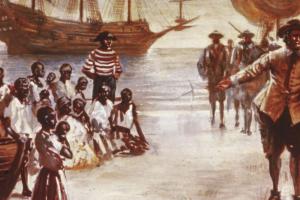
Whether or not the words “slave” or “slavery” appear in the text of the Constitution, they dominate its spirit. Slavery profoundly altered the four months of Constitutional debate with respect to how slaves would be counted for apportionment, how often the census would be taken, how a president would be elected. By the time the Constitution was signed on September 17, 1787, slavery had indeed become a national institution.

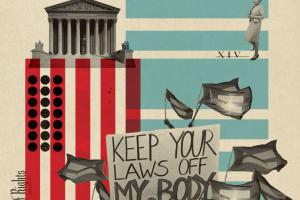
To Have and to Hold. Reproduction, Marriage, and the Constitution.

Jill Lepore The New Yorker
There is a lesson in the past fifty years of litigation. When the fight for equal rights for women narrowed to a fight for reproductive rights, defended on the ground of privacy, it weakened. But when the fight for gay rights became a fight for same-sex marriage, asserted on the ground of equality, it got stronger and stronger.

Fight for Black Voting Rights Precedes the Constitution

Van Gosse The Boston Globe
There’s a comforting myth in the United States that suggests African-Americans steadily moved from absolute slavery to complete freedom following the Civil War. This, however, obscures how hard many Americans of every race had fought against racism since the Revolution. It was a struggle that went deeper than slavery and right to the core of who was an American.

The U.S.-Mexico Border - A Constitution-Free Zone

David Bacon ACLU STAND Magazine
Under the Fourth Amendment, the people of the United States are not supposed to be subject to random and arbitrary stops and searches. But within 100 miles of a U.S. border, these rules don't apply.

Respecting the Constitution

There are few things more bizarre than watching people advocate that another country be bombed even while acknowledging that it will achieve no good outcomes other than safeguarding the "credibility" of those doing the bombing. Relatedly, it's hard to imagine a more potent sign of a weak, declining empire than having one's national "credibility" depend upon periodically bombing other countries.

NSA Collecting Phone Records of Millions of Verizon Customers Daily

Glenn Greenwald The Guardian
The Government is collecting phone records for millions and millions of Americans under the PATRIOT Act. It's an outrage: The Guardian has obtained long sought-after evidence of the extent of ongoing spying on Americans under the PATRIOT Act -- and it's as bad as we'd worried. The NSA is currently collecting the telephone records of millions of US customers of Verizon, one of America's largest telecoms providers, under a top secret court order issued in April.

Verizon Responds to Domestic Spying Report

Matthew Flamm Crain's
Verizon Communications has responded to an explosive report that outlines the telecommunications giant's role in an ongoing domestic spying program. The response, in a memo to employees, seems aimed at containing a public relations disaster. The wording, however, has to adhere to restrictions, imposed on Verizon by the secret court, not to disclose that the company was ordered to hand over phone logs to the FBI and the National Security Agency.
Subscribe to Constitution