Behind the White House’s Sanctions Against Venezuela
CounterPunch
A leader in the Afro-Cuban jazz movement, Arturo O'Farrill reflects on the tremendous potential he sees in the new opening to Cuba. “We will be forced to acknowledge that even though we have everything we are starving, and even though they have nothing they are gorging on the richest of all human achievements—love of pueblo, love of community.” Arturo is the son of legendary Cuban trumpeter/arranger Chico O’Farrill, who moved to New York from Havana in 1948.
The U.S. government is allowing tourists to bring home $100 worth of rum and cigars. And the U.S. State Department is working on a forthcoming list of products that Cubans can export to the United States. The list will not include numerous life-saving medicines currently unavailable in the United States, and not apparently because the U.S. government believes rum and cigars are better for its people than life-saving medicines. No, the reason is bizarre yet predictable.
After 53 years the United States and Cuba have restored diplomatic relations, with the U.S. formally ending its unsuccessful attempts to isolate the socialist island republic. One commentator termed President Obama's decision to restore diplomatic relations his most positive foreign policy decision. Another said the accord proves "dignity wins battles." Many hope the Cuba decision will augur more realistic U.S. approaches to countries such as Iran and Venezuela.
Secretary Kerry’s attempt to conclude . . . accords was . . . always quixotic and doomed to failure. A powerful Israeli state simply has no reason to abide by its commitments with a stateless, weak people divided into bantustans and encircled by checkpoints. If Palestinian statelessness is at the root of the crisis, then the solution is obvious. The Palestinians must erect, and be recognized as, a state.
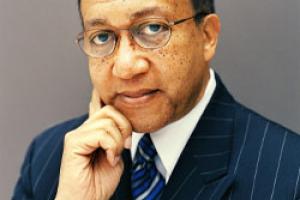
This week the President/CEO of the National Newspapers Publishers Association, the 73-year-old federation of more than 200 Black community newspapers in the United States, called upon the Black community to support full normalization of relations with Cuba. Benjamin Chavis, Jr. noted only Congress can lift the embargo of Cuba, and only the people can "force Congress to do the right thing." Now is not the time for Black America to be silent, he said.
Spread the word