The First National Monument to Victims of Lynching
A dynamic new memorial to lynching victims seeks to inspire local efforts to make the history of racial terror in America more visible and tangible, challenging each county where a racial terror lynching took place to permanently install a memorial to the victim.
Engaging Communities to Tell the Stories of Lynching Victims
An Equal Justice Initiative project is engaging hundreds of people to collect soil at lynching sites and to create community remembrance projects that tell the stories of lynching victims.
Did Slavery End in 1865?
Bryan Stevenson, founder of the Equal Justice Institute, talks about how slavery didn't just end in 1865, but how it evolved through Jim Crow, segregation and mass incarceration.
books
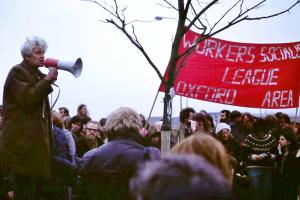
Homage to E.P. Thompson
Labor historian E.P. Thompson is perhaps best known for his monumental and path-breaking work, The Making of the English Working Class. The collected essays reviewed here, many either out-of-print or difficult to obtain, were written between 1955 and 1963. They show Thompson as also a dedicated educator of workers, a sharp polemicist, a skilled political theorist and a tireless agitator for peace, against nuclear weapons and for a rebirth of the socialist project.
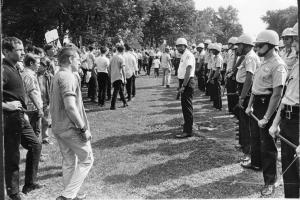
50 years Since Marquette Park - A Broader View
books
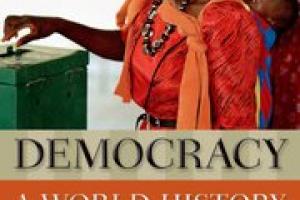
Democracy, from King Hammurabi's Time to Tomorrow
Democracy briskly and transparently recasts traditional world histories and world populations frequently left out of the narrative into a consideration of how different political alliances, including those of repressed and typically underrepresented groups, demand democracy through use of language and direct action. Democracy connects the local and the global, as well as the past and present, in understanding the complex and shifting notions of democracy.
Remembering a Dutch Partisan
Frederick Douglass vs Thomas Jefferson
High powered and high speed confrontation of issues of history, slavery, agency and more. One more of the Epic Rap Battles of History.
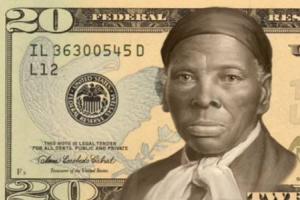
The Long Journey from the Age of Jackson to Harriet Tubman on the Twenty
When I began my academic career over forty years ago, the idea that a sea change from Andrew Jackson to Harriet Tubman would happen within my lifetime, that my students would come to college familiar with not only Harriet Tubman—but also Harriet Beecher Stowe and Harriet Jacobs—seemed unimaginable. The forgotten voices of women, particularly women of color, are being recovered.
Spread the word