
- Court: Breaking Your Employer's Computer Policy Isn't a Crime - Jamie Williams (Electronic Frontier Foundation)
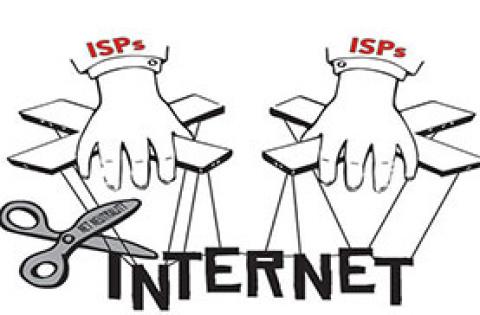
- Net Neutrality in Court This Week: The Story of How We Got Here - Harold Feld (Public Knowledge)
- Uber Is Not the Future of Work - Lawrence Mishel (The Atlantic)
- The Land That the Internet Era Forgot - W. Ralph Eubanks (Wired)
- Can Computers be Racist? Big Data, Inequality, and Discrimination - Michael Brennan (Ford Foundation)
Court: Breaking Your Employer's Computer Policy Isn't a Crime
By Jamie Williams
December 3, 2015
Electronic Frontier Foundation
The United States Court of Appeals for the Second Circuit issued an opinion rejecting the government’s attempt to hold an employee criminally liable under the federal hacking statute—the Computer Fraud and Abuse Act (“CFAA”)—for violating his employer-imposed computer use restrictions. The decision is important because it ensures that employers and website owners don’t have the power to criminalize a broad range of innocuous everyday behaviors, like checking personal email or the score of a baseball game, through simply adopting use restrictions in their corporate policies or terms of use.
The court also ruled that the government cannot hold people criminally liable on the basis of purely fantastical statements they make online—i.e., thoughtcrime.
Net Neutrality in Court This Week: The Story of How We Got Here
By Harold Feld
December 02, 2015
Public Knowledge
For close observers of the net neutrality saga, this Friday brings a sense of déjà vu, as the agency again heads to Court to defend net neutrality rules at oral argument. The FCC’s relevance in the broadband era, along with how consumers, content creators, entrepreneurs, and network providers interact with each other, hangs in the balance.
Uber Is Not the Future of Work
By Lawrence Mishel
November 16, 2015
The Atlantic
The rise of Uber has convinced many pundits, economists, and policymakers that freelancing via digital platforms is becoming increasingly important to Americans’ livelihood. It has also promoted the idea that new technology—particularly the explosion of platforms enabling the gig economy—will fundamentally alter the future of work.
Uber is frequently in the news, and digital-freelancing platforms garner a lot of attention, but evidence of an exploding gig economy is, as they say, showing up everywhere but the data.
The Land That the Internet Era Forgot
By W. Ralph Eubanks
November 7, 2015
Wired
In the small Delta town of Ruleville, the only public space with a strong Wi-Fi connection is the public library, open just two days a week. Sharonda Evans, a 16-year-old student at the local high school, tells me that she’s one of the lucky ones in her town: Her family pays $50 a month for a slow connection. “Those who live outside the center of town can’t get Internet access, even if they can afford it,” she says. And as far as I can tell, there are no plans in the works to bring broadband to Ruleville.
In a state that has privatized everything from child protective services to nutrition programs for the elderly, broadband access is bound to be regarded pretty much entirely as something for the private sector to sort out, and not as anything like a public need or a civil right.
Can Computers be Racist? Big Data, Inequality, and Discrimination
By Michael Brennan
November 18, 2015
Ford Foundation
It seems like everyone is talking about the power of big data and how it is helping companies, governments, and organizations make better and more efficient decisions. But rarely do they mention that big data can actually perpetuate and exacerbate existing systems of racism, discrimination, and inequality.
While we’re lead to believe that data doesn’t lie—and therefore, that algorithms that analyze the data can’t be prejudiced—that isn’t always true. The origin of the prejudice is not necessarily embedded in the algorithm itself: Rather, it is in the models used to process massive amounts of available data and the adaptive nature of the algorithm. As an adaptive algorithm is used, it can learn societal biases it observes.
Spread the word