Twenty years into its C.T.E. era, the N.F.L. is more popular and profitable than ever. Revenues rise even as the math becomes clearer for the once immeasurable price paid in brain damage sustained by football players.
Fans know too much to plead ignorance. They now know, thanks to a new study , that at least one in four former N.F.L. players had C.T.E. among the nearly 900 who died between 2016 and 2021.
We are living in an era of cognitive dissonance, sociologists said. How many C.T.E. cases, they wondered, are too many for fans’ collective consciousness? What would it take to quit watching, or to quit sending children into the scrum? How many irreversibly damaged brains in the N.F.L. would turn away the masses?
“I doubt that any number is going to do it,” said Steve Almond, a lifelong football fan and the author of “Against Football: One Man’s Reluctant Manifesto.”
Mr. Almond is among the millions who cannot turn away from what he has called “our unholy appetites.” He’s just more thoughtful about it. He says football is “morally troubling.”
“The vast majority of fans aren’t sitting there saying, ‘I want people to get hurt and I have this blood lust,’” he said. “I think, like me, they’re getting off on a beautiful, narratively thrilling sport that has an unfortunate adjunct to it — the fact that it’s absolutely unsafe to play.”
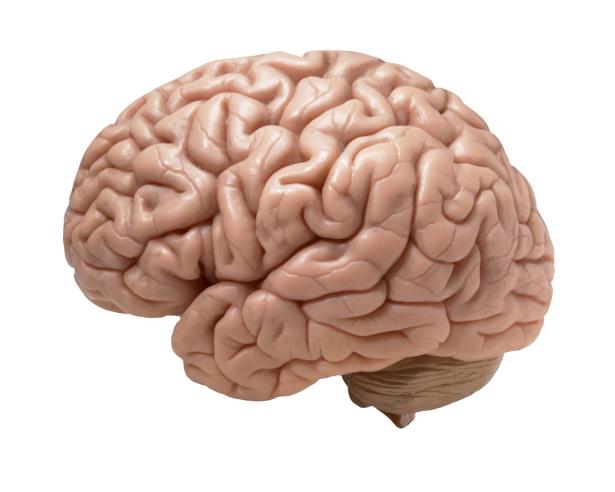
In the past two decades, hundreds of former N.F.L. players have died with chronic traumatic encephalopathy, or C.T.E., a brain disease caused by the cumulative effect of repeated hits to the head. Now a new peer-reviewed study reveals that 25 percent of them over a recent six-year period were found to have had C.T.E. — posthumously, the only way to diagnose the disease with certainty.
That one-in-four ratio is certainly low, since it does not account for the nearly 75 percent of deceased players in that period whose brains were not examined because they had not been made available to researchers.
If the one-in-four rate extended to the upcoming season, that would mean, on average, 13 players per team and more than 400 active players in the league would have C.T.E.
They, too, might experience C.T.E.’s dementia-like symptoms, possibly including memory loss, confusion, impulsivity and depression. They, too, might have shorter life expectancies and far higher rates of addiction and suicide than those lucky enough not to get it.
By any standard of workplace safety, C.T.E. is an epidemic. There may be no industry that does so much damage to its workers. And we know that the damage sometimes also reaches teens who play the game just for fun.
Yet millions of children continue to play tackle football. American universities spend billions of dollars on it — higher education leaders knowingly fostering a sport that leaves some of its students addled with a neurological brain disease. The pipeline of players, an inexhaustible resource, keeps flowing toward the N.F.L.
And fans keep cheering.
Football has a unique hold on American culture. There is a gauzy nostalgia to the game, but it is thriving like never before, too. Roots run deep. The college game predates the N.F.L. by decades, but the N.F.L. has been around for more than a century. Today, the league’s game telecasts are most of the most-viewed shows on television.
It’s not just entertainment. Football permeates the American landscape. Entire cities identify with pro teams. Entire communities thrive on the tradition and pomp of the college game. Small towns and suburbs across the country glow with Friday night lights.
Traditions are passed down and communities are uplifted, through tailgates, game-day rituals and a steadfast devotion to team colors. Millions are bet on the games, even if only through office pools or fantasy football. Children play football in schoolyards and backyards. The Super Bowl is one of the few cultural events that still connects people from all corners.
The latest research paper may not be enough to upset that devotion.
Jay Coakley, a retired college professor and an author of “Sports in Society,” a college textbook now in its 14th printing, says that football, for now, seems exempt from a reckoning over its dangers. The game is too deeply entwined in fans’ lives, he said, to let even a one-in-four C.T.E. prognosis for beloved N.F.L. stars turn fans away.
“When you start holding it up to what’s happening to athletes who they don’t really know, who they have very little personal information about, they’re going to go with what is contributing to their lives in significant ways,” Mr. Coakley said. “And they will then purposely ignore or discredit anything that conflicts with that.”
Like brain injury data. Mr. Coakley speaks of “the great sports myth,” the idea that sports are seen as so intrinsically good and pure, individually and collectively, that it keeps us from looking at them critically. Mr. Almond calls it a “suitcase of rationalizations,” the ability to tell ourselves that it’s OK even if, deep down, it bothers us.
“There is a sort of great bargain, this sort of dirty deal of capitalism,” Mr. Almond said. “We all know that there’s a slaughterhouse, but we also love the bacon cheeseburger. So we don’t really focus too much on the slaughterhouse.”
Fans have the luxury of distance and can feign some sort of remove, sociologists said. They can pretend that their heroes are immune to the degenerative risks of America’s favorite collision sport. Football, with its armorlike uniforms, is not like boxing, or even mixed martial arts, where the injuries are obvious among the blood and 10 counts. Brain injuries sustained in football are usually invisible and delayed. Suffering comes later, out of sight.
Besides, don’t players accept all risks once they take the field?
The league and its team owners, now 20 years into the evidentiary era of C.T.E., have taken marginal steps toward brain safety. In 2013, when the N.F.L. settled, without admitting liability, a class-action lawsuit involving more than 4,500 players for $765 million, the league’s annual revenues were about $14 billion, adjusted for inflation. In 2024, they were more than $23 billion.
And N.F.L. players? They keep coming, chasing childhood dreams and million-dollar salaries, still unsure how to calculate the risks and rewards.
Joe Thomas, 41, retired after an 11-year career as an offensive tackle for the Cleveland Browns. He was inducted into the Pro Football Hall of Fame in 2023.
“In the locker room, generally the thought process was that we’re all football players and we’ve chosen this profession,” Mr. Thomas said. “It’s our identity, it’s what we love to do, it’s what we get paid a lot of money to do.”
Mr. Thomas experienced memory problems during his career, he said, but was never certain whether they were related to football or to ordinary aging. It’s a muddy distillation that lead some to justify the status quo.
“It’s pretty clear that if you smash your head into other full-grown humans, or even smaller humans, there are going to be some negative effects,” Mr. Thomas said.
Football players, even those who do not reach the N.F.L., live with a sort of boogeyman. Who among us will get it? And when?
A vexing thing about C.T.E. is that researchers don’t yet understand why some people with the disease experience symptoms and others don’t.
“I try not to dwell on it or have this daily fear of this guy lurking over me,” Mr. Thomas said. “There will be a tipping point when we have data related to genetic susceptibility that certainly plays a huge role in why some guy who played 20 years, who was the most physical head-basher you’ve ever seen in your life, has no problems and lives to 90, and another guy got hit in the head twice and has C.T.E. So hearing that 25 percent got C.T.E., I still don’t know what that means. I don’t know how to quantify it in my mind.”
This month, the former N.F.L. running back Roger Craig, 66, was inducted into the Pro Football Hall of Fame. He used his speech to announce his dementia diagnosis, which he believes is related to football.
“Two things can be true,” Mr. Craig said. “Football gave me opportunities beyond anything I could imagine. It helped shape the man I became. At the same time, we know more today about brain health than when I played, and I hope sharing my story encourages people to pay attention to their health and seek help when something doesn’t feel right.”
The induction ceremony was part of a weekend of festivities to celebrate football. It included the N.F.L.’s first preseason game between two teams with expanded preseason rosters. If the latest study’s numbers are applied, at least 45 of those players will someday have C.T.E.
C.T.E. is a degenerative brain disease believed to be caused by repeated hits to the head — not just major concussions, but the countless subconcussive hits absorbed with little attention. There are no other known causes. In the past 20 years, it has been found in athletes in hockey, rugby, soccer, BMX biking and bobsledding, among other sports. It has also been found in military members and in at least one police officer .
But it is football where the intersection of American popular culture and public health is most on display, in front of millions of fans.
Cases have become routine, almost rote. Most are not made public. Those that are, a few each year, have become a familiar backdrop as the games go on.
About 350 former N.F.L. players have been diagnosed with C.T.E., most after showing severe symptoms in their later years. Some were aging stars, like Frank Gifford, Ken Stabler and Nick Buoniconti — one of eight members of the undefeated 1972 Miami Dolphins to be diagnosed so far. Others were recently retired or in middle age, like Demaryius Thomas, Frank Wycheck and Vincent Jackson. Several died by suicide, including Junior Seau, Dave Duerson and Terry Long. A few died young after committing murder, including Aaron Hernandez, Jovan Belcher and Phillip Adams .
Most suffered far from public view, years after their careers ended.
“We don’t see what happens to those people in the long run and how it changes their lives,” said Mr. Coakley, the retired professor. “That’s the important factor — the actual, concrete representation of the consequences of their involvement. And fans don’t have access to that. To the extent that we don’t have access, we don’t have to make decisions.”
The N.F.L. insists that it has taken concussions and C.T.E. seriously since it held its first “concussion summit” in 2007. It has donated to research and tinkered with rules to reduce blows to the head.
“Through improved equipment, rules modifications and a continued culture change, we will make the game safer and more exciting,” Jeff Miller, N.F.L. executive vice president overseeing player health and safety, said in a statement days before the Super Bowl in 2025.
In the latest study of former N.F.L. players, it is impossible to know when the brain damage occurred. Most had played years of youth, high school and college football before reaching the N.F.L.
C.T.E. has been found in boys as young as 15. That is why researchers recommend that children not play tackle football. Since a vast majority will not play college or professional football, avoiding full-contact youth football can reduce the chances of getting C.T.E.
Some of the same researchers involved in the latest study hope to soon be able to clinically diagnose C.T.E. accurately in the living. It is not an exact science like a brain autopsy, but one akin to diagnosing Alzheimer’s or Parkinson’s by analyzing myriad symptoms and tests. They also plan to publish what they believe is the true estimate of C.T.E. cases in all former N.F.L. players upon death — a rate expected to be far higher than 25 percent.
Some researchers believe that tally will show that more than half of all former N.F.L. players die with C.T.E. If that’s true, football fans will be confronted with an even more troubling view of the game.
John Branch writes feature stories for The Times on a wide swath of topics, including sports, climate and politics. He is based in California.
Get the best of the New York Times in your Inbox with a free newsletter. Gain unlimited access to all of The Times with a digital subscription .

Spread the word