If the World Began Again, Would Life as We Know It Exist?
Nautilus
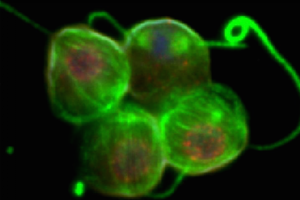
According to a new finding, described as a "shock" by its discoverers, a single mutation 600 million years ago may be responsible for the emergence of complex organisms -- including all of the plants and animals that we are familiar with -- from a single-celled ancestor. This evolutionary accident enabled cells to communicate with each others and therefore to cooperate.
Cooperative colonies — ants, termites, and some wasps and bees — have fascinated scientists for more than a century because they pose an evolutionary conundrum. Only a very small number of insects actually get to reproduce: the queens and their mates. The rest give up their chance to contribute to the gene pool, caring for the offspring of others instead. How did this lifestyle, known as eusociality, evolve?
That's what computers are really good at, relentless grinding. I can't call it intelligence, and I can call it artificial intelligence only in the sense that an inflatable palm is an artificial tree. I realize that we do have to call it something, though, but the term "artificial intelligence" probably confuses more than it illuminates.
Spread the word