The Bostonian Who Armed the Anti-Slavery Settlers in “Bleeding Kansas”
Zócalo Public Square
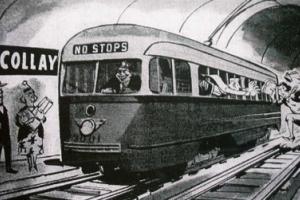
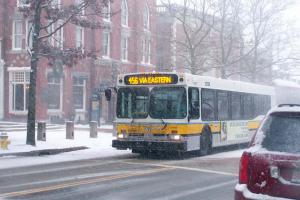
Most Americans know the song “MTA,” popularized by the Kingston Trio in 1959. It’s the one about a “man named Charlie” doomed to “ride forever ’neath the streets of Boston . . . the man who never returned.” What’s forgotten, however, is that the song was originally made for a left-wing political campaign. In 1949, the Boston People’s Artists wrote “MTA” for a left-wing candidate. The song became a hit — the man behind it disappeared.
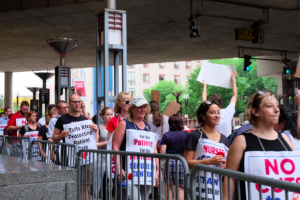
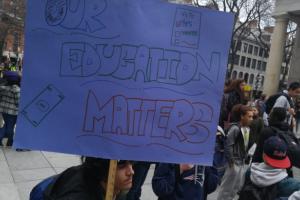
What’s unspoken is that the best proof that the unions didn’t have much of a role in the protest is that historically they’ve shown little ability to mobilize significant numbers of students in the Bay State. Typically, union-backed coalitions like BEJA will pull a few dozen to a few hundred people to such protests. Students or non-students, the story is always the same. The people who turn out will be a mix of union and nonprofit staffers.
Under the settlement, these workers, who were supported by the hospitality union Unite Here, also will receive preference in hiring at future Boston-area Hyatt hotels, although many said they would be reluctant to return to a Hyatt unless it is unionized. Nationwide, about a quarter of Hyatt hotels have a union presence, and Marc Ellin, senior vice president at Hyatt, said future Hyatts in Greater Boston “could involve union representation
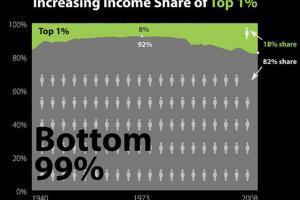
In the years since the destruction of the occupations, the critique of inequality has only broadened and deepened in the U.S. Occupy should claim credit for getting it on the map, while political iterations old and new have been keeping it there. Today, the fight against inequality is taking greater institutional shape, and seemingly exerting more leverage, in places inspired by Occupy but moving beyond its initial tactics.
Spread the word