Private Equity: The New Neighborhood Loan Sharks
The American Prospect
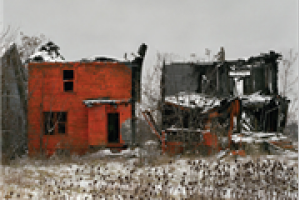
Perhaps in no U.S. city is the wreckage wrought by today's capitalism better seen than in Detroit, the once mighty auto metropolis now morphed into a showcase of post-industrial abandonment. New signs of rebirth and redevelopment there are fraught with contradictions, as artists and gentrifiers engage in what Dora Apel calls "ruin lust." Here, Scott McLemee reviews Apel's take on the (former?) Motor City and post-industrial tourism and aesthetics.
Detroit's bankruptcy wasn't inevitable. Neither is Chicago's. But the austerity hawks don't want you to know that...When cities and states borrow money by issuing bonds, the lenders are typically high-wealth individuals, who purchase the bonds to get a tax break. It is a perverse system through which, rather than paying their fair share in taxes, the wealthy are instead able to lend that money to us, charge us interest for it, and then claim a further tax break on it.
The new Detroit renaissance does not address why the city declined in the first place. It does little to address poverty, unemployment and access to resources for the vast majority of the city’s residents. What’s worse, the gentrification of downtown Detroit contributes to greater inequality and polarisation, which are growing challenges for cities around the world.
Pre-1920 were tumultuous times: World War I, the Bolshevik revolution, Espionage and Sedition Acts; Race Riots in Chicago, returning African American veterans defending their communities against white mobs, mass deportations of foreign born, the Great Influenza Pandemic; UMW Coal Strike and the Great Steel Strike, mass economic inequality. The Palmer raids of 1920 capped an era. The Chicago Police and State's Attorney couldn't wait and began the raids a day early ...
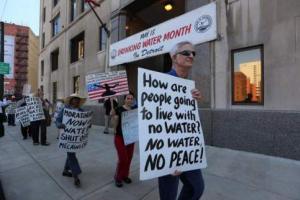
As Detroit seeks to leave bankruptcy behind and get back on its feet—ramping up development with construction of a light rail and a new hockey arena that will cost the city hundreds of millions of dollars—it is simultaneously bearing witness to a process that could evict up to 142,000 of its residents, many of whom are too poor to pay their property taxes.
Spread the word