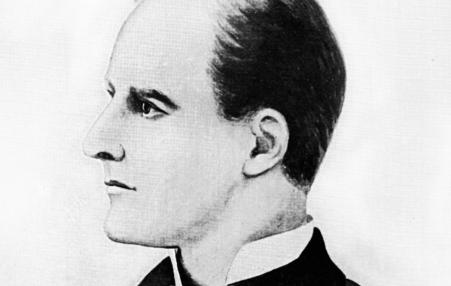
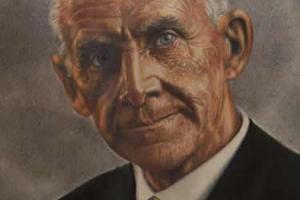
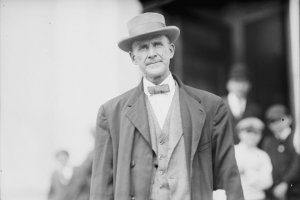
The Young Eugene V. Debs
Jacobin
Debs came to the conclusion that no strike or labor movement could ultimately be successful as long as the government was controlled by the capitalist class. Any advances made by an organized working class would be reversed once the capitalists regained absolute power, often by temporarily mollifying workers with a few reforms. Working men and women had to achieve political power, or they would forever be at the mercy of the bosses.
Reader Comments: White House Explains the Holocaust - Just in time for Passover and Easter; Trump and Syria - What We Know...and Don't - Take Action Now; A Nation Made By War - A Veteran's commentary; the Frayed Alliance Between Unions and Progressives; Sanders Bill To Make Public Colleges Tuition-Free - San Francisco's Example; Free Resources - Resources: Mapping the Left in EU, Canada and USA from Rosa Luxemburg Stiftung - New York Office; Announcements; and more...
The upsurge in interest in the ideas of Socialism also means a reassessment of its traditions. Jack Ross offers a new, ambitious attempt to come to terms with the history of the Socialist Party in the United States, an organization, and movement, whose story is one of this country's modern legends. In this review, Harold Meyerson, who, as he points out, was a part of this history, takes a look.
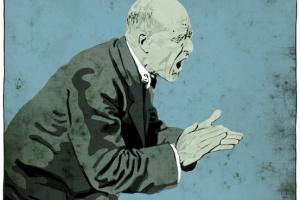
In response to the Congressional declaration of war in April 1917, delegates at a Socialist party convention declared their “unalterable opposition” to it. The federal government began prosecuting Socialist Party leaders. Socialist Congressman Victor Berger, convicted under the Espionage Act, was expelled from the House of Representatives, re-elected by the voters, and then expelled again. Debs responded with a blistering speech at a party rally in Canton, Ohio.
Spread the word