‘Stamped From the Beginning” This Film Is Needed Now More Than Ever’: Exploring the Roots of US Racism
The Guardian

Many commentators who have affirmed that something called "white rage" gave us Trump appear to treat the phenomenon as if it was a newly sprouted thing. Here is a book that aims to add nuance and historical context to a widely noted, but still too-little examined, aspect of our contemporary political reality.
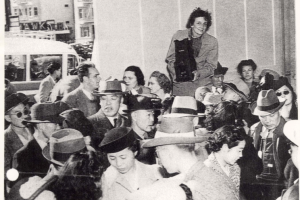
Until 2006, almost no one knew of Dorothea Lange's photographs of the Japanese internment. These were also commissioned by the federal government, but had never been published as a collection, and approximately 97 percent of them have never been published at all.1 Their neglect resulted from US Army censorship: once the brass saw the photographs, they quickly impounded them for the duration of the war, and afterward placed them in the National Archives.2
A century ago, Madison Grant was one of the most influential racists in the United States. Republican presidents echoed his ideas. He helped shape immigration legislation. His ideas showed up in U.S. literature and popular culture. Adolph Hitler was a fan. In this essay, Noel Hartman focuses on Grant's best-known book and reminds us how some of Grant's ideas have survived and resurfaced in our current presidential campaign.
The history of racism in our country is sometimes best understood by looking at how that history unfolded locally, and in places outside the slaveholding South, as well as nationally. Fred Whitehead writes about his own experience growing up in Kansas in the 1950s and about what Brent M. S. Campney, in his new study of that state's bloody Civil War and Post-Civil War racial history, taught him.
Spread the word