
What Little Babies See That You No Longer Can

Susana Martinez-Conde Scientific American
Before developing perceptual constancy, three- to four-month-old babies have a striking ability to see image differences that are invisible to adults. They lose this superior skill around the age of five months

How Humans Evolved Supersize Brains

Ferris Jabr Quanta Magazine
Fossils established the Brain Boom as fact. But they tell us next to nothing about how and why the human brain grew so large so quickly. In the last eight years, however, scientists have started to answer the “how” of human brain expansion — that is, the question of how the supersizing happened on a cellular level and how human physiology reconfigured itself to accommodate a dramatically enlarged and energy-guzzling brain.

Brainlike Computers, Learning From Experience

John Markoff The New York Times
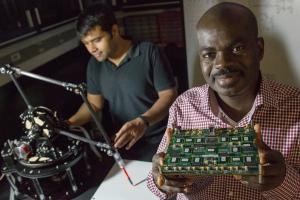
These computers are not programmed instead, connections between the circuits are “weighted” according to correlations in data that the processor has already “learned.” Those weights are then altered as data flows in to the chip, causing them to change their values. That generates a signal that travels to other components and, in reaction, changes the neural network, programming the next actions much the same way that information alters human thoughts and actions.
Subscribe to human brain