Roma Slavery: The Case for Reparations

Margareta Matache and Jacqueline Bhabha Foreign Policy in Focus
The Romanian church, the aristocracy, and the state institutions inherited huge sums of wealth from the fruits of Roma slavery. Like on other slave-holding continents, after five centuries of brutalization and inhuman exploitation, the abusers received monetary compensation for freeing their Roma slaves.

Human Rights Hypocrisy: US Criticizes Cuba

Marjorie Cohn Marjorie Cohn
In advance of President Barack Obama’s historic visit to Cuba on March 20, there was speculation about whether he can pressure Cuba to improve its human rights. But a comparison of Cuba’s human rights record with that of the United States shows that the US should be taking lessons from Cuba.

UN Discovery of Secret Detention Centre Revives Nightmares

Amantha Perera Inter Press Service
The site is nothing new to those who were held there. In June this year the South Africa-based International Truth and Justice Project, Sri Lanka (ITJPSL) launched a 134-page report on on-going human rights violations and past cases in Sri Lanka. Many of those held were either members or were connected to the separatist Liberation Tigers of Tamil Eelam (LTTE).

books

Stripping Away Invisibility: Exploring the Architecture of Detention

Victoria Law Monthly Review
Like the people within, immigrant detention centers are often invisible as well. Photos and drawings of these places are rarely public; access is even more limited. Canada has three designated immigrant prisons, and it also rents beds in government-run prisons to house over one-third of its detainees. Undocumented: The Architecture of Migrant Detention begins to strip away at this invisibility.

What the Class Politics of World War II Mean for Tensions in Asia Today

Walden Bello Foreign Policy in Focus
Postwar U.S. authorities helped rehabilitate erstwhile collaborators with the Japanese occupation in the name of fighting communism. Generations later, it’s led to the grandson of a despised Philippine collaborator endorsing the re-militarization of his country’s former occupiers — by the grandson of a war criminal, no less.

The U.S. Aids and Abets War Crimes in the Philippines

Marjorie Cohn Truthdig
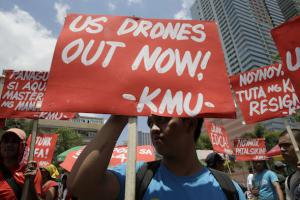
People and groups have been labeled terrorists by the Philippine government, the U.S. government and other countries at the behest of the U.S. government. The Philippine government engages in - red tagging - political vilification. Targets are frequently human rights activists and advocates, political opponents, community organizers or groups struggling for national liberation. Those targeted for assassination are placed on the order of battle list.

US Cited for Police Violence, Racism in Scathing UN Review on Human Rights

Natasja Sheriff Al Jazeera
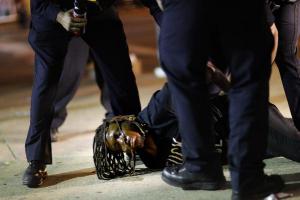
117 countries criticized, shamed and attacked the U.S. for police violence and racial discrimination at the United Nations Human Rights Council hearing in Geneva. Among the various concerns raised were the failure to close the Guantanamo Bay detention facility, the continued use of the death penalty, the need for adequate protections for migrant workers and protection of the rights of indigenous peoples.

Tidbits - May 14, 2015 - TPP; Stop-and-Frisk; White Americans and Police Accountability; Vietnam ,Debating the War; Remembering Jackson State Murders; more...

Portside
Reader Comments - Obama and the TPP; Stop-and-Frisk; White Americans and Police Accountability; Vietnam and Anti-War History and the Ongoing Debate; Remembering Jackson State Murders; Greece, Organizing New York; Those Who Work in Customer Call Centers; Announcements - Immigration, Work and Wages - Washington - May 21; Film Showing and Discussion - Blood Fruit - New York - May 22

Civil Resistance and the Geopolitics of Impunity

Baltasar Garzón OpenDemocracy
The Spanish jurist who issued arrest warrant for Augusto Pinochet reflects on the battle to unseat impunity in Chile and Argentina, and Spain's efforts to shake off its collective amnesia. Impunity, as the absence of justice, is the second of two assaults on both the law and the dignity of victims. Garzon asserts it is a mistake to advocate for peace while disregarding demands for justice. No amnesty law should obstruct access to justice for victims.
Subscribe to Human Rights