
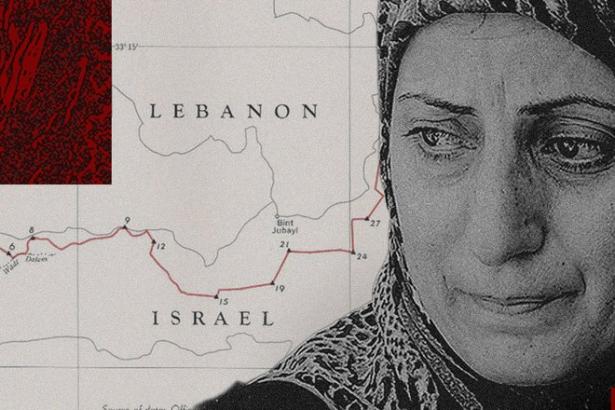
Jennifer Loewenstein, activist and former associate director of Middle Eastern studies at the University of Wisconsin–Madison, recently returned from a visit to Lebanon, the southern region of which has been occupied by Israeli forces since March. Despite a U.S.-brokered ceasefire agreement signed in June and ongoing peace talks in Rome, the area has been subject to violent incursions as well as shortages of food and basic necessities. The Progressive discussed the crisis in Lebanon with Lowenstein in July. This interview has been edited for length and clarity.
Q: What is the latest on the crisis in Lebanon?
Jennifer Loewenstein: Recently, the prime minister of Lebanon, who is a Sunni, and the president, who is a Christian, made an agreement with Israel and the United States that Israel could stay in south Lebanon indefinitely in what they call their “security zone” until Hezbollah is disarmed. This was a scandalous agreement for most Lebanese because it is negotiating with the country that is currently bombing and destroying them.
And, of course, Hezbollah is not just an Iranian proxy. It’s a popular grassroots movement that about 95 percent of the Shia population in Lebanon support, because it’s the only group in Lebanon actually fighting the Israelis who are illegally occupying and destroying Lebanese territory. Israel has displaced more than a million people, some of whom have tried to go back to their homes only to find that their homes have been destroyed.
So, you have a real internal rift right now between various factions within the government and also among the population. It’s a real mess. Israel wants to make sure that Lebanon is weak and divided and internally unstable because that way it’s easier to control.
Q: I understand a ceasefire is part of the current agreement, but the bombing has continued regardless. Ending the violence in Lebanon was also part of the brief ceasefire agreement the United States had negotiated with Iran, before those bombings started again. Is Israel purposely trying to sabotage the peace efforts between Iran and the United States?
Loewenstein: Absolutely. Israel certainly doesn’t act as if it knows the meaning of the word ceasefire. It’s the usual: They [the targeted populations] cease, and Israel continues to fire. The Israeli government, as far as anyone can tell, seems to be only interested in perpetual warfare, and that’s not an exaggeration. This perpetual warfare has been going on for a very long time.
Obviously, the latest wave of it began with October 7, [2023], but it’s nothing new. Israel has occupied huge tracts of land now in Syria. It’s occupying this strip of land in Lebanon and hoping to move further north. It’s attacked Yemen. It’s attacked Iraq. It will attack Iran again.
Israel’s goal is to become the dominant hegemon in the Middle East, and to do to these countries what it has been doing to the Gaza Strip for the last few decades, which is to “mow the lawn” any time those countries appear to be getting stronger or re-arming.
Q: The United Nations Office for the Coordination of Humanitarian Affairs has just issued a statement that women and girls in southern Lebanon are facing heightened risks of gender-based violence and disrupted access to essential health services amidst Israel’s invasion. Can you comment on that?
Loewenstein: We do see this, in south Lebanon especially. When you have an army, a military that targets the health-care systems of these countries, obviously women are going to be on the receiving end of those destroyed facilities because that limits what they’re able to access, and women are very much the caretakers of families in the Middle East.
What we’re seeing in Lebanon is very similar to what we see in Gaza, where women’s lives have been shattered in every conceivable way. As a result, trying to put the pieces back together is much more difficult than it would be in a society where the women were mostly left alone or considered not fair targets.
Q: And women are being targeted in larger numbers than in most conflicts?
Loewenstein: We have seen women being killed, assassinated in certain cases, for being journalists. Journalists are fair game for Israel. There was a woman named Mona Khalil who is well-known as a conservationist for sea turtles. She was also killed by the Israelis. They knew where she lived and her home was bombed, so I have to say that she was probably targeted.
Women are not exempt in Israel’s eyes from being killed, from being assassinated, from being targeted. And in that sense they’re paying just as heavy a price in life as are the men, which is not always the case. If anything can be said, they’re just as equal targets in this war. In most wars, women are not the first targets or equal targets to the men. But with Lebanon and Gaza, we’ve seen almost an equal targeting of women.
Q: Gender-based violence is exacerbated by war and strife.
Loewenstein: Right. In these societies, there is still a very traditional divide of men and women. It’s not a hundred percent, but the women are the ones who bear the brunt of things like domestic violence. When society is under attack, when the men of the society are having difficulty finding work, staying alive, providing food, what happens is that gets taken back in the home and domestic violence goes, often, off the charts, And it’s no different in places like Gaza and the West Bank.
Women will end up being the targets of the rage and frustration that the men are feeling. That’s not an excuse for domestic violence; if anything, it’s a sad commentary on our societies. Domestic violence spikes when the social conditions start to falter. I’m sure that’s a very big problem now, just as it was before October 7, and it’s one that needs a great deal of attention.
Fortunately, there are also groups and women in these societies trying very hard to stem this tide of violence. There are domestic violence counselors. But obviously, a great deal of work still needs to be done to help these women because, once again, they are the ones that are paying the highest price—they and the children.
Q: Is there any data from currently occupied Lebanon about sexual violence as a war crime? Unfortunately, it happens in every war.
Loewenstein: That’s a very good question. I have not read about sexual violence in Lebanon so far, but you’re absolutely right. If there’s some irony, it’s how women and men have been fairly equally targeted as objects of sexual violence in the prison systems in Israel, which is absolutely scandalous. The number of rapes. The molestations. I mean, this happened to the flotilla participants, not just the Palestinian women or the Lebanese women or anybody else. The reports that are, in fact, coming out now by B’Tselem, by Human Rights Watch, by Amnesty [International] on the sexual violence against Palestinians…it’s beyond atrocious.
Women are definitely targets, as well as men. If anything, Israel has managed to be very egalitarian in meting out sexual cruelty and that is something that is going to be studied for, I believe, decades because it’s so appalling, what’s happening there in the prison system. Israel, of course, likes to deny that it’s happening, but there are too many credible reports and testimonies from the victims, the survivors. It’s everywhere and it’s very ugly and it’s pervasive.
Q: What can we do to address these problems?
Loewenstein: I always tell people not to give up hope even though there are days I feel utterly hopeless myself. The only way any of this is going to stop is by people like us standing up and saying “enough is enough.” We’ve got to divorce ourselves as a country from Israel completely because of what it’s doing.
You know, for many years, the Palestinian issue was still a minority issue and people were still basically protesting anyone who criticized Israel. But that’s shifted. Now we see 80 percent of Democrats wanting to divorce from Israel and a good percentage of the population in general. That’s a huge shift. So, change does happen. It’s just that it’s very slow, which can be very frustrating.
Since 1909, The Progressive has aimed to amplify voices of dissent and those under-represented in the mainstream, with a goal of championing grassroots progressive politics. Our bedrock values are nonviolence and freedom of speech.
Based in Madison, Wisconsin, we publish on national politics, culture, and events including U.S. foreign policy; we also focus on issues of particular importance to the heartland. Two flagship projects of The Progressive include Public School Shakedown, which covers efforts to resist the privatization of public education, and The Progressive Media Project, aiming to diversify our nation’s op-ed pages. We are a 501(c)(3) nonprofit organization.
Spread the word