
Louise Vincent Built the Collective Power of Drug Users. A Year After Her Death, the Movement She Sparked Struggles To Pick Up the Pieces.
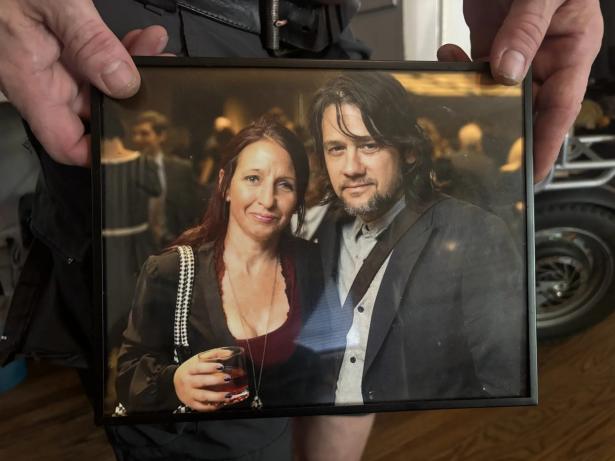
This story is in loving memory of groundbreaking drug user activist Louise Vincent, who died one year ago today, and journalist Logan Hullinger, who was working on a story for Prism about the National Survivors Union when he died from an overdose on March 6. He was 29 years old.
In her early years in the American drug user human rights movement, before harm reduction went mainstream, before she was profiled by The New York Times, before she got sick, the late activist Louise Vincent spent her days and nights anticipating “the call.”
At the time, it was still illegal in North Carolina to possess or distribute naloxone, the lifesaving medication that reverses an opioid overdose. She had a small supply smuggled to her from an activist in Chicago, though not enough to distribute widely. When someone overdosed in her hometown of Greensboro, North Carolina, people knew where to go. Strangers knocked on Vincent’s door or called her phone pleading for help. She left immediately after the overdose was reversed, before the ambulance or cops arrived. Sometimes dealers even called her, until Vincent taught them how to reverse an overdose themselves.
Vincent soon realized the drug supply was changing. More people were dying than ever before. The fentanyl crisis had begun.
“But we were seeing it in real time with real bodies and real life. This wasn’t graphs and maps,” Vincent told me when I interviewed her in 2024. “This was friends and lovers and people we loved.”
In the years that followed, Vincent became one of the nation’s foremost drug user advocates. She founded the North Carolina Survivors Union, which included a drug user-led health hub in Greensboro offering users a place to rest, clean their wounds, test their drugs, and access harm reduction supplies. Under her stewardship, the Urban Survivors Union, later renamed the National Survivors Union, organized against drug-induced homicide laws that allow prosecutors to bring charges against people who provided drugs to someone who overdosed. Her advocacy also helped compel the federal government to significantly loosen methadone dispensing rules for the first time in more than two decades, most notably by granting clinics greater autonomy and flexibility to offer their patients doses to take home.
 In Greensboro, the North Carolina Survivors Union offers drug users a dignified place to rest, test their drugs, and access harm reduction supplies. Credit: Aviva Stahl
Vincent was a movement visionary who sought to build the collective power of drug users to demand essential human rights: the right to bodily autonomy, the right to dignity, the right to healthcare. In a movement historically dominated by white men, she dedicated time and resources to lifting up the experiences of women and people of color who were sex workers and parents.
Even after naloxone became accessible, the culture of cruelty toward drug users within the science and medical fields remained the same. All around her, users—her dearest friends, her movement comrades, her own child—were still dying preventable deaths.
“It is not a drug war,” Vincent told me. “It is fucking genocide.”
We weren’t just ‘the fucking junkies.’ We were going to change the world.
Louise Vincent
Vincent died on Aug. 31, 2025, at the age of 49. Her death came amid a right-wing backlash against harm reduction, including President Donald Trump’s 2025 executive order that called for unhoused people with mental illness or substance use disorders to be institutionalized against their will. The executive order also placed restrictions on the use of federal funds to purchase harm reduction supplies, including fentanyl test strips.
Drug user organizing “breathed life into us. It gave us something to be proud of,” Vincent told me before her death. “We weren’t just ‘the fucking junkies.’ We were going to change the world.”
A movement is born
In Greensboro, Vincent lived and died in a single-story house on a quiet street. In June, I went to visit her partner of nearly 15 years, Don Jackson, and Nick Voyles, an Indiana-based drug user human rights advocate and Vincent’s collaborator and close friend.
Jackson and Vincent had known each other in high school and met again in 2013, after Jackson was released from prison. They quickly became a movement couple, the kind whose entire lives were lived in tandem and in the work.
“I never knew you guys to be a separate organism,” Voyles told Jackson.
Jackson has struggled with reporters since Vincent’s death. When the Times first published her obituary, the word “addict” appeared in the headline. The article still states that Vincent survived several overdoses, which, according to Jackson, isn’t true.
Though Jackson was at first reluctant to talk, when I asked who most influenced and shaped Vincent’s politics, Voyles and Jackson were quick to answer: Thelma Wright, a Black woman, Seventh Day Adventist motorcycle mechanic who became interested in harm reduction after losing a good friend to AIDS. Vincent reached out to Wright after hearing about her organization, the North Carolina Harm Reduction Coalition. By 2008, Vincent was working as the organization’s program director.
Dr. Nabarun Dasgupta, an epidemiologist at the University of North Carolina at Chapel Hill, entered harm reduction advocacy around the same time as Vincent. He, too, was mentored by Wright, who died in 2023. The activist and educator taught Vincent and Dasgupta the importance of leading by example, Dasgupta said. For example, she paid out of pocket to bring busloads of people from around the state to rallies in Raleigh calling for HIV prevention legislation.
“And that’s partially the model that Vincent followed when she started the North Carolina Survivors Union,” Dasgupta said.
Wright brought Vincent to the 2008 National Harm Reduction Coalition conference, and it was there she met Dan Bigg, a drug user organizer from Chicago. At the time, Vincent had been attending Narcotics Anonymous (NA) meetings, and she was completely enmeshed in the messaging that being a drug user made her a failure and a fuck-up, she later told journalist Travis Lupick.
She left the conference changed.
“It was the first time I realized that maybe I was not a bad person,” she told Lupick. “Before that, I had no idea that other people thought like me. I had no idea there was a movement. I mean, I was born again.”
At the time, distributing syringes for the purpose of drug use was still illegal in North Carolina and Vincent quickly grew tired of operating within the legal limits of a nonprofit. Around 2010, she left her job with the North Carolina Harm Reduction Coalition and threw herself into running an underground syringe exchange program. The first time Dasgupta met Vincent, it was at a Burger King to hand off some naloxone.
Around 2013, Vincent went to a conference organized by the Drug Policy Alliance (DPA), which focuses on policy solutions to address the harms of drug use and criminalization. There, she connected with Seattle-based drug user activist Shilo Jama, who was part of a burgeoning movement influenced by decades of drug user activism across Europe and Canada and the legacy of the direct action group ACT UP, or the AIDS Coalition to Unleash Power.
The first drug user union, formed in the Netherlands in 1980, mobilized the collective power of users to oppose involuntary drug treatment and provide underground access to needles and methadone. User unions were slow to arrive in the U.S., but by 2013 five had been founded, including in New York City, San Francisco, and New England, explained drug user human rights activist, Jess Tilley.
At the DPA conference, Jama asked Vincent if she wanted to set up a union chapter in North Carolina. She was thrilled. In 2015, Vincent and Jackson opened their drug user-led health hub in a brick building on the northeastern side of Greensboro. In 2018, the North Carolina Survivors Union (NCSU) officially became a nonprofit.
During a visit I made to NCSU this past June, the walls inside the building were covered with placards from protests, flyers, and harm reduction information. In the main room are couches where people can lounge and rest. Visitors walk up to a glass countertop to request a range of harm reduction supplies, including syringes, naloxone, and cookers. There is a private room dedicated to wound care. The NCSU also offers drug-checking services, using a machine gifted by artist and activist Nan Goldin. Street outreach is done weekly by members of the health hub team, most of whom are drug users—part of Vincent’s vision of offering low-threshold employment to people struggling for cash and looking for a way to connect.
Offering direct services was nonnegotiable, Vincent told me in 2024. “We are drug user activists and organizers,” she said. “The only reason we provide direct services is because we’ll die if we don’t.”
Recovery ideology embraced by groups such as NA place a moral judgment on drug use, equating it with a person’s character. Harm reduction is agnostic about the question of why people use drugs; rather the focus is for people to stay safe when using drugs, explained Aaron Ferguson, a National Survivors Union (NSU) activist who lives in Austin, Texas. “Whereas, the drug-use organizing space says, ‘No, drug use is a human right,’” he said.
Before the 2013 DPA conference began, dozens of drug user activists gathered in a conference room and decided something monumental: to launch the United States Alliance of Drug User Unions (USADUU), the first national network for user activists. The conversation was captured in a short film.
A nationwide movement was gathering strength.
Women demanding their place
Following the DPA conference, USADUU only met a few times before the meetings petered out. A small group of activists, including Vincent, began speaking regularly with the goal of building Jama’s Urban Survivors Union (USU) into a national organization.
Slowly, their vision came together.
In 2017, Vincent helped launch a weekly drug user activist call. At first, the only people who joined were the organizers themselves. Within a year, activists from across the country called in.
Still, it was a difficult time in Vincent’s life.
In 2016, her older daughter Selena overdosed at a rehab center that didn’t have naloxone on site. She was 20 years old. Vincent had devoted her life to the movement, but Selena’s death led to a new intensity. “Her work and organizing and her daily life—there was really no boundary between the two,” recalled Ferguson.
The USU’s first march took place during the 2018 Harm Reduction Coalition conference in New Orleans. Vincent sat in a bike-powered cage at the front, leading chants through a megaphone. Tilley, who helped lead USU with Vincent in its early years, walked alongside her. Behind them was a sea of people—the movement they were building.
That same year, Tilley, Vincent, and other activists launched #ReframetheBlame, a campaign to oppose drug-induced homicide laws. The union organized drug users to sign “do not prosecute” orders, in order to request that no one be charged for their death if they overdosed.
Vincent was also part of a broader shift within the global drug users movement, when “women were demanding their place” and taking on leadership roles, according to Caty Simon, a Western Massachusetts-based drug user activist and member of the NSU leadership team.

Louise Vincent at a National Survivors Union retreat in Florida, holding her long-time partner Don Jackson’s guitar. Photo courtesy of Caty Simon
It was important to Vincent to cultivate connections with other women drug user activists, including Dinah Ortiz, a Bronx-based NSU activist and longtime advocate for parents who use drugs.
Like Ortiz, Vincent felt it was important to speak openly about being a woman and mother who used drugs. There are drug users in every movement, Ortiz recalled Vincent telling her, and it was a problem their voices weren’t being heard.
For many women in the movement, internalized stigma and self-hate sometimes made it hard to accept the affirmation of friends. “This person couldn’t honestly love me because I am so flawed,” Tilley explained. But her connection to Vincent changed things. “She really pushed me to be the best I could be—in not doubting myself, in making me realize I was worthy of taking on national campaigns. I felt complete with Louise.”
Leading up to 2020, women in USU brought to life Narcofeminism Storyshare, a writing group that gave women who use drugs a space to share autobiographical stories and discuss the stigma that has shaped their experiences.
There are few spaces where parents who use drugs can speak openly and refuse the narrative that they’ve failed their children, according to Ortiz. “If there’s nothing else that I’ve done in life or accomplished in life in leaving my mark, being part of Narcofeminism will be it,” she said. “I know that’s how Vincent felt too.”
In 2019, Vincent pushed NSU to create a more horizontal leadership structure, one that included women, sex workers, and people of color—populations historically erased from the movement. Vincent “believed in building community and in building power—and not just in building power for herself,” said Simon.
But her leadership was undeniable. By 2020, Vincent was the informal leader of USU. She pushed activists to show radical love to each other—even when doing so was unpopular.
“Nobody gave you a second chance or third chance or fourth chance,” Ortiz recalled Vincent telling her. “We don’t want to treat people the way that we’ve been treated all our lives.”
“The price of being authentic”
As she embraced her leadership role, Vincent gained nationwide prominence. In 2023, she spoke at the inaugural Liberate Methadone conference, an event that emerged from a growing movement focused on loosening the restrictive regime governing the medication used to treat opioid use disorder.
Sitting alongside New Jersey Rep. Donald Norcross as well as a highly esteemed doctor and a lawyer, Vincent bantered about how hard it was to pee into a cup for drug testing as a woman with one leg. She told hundreds of attendees how, during the pandemic, methadone clinics put cameras in bathrooms so staff could avoid escorting patients. She joked that the clinic cameras would be a gold mine for anyone who might enjoy watching.
Everyone laughed, and then Vincent broke the spell.
“This is real. This is funny, but it’s real,” she said, as silence rippled through the crowd. This was the power of Vincent: to reach every person in the room by speaking forthrightly about dehumanizing and humiliating experiences, and shifting the onus of blame onto the system.
Vincent never really prepared for public speeches. She just had an innate gift, according to Voyles, weaving together her own story with anecdotes from drug users she met. “When she spoke, she spoke in the voice of every person she’s talked to. All of us together,” Voyles said.
For drug user activists, the broken methadone clinic system was a source of ire, but it was the COVID-19 pandemic that created an opening for change.
The entire country shut down, yet people on methadone still had to show up for daily dosing. In 2020, the USU organized an open letter to the Substance Abuse and Mental Health Services Administration (SAMHSA), demanding that regulations be loosened. In 2021, the union published the Methadone Manifesto, drawing on peer-reviewed research and the lived experience of drug users to call for an end to the clinic system. People on methadone in the U.S. can only receive their medication at a clinic; activists advocate for methadone to be available for pick-up at a pharmacy, just like any other prescription.
As the campaign grew, drug user activists came together with researchers, physicians, and other experts to create the National Coalition to Liberate Methadone, a grassroots organization dedicated to reforming the U.S. methadone treatment system. As part of its efforts, the group pushed for drug users to enter leadership roles in policy development and continued longstanding efforts to incorporate drug users as equal members of research teams. Although their campaign was focused on abolishing the clinic system, the activists dreamed of a world where medicine would serve patients on their own terms.
Around the same time in 2022, the Biden administration took steps to develop policies with the assistance of drug user activists. SAMHSA invited Vincent, Simon, Tilley, and others to help develop its harm reduction framework.
Just as drug user organizing was beginning to change the system, Vincent became sicker than ever.
To make work travel easier, she’d recently transitioned from methadone to buprenorphine, another medication used to treat opioid use disorder, she told me in 2024. While it’s available for pick-up at pharmacies, buprenorphine doesn’t curb withdrawal symptoms as effectively as methadone. Vincent’s body couldn’t tolerate the switch, and when she returned to her methadone clinic, they refused to provide her previous dose. Pushed into withdrawal, Vincent began using opiates with more frequency. Soon, she started noticing deep wounds on her arms that would not heal, a result of the adulterant xylazine entering the drug supply. The animal tranquilizer is known to cause severe skin wounds in humans. She was also suffering from chronically and severely low hemoglobin, requiring regular blood transfusions and occasional hospital admissions.
“Using against my will is one of the most painful things I’ve ever had to do,” she said at the Liberate Methadone conference in 2023.
Over the years, Vincent was subjected to 24/7 surveillance in the hospital, as well as frequent searches. She regularly encountered providers who would not treat her pain. “I hear people regularly say, ‘I’d rather die than go to the hospital’—and they mean it. And I mean it,” she told me during our 2024 interview.
Soon, a new pattern developed: Vincent would refuse to go to the hospital unless her health reached a crisis point. Eventually, her partner Jackson or friends would convince her to seek emergency care. Jackson told me that he would drive her to the hospital and circle the building six or seven times while Vincent cried and prepared to enter.
She experienced such horrific treatment at Greensboro hospitals that Dasgupta, who by this time worked closely with Vincent, intervened, insisting she transfer her care to the University of North Carolina at Chapel Hill, where he focused on public health programs for drug users. One day in 2023, when Vincent had life-threateningly low hemoglobin, Dasgupta and Jackson escorted her to the emergency room.
Dasgupta was appalled by how healthcare professionals at his own institution treated Vincent. In a complaint letter he later submitted to the hospital, Dasgupta said he saw nurses laugh at her and gawk at her wounds. She was denied methadone and forced into withdrawal. Jackson was even barred from her bedside because hospital staff assumed he was bringing in drugs, according to Dasgupta’s letter.
“This is the strongest drug user advocate in the country, and she can’t even get basic nonjudgmental care for a blood transfusion,” said Dasgupta. “We couldn’t put all the pieces together to get her the exact help she needed, even though those resources were here at our doorstep.”
For people in their community, death always seemed to loom, according to Andrew Bell, a Maryland-based NSU collaborator. “There are the hits to stability from the loss of friends, mentors, lovers, collaborators. And then there’s also the basic level of instability that exists for people.”
The price of being authentic and being a person who uses drugs unabashedly and being willing to stand up for that … is losing your life.
Aaron Ferguson, National Survivors Union activist
In the last weeks of her life, Vincent went to the North Carolina coast, bringing loved ones and friends with her. After a couple of days, most guests left. Vincent pleaded with friend and fellow NSU activist Robert Suarez to stay. “I think she knew she was dying,” Suarez said. “And that’s why she wanted to stay. She wanted to stay traveling around on the beach for as long as she could.”
Suarez stayed at the beach with Vincent and Jackson for almost a week before driving the couple back to Greensboro and catching his flight home to New York.
Vincent died at home the next night.
Being a drug user activist can be all-consuming, and it can also be deadly. “The price of being authentic and being a person who uses drugs unabashedly and being willing to stand up for that—the right to be a human being in that context—is losing your life,” said Ferguson.

A memorial for Louise Vincent inside Greensboro’s North Carolina Survivors Union. Credit: Aviva Stahl
Vincent’s death, in addition to the reelection of Donald Trump, brought new challenges to the movement. SAMHSA and other federal agencies are now turning away from evidence-based approaches.
The politics of exclusion and vilification are nothing new to drug users. They have always figured out how to help each other survive. Still, the push and pull of the last few years—especially related to funding—has left many harm reduction initiatives struggling to survive.
Vincent was a gifted visionary, but not necessarily an organized one, NSU members told me. Since her death, the drug user movement is still figuring out how to operate in her absence. “We owe it to people who use drugs to get our shit together,” said Tilley. “Trump wants our people dead. There was never a better time or never a more needed time than now.”
Before I left North Carolina this summer, Jackson took me to the church where Vincent’s and her daughter’s ashes are kept, just down the street from their house. I asked him how he’s doing.
“I don’t know how to fucking be,” he said. “It’s like my leg got cut off.” One day soon, he plans to spread her remaining ashes in the ocean.
Vincent left behind an army of people who loved her, who were transformed by her, and who learned from her that their lives had value.
“She left before we were ready for her to leave,” Ortiz said, “before she should have left, before this world would have really, really known how truly fucking amazing she is.”
Aviva Stahl is a Brooklyn-based investigative journalist who writes about science and health at the intersection of politics and power. You can follow her on Bluesky at @stahlidarity.bsky.social.
Prism investigates systems of power with communities most impacted by injustice at the center of our reporting. We connect lived experience to structural inequality, ground our work in historical and political context, and produce clear, accurate journalism that strengthens movements and builds media literacy for collective liberation.
Spread the word