
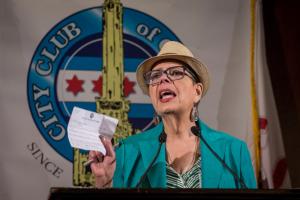
President Karen Lewis at City Club of Chicago
Chicago Teachers Union
 If you say you’re on the freedom side, then that means you will join us in asking the rich to pay their fair share; calling on the city and state to stop the attacks on public and higher education; in asking the banks to end their predatory deals that strip vital dollars from our schools; in fighting for stronger neighborhoods and job creation, and access to health care and not just health insurance.








Spread the word