Venezuela Update: 3 Sources
NACLA
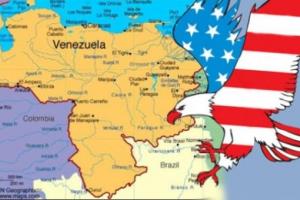 Venezuela updates.
 Venezuela updates.
 In its first 100 days, the Trump administration has deployed Secretary of Defense General Mattis, Secretary of State Tillerson, and now Vice President Pence to South Korea and Japan. Speaking at the Korean Demilitarized Zone (DMZ), Pence stated that "the era of strategic patience is over" and threatened that "if China is unable to deal with North Korea, the United States and our allies will."
 The peace movement is where realism about U.S. military madness lives. The movement is the main challenger to nationalism and xenophobia, and the main force for internationalism in an interconnected world. It abides in the best political instincts in every other progressive social movement. Restoring it is a collective responsibility for the entire range of forces shocked into motion by the 2016 election.
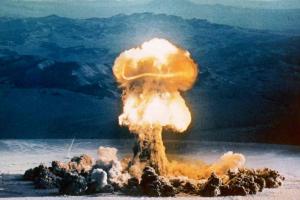 As Trump faces down North Korea, it’s alarming to think that most of the world’s nuclear warheads are now in the hands of men who are prepared to use them. We do know that Donald Trump has been obsessed since the 80s with nuclear weapons, that he refuses to take advice from military professionals and that he seems not to understand the core NATO concept of nukes as a political deterrent, as opposed to a military super weapon.
 It's time to end US military engagements in the Middle East. Drones, special operations, CIA arms supplies, military advisers, aerial bombings - the whole nine yards. Over and done with. That might seem impossible in the face of ISIS, terrorism, Iranian ballistic missiles, and other US security interests, but a military withdrawal from the Middle East is by far the safest path for the United States and the region. That approach has instructive historical precedents.
 The time and place was vastly different, but the men who designed the war against Native Americans would embrace the rationale that currently impels U.S. foreign policy. U.S. exceptionalism, the dangerous delusion that its institutions and its organization of capital are superior, has its roots in the campaigns against Native Americans. While it has fostered many crusades and stupendous violence, it is increasingly unacceptable and unenforceable in a multi-polar world.
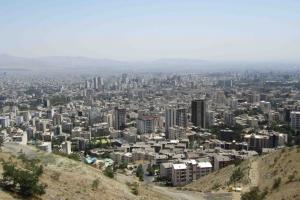 The danger of Donald Trump resorting to military action to prop up his failing policies cannot be over-looked. National Security Advisor Michael Flynn threatened retaliation against Iran, which for those of us of a certain age sounded like the Gulf of Tonkin incident (used as justification for War in Vietnam) - later proved to be a fabrication. What really is Iran with a population of 82 million people? Here is a report on what is actually happening in Iran today.
 Social movements ought to place private military contractors at the center of a broader critique of authoritarian neoliberalism and America’s permanent war economy.
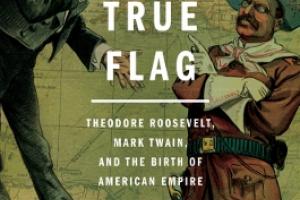 A democratic foreign policy or empire building as central to U.S. action abroad? It's an old debate. Author Stephen Kinzer sees the alternatives set at the turn of the 20th century, when imperium boosters Theodore Roosevelt, Henry Cabot Lodge and William Randolph Hearst squared off against Mark Twain and the Anti-Imperialist League. Here, Kinzer is queried about his analysis and his thinking on just where Trump and his malignant "America First" grandiloquence stand.
 Already Trump is super-charging U.S. militarism, gutting diplomacy, and punishing the victims of wars Washington started. Donald Trump signed an executive order regarding refugees and entry to the U.S. for a whole swathe of people. In effect, the edict would be aimed at banning Muslims from the United States, demonizing people from Muslim-majority countries across the Middle East and North Africa.
Spread the word