Looking Back, Looking Forward Resolving the Left Impasse Over Elections

Kurt Stand The Stansbury Forum
Defining a social justice agenda primarily in reaction to Clinton (oppose her, back her), or Trump (fight him, ignore him), allows the dominant two-party system to set the tone, reduces independent politics to slogans without substance. Failure to look at the whole political environment rather than any one aspect of it, has led to lost opportunities in the past.

Tidbits - July 21, 2016 - Reader Comments: Racism in Police Shootings; NLRB More Activist than Labor?; Abdication of the Left?; Free State of Jones; Tair Kaminer Released; Jay-Z and Beyoncé; and more...

Portside
Reader Comments: Tair Kaminer Released; Racism in Police Shootings; NLRB Become as More Activist than Labor?; Socialism Comes to Philadelphia; Portside readers have differing views on both the Abdication of the Left and the movie, the Free State of Jones; United States-Land of Terrorists and Massacres; Is Anti-Zionism Inherently Anti-Semitic?; Jay-Z and Beyoncé are donating $1.5m to Black Lives Matter

Atoning for Washington’s ‘Mass Kidnapping’ in the Indian Ocean

Davis Vine Foreign Policy in Focus
Between 1968 and 1973, the two governments concealed the expulsion from the world. If anyone asked, Anglo-American officials decided to “maintain the fiction that the inhabitants of Chagos” were “transient contract workers,” as one bureaucrat explained. A British official called the Chagossians “Tarzans” and “Man Fridays,” in a tellingly racist reference to Robinson Crusoe.

books

The Butler's Child - A Revolutionary Civil Rights Lawyer

Bob Zellner East Hampton Star (Long Island, NY)
The timeliness of The Butler's Child has just been demonstrated by the death of a black man in Baton Rouge at the hands of two ill trained young white police officers. Fifty years ago Steel thought of the Deep South as a dangerous and racist place. Today, however, it has become clear that racism and trigger-happy cops are national phenomena.

"The Crucible" a Stunning Parable of McCarthyism's Attack on America

Lucy Komisar The Komisar Scoop
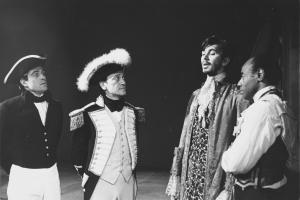
A crucible is a pot in which metals or other substances are heated to a very high temperature or melted. Miller's story is about events that took place in Salem, Massachusetts in 1692. But it's really about the House Un-American Activities Committee (HUAC), America's thought police of the early 50s, which burned through American rights and professed values. It's the best play of the season.(Closes July 17, 2016)

Philadelphia’s Forgotten Spirit of 1776

Sam Pizzigati Campaign for America's Future
The struggle for independence upset the “politics of deference.” The colonial elites, explains historian Clement Fatovic, found it “more and more difficult” to reconcile “great disparities of wealth with the animating principles of the Revolution.”

What You Still Don’t Know About Abolitionists

Manisha Sinha TIME
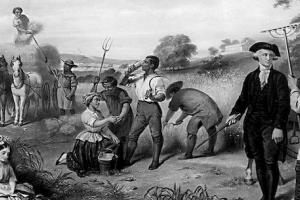
The abolition movement was an interracial radical social movement of disfranchised people, men and women, white and black, free and enslaved. Slave resistance lay at its heart. On this Juneteenth, it is important to recall that African Americans were not passive recipients of the gift of freedom but architects of their own liberation.

Trumpism In The Context Of American History; Why Some Union Members Vote Against Their Own Interests

Van Gosse; Mark Pazniokas
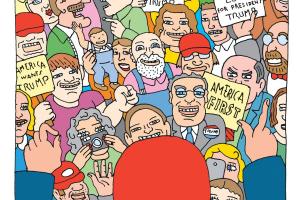
Trump's strategy and campaign is to appeal to majority white, working class voters who have economic anxiety and fear of demographic change. Trump's candidacy viewed in the context of historical continuity - nativism is a primary political discourse in American history. Trump has shown us that it is just as powerful now as in the 1850s or the 1920s. Indeed, "Make America Great Again" recalls the 1920s Ku Klux Klan's appeal for "100% Americanism."

Sixty Years Ago: Congressional Red-Hunters Set Their Sights on Bridgeport

Andy Piascik Portside
Passed into law in 1940, the Smith Act made it illegal to "teach, advocate or encourage the overthrow" of the government and extended to any member of an organization that allegedly did so. The notion that in 1956 the Communist Party was interested in, let alone capable of, overthrowing anything was patently absurd. From a 1940's peak of around 80,000, the CP's national membership had dwindled to perhaps 10,000 by the time of the hearings in Connecticut.
Subscribe to U.S. history