Venezuela: Left Discussion and Debate
teleSUR
Venezuela does not have the religious or sectarian divisions that have fueled the civil wars, mass slaughter, and chaos of Libya, Syria, or Iraq ― all countries where the US/major media narrative about the results of successful or attempted regime change turned out to be horrifically wrong. But the political polarization in Venezuela since Chávez was elected in 1998 has been overwhelmingly along class and therefore racial lines as the two are highly correlated.
Reader Comments: Trump's Revisionist History - Poland; Ransacking the Public Sector; Democracy in Chains; Paul Robeson; Chile then, Venezuela Today; Beatriz at Dinner; San Francisco Labor Against Cuban Blockade - Example for labor; Painters Union Calls for Release of Two Union Members from ICE Detention; New Book on Baseball's Radicals; Reality Winner Defense Launched; Global Platform for the Right to the City; National Screening: Arc of Justice-July 20th; and more...
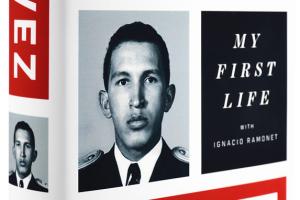
Hugo Chavez, with Ignacio Ramonet, Chavez: My First Life (translated by Ann Wright)
Verso, 544 pp, Hardback, $36.00, August 2016,
ISBN 978 1 78478 383 9
A balanced look at the early days and years in power of Venezuelan general cum President Hugo Chavez, who, while widely accused of authoritarian practices against his opposition, was singular among Latin American populist leaders in never aligning with the nation's bourgeoisie or turning on his left allies.
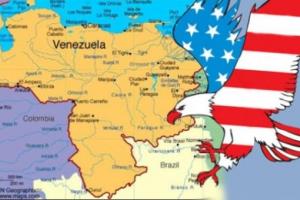
The OAS has no positive role to play in resolving the political crisis in Venezuela, any more than would Senator Marco Rubio or other Florida politicians who seek regime change there. It should be clear that the organization is currently an instrument of those who simply want to use the current crisis to topple the Venezuelan government. People who want to avoid escalating violence or civil war in Venezuela should not pretend otherwise. Differing responses.
The historical time is in our favour. What helps us in this fight is that the kind of society we propose is in the interests of the immense majority. The great question is: why does this not translate into an equivalent social and electoral support? Part of the reason is media disinformation. But we are also at fault. We have not been able to explain our project in understandable terms. And worst of all, we preach democracy but act in an authoritarian way.
Another challenge facing us is to be capable of explaining the difficulties that the country is facing to the people. There are those who think that it is not necessary to tell the people about the problems, because they might get depressed. I believe the opposite, our people are sufficiently intelligent to understand and to buckle up their belts when necessary,
Spread the word