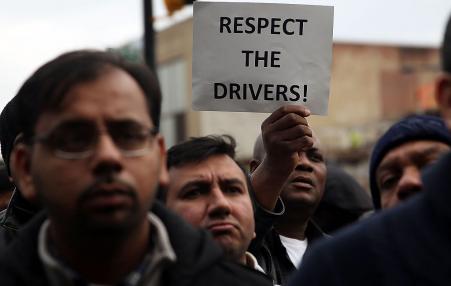
What the Strike Ahead of Uber's IPO Exposes About American Inequality
TIME
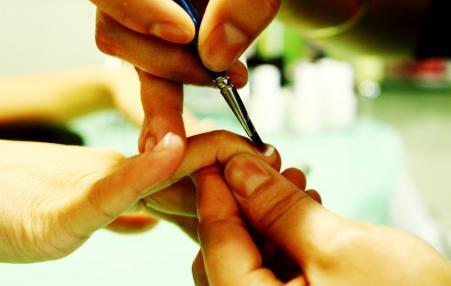
New Labor Forum’s “Working-Class Voices” columnist Kressent Pottenger interviewed Narbada Chhetri, former nail salon worker and director of Organizing and Advocacy at Adhikaar (a social justice organization based in New York City with approximately eight hundred members serving the Nepalese and Tibetan community), and Pabitra Dash, nail salon worker and organizer at Adhikaar, about the poor working conditions of nail salon workers in the United States. Highlights of the interview follow.
The meat and poultry industry remains exceptionally dangerous, despite a decline in reported injuries and illnesses over the past 10 years, according to a new Government Accountability Office (GAO) report. Further, says the report, the injury and illness rates reflected in Department of Labor numbers are significantly underreported.
The Freelancers Union’s attempt to claim 34 percent of the population as mostly delighted freelancers clouds our understanding of the need for reform. While the Freelancers Union is doing important work to support a select group of freelancers, its approach isn’t likely to work for other independent workers; those workers who are more replaceable may still need to go to war against industry leaders if they’re going to access acceptable working conditions.
The rise of precarious labor in Canada, combined with the deliberate creation of fear through constant surveillance, the security apparatus and the demonization and criminalization of dissent, starts to answer the question of why there is no militant resistance to savage capitalism or even sustained social solidarity.
The “Schedules that Work” bill (introduced by Representatives George Miller and Rosa DeLauro and Senators Tom Harkin and Elizabeth Warren) is the proletarian answer to the workplace “flex” policies that are common in corporate offices. After all, poor parents need flexibility more than anyone, as they cope with the chaos of economic hardship and work unstable jobs with few benefits..
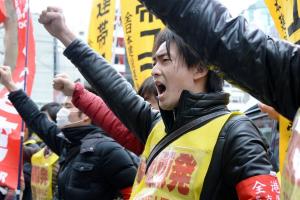
The start of the twenty-first century has seen a continuing decline in union membership and strikes. But it has also seen the emergence of unpredicted mini-revolts. Activists in the Battle of Seattle took over downtown Seattle, put an end to the millennium round of the World Trade Organization, and redefined the question of globalization for millions of Americans.
Spread the word