
· Cornell University researchers say agricultural waste like fruit pulp and household food scraps could be transformed into high-protein food through fungal fermentation, helping to address a projected global food shortage by 2050.
· The review found that fungi can convert carbohydrate-rich farm byproducts into nutrient-dense, mycelium-based proteins that mimic the texture and nutritional profile of meat.
· While large-scale production would require tightly controlled fermentation systems, this “circular bioeconomy” approach could lessen the need for new farmland.
The global population continues to grow, and by 2050, experts estimate there will be nearly 10 billion people on Earth. As the World Resources Institute explained, that's about "3 billion more mouths to feed than there were in 2010." During the same period, the institute expects a 56% "food gap" between the crop calories we produced in 2010 and what we will need by 2050. Filling that gap will require us to find 593 million hectares, or roughly 1.47 billion acres, of land to grow all that food. However, according to researchers at Cornell University, there might be an easier solution, and it all comes down to "agricultural waste."
The researchers published a new review in the journal Trends in Food Science & Technology, which explained how an “emerging circular fungal biorefinery” could change the game. Or, in plain language, how farming waste could be used for fungal fermentation and turned into a high-protein food for humans.
“The main driver of this type of research is identifying new and sustainable food sources,” Ke Wang, the corresponding author and an assistant research professor of food science at Cornell, shared in a statement. “We looked at all the possible perspectives and tried to understand the technologies and the research gaps.”
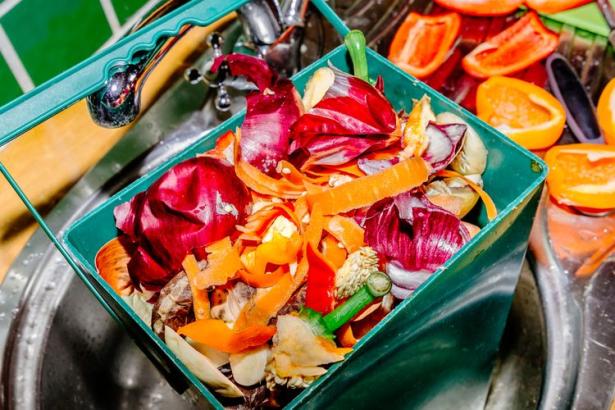
The team reviewed more than 100 previously published studies on fungal fermentation and mycelium-based foods to better understand how fungi could convert agricultural leftovers into edible products. In their review, the researchers identified several waste streams, such as fruit pulp from juice and wine production, and even household food scraps, and how all of this can be used in the fermentation process of fungi, which in turn would be processed into fungal protein. That's because, the team explained, the materials we often discard are full of things that can feed fungi, including carbohydrates and essential nutrients, which the fungi break down into biomass.
“Fungi are remarkably efficient at converting complex biomass into structured proteins,” Wang said. “And they are the most promising substitute for animal-based protein. Beyond their high protein content, they are rich in minerals and other bioactive compounds beneficial to human health.”
Turning this waste into food is not as simple as dumping a few spores into a backyard composter. The researchers pointed out that fungal fermentation is a highly controlled process that requires precise calibration of temperature, oxygen, and nutrients, along with equipment capable of supporting large-scale fungal growth.
If all of that can be engineered, we could create an easy-to-grow substance that mimics both the nutritional profile of meat, as well as the mouthfeel, ensuring that the future of food doesn't look or taste very different from what we have now. And if you're curious about what 2050 might look like, the researchers noted that "certain strains have long underpinned products like Quorn, a meat substitute that has been on the market for decades."
And, as an added benefit, this method would fit into what the team called the "circular bioeconomy," where waste from one process can serve as a resource for another, avoiding the need for all that new farmland used to grow crops solely for feeding animals for protein production.
But even with this new knowledge, researcher Kalyani Sahoo said the biggest challenge might be consumer perception — after all, convincing people to eat fungus isn't an easy task. But, if they can overcome that, the team explained, we can almost guarantee "high-value" foods will continue to be available well into the future.
Spread the word