Our Bodies, Our Lives, Our Right to Decide
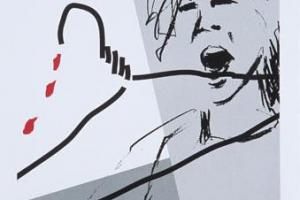
Center for the Study of Political Graphics
Neither the videos nor the many investigations that followed have found any evidence that Planned Parenthood employees offered to sell fetal tissue for a profit. Texas is the 12th state in which investigations stemming from the videos have found no wrongdoing by Planned Parenthood. A grand jury in Harris County, Tex., went a step further. Though it was convened to investigate Planned Parenthood, it indicted two members of the group that made the videos instead.
I wrote this paper originally in 1996—for a magazine called Sojourner: The Women’s Forum. As a clinic defender, I witnessed people yelling violently and acting aggressively towards women going into clinics in Boston and Brookline, Mass. to get abortions. I wanted people to know what it was like at the clinics on Saturday mornings. And I also wanted to honor the two women who were killed at a Massachusetts clinic in 1994 and others murdered over abortion rights.
After two days of near silence, Republican presidential candidates are finally praying for the victims of the Colorado attack. Praying is always okay, even for sinners. It's a turn of phrase that doesn't risk showing even the slightest desire to protect Planned Parenthood from future attacks. Republicans might not want Planned Parenthood workers killed, but they sure don't seem to mind if their angry hordes do everything just short of that.
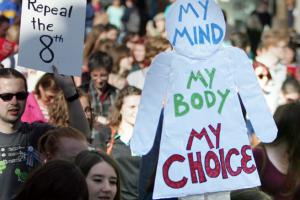
An alliance of Irish trade unions is determined to end the island’s draconian ban on abortion. The denial of the right to an abortion is not about morality, the law exists to target and punish working-class, poor and migrant women for daring to think they deserve equality and control over their own lives and bodies.
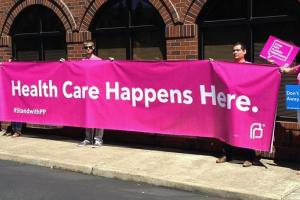
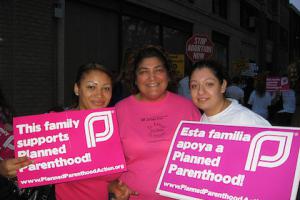
As the partisan Congressional Republican attack on Planned Parenthood heated up this week, a new study released Tuesday by the Guttmacher Institute found, "unequivocally that for women in many areas of the country, losing Planned Parenthood would mean losing their chosen provider—and the only safety-net provider around." Safety-net providers provide care and services in low-income, medically underserved, immigrant, and communities of color.
A coalition of reproductive rights groups and healthcare providers filed a formal request Thursday for the U.S. Supreme Court to permanently block enforcement of key provisions in Texas’ extreme anti-choice law. "Without the Court's intervention, the impact on Texas women will be immediate and devastating," says the Center for Reproductive Rights. Women’s health groups say if the law is allowed to go into effect 31 of the 41 women’s clinics in Texas will be closed.
Spread the word