The Surprising Origin of Argentina’s Brazen Pastry Names
BBC

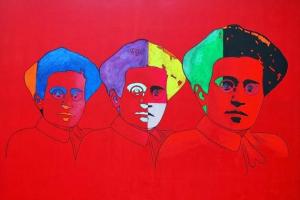
Presiding over last month’s honorary Gramsci conference in Buenos Aires was a sense of urgency: a need redress certain aspects of Gramsci’s thinking in light of a reactionary uptick throughout the continent. The ability of right-wing movements—in Venezuela, Brazil, and elsewhere—to mobilize mass demonstrations against progressive governments has led several commentators to orient themselves through a rereading of Gramsci’s writings on fascism.
Tens of thousands of women rallied across Argentina in response to a call for a national strike against gender violence. The labor strike also aimed to emphasize the crucial role of women in the country's economy as well as highlight the fact that they have been the first victims of massive layoffs by the current right-wing government. Organizers highlighted the link that makes poor and disadvantaged women more vulnerable to sexual violence.
According to the U.S. federal judge that has held Argentina financially captive since 2014, all the people of Argentina had to do get a tentative agreement with their vulture fund debt holders was choose the right president to run their country. “Put simply, President Macri’s election changed everything,” Judge Thomas Griesa said when announcing the tentative agreement that would allow Argentina to borrow on the international market again and pay its bills.
Voters in Argentina’s October 25th national elections will help define the future of Latin America’s third largest economy. While the three main Presidential candidates and their parties are all seeking to lay claim to the populist legacy of former President Juan Domingo Perón, voters will nonetheless be choosing between candidates with sharply different views on the role of the state as Argentina faces major structural economic challenges.
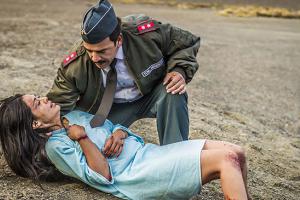
Olvidados serves as powerful indictment of the military personnel who were responsible for thousands of deaths and disappearances of political dissidents in Latin America during Operation Condor, estimated at 30,000 forced disappearances, 50,000 deaths, and 400,000 arrests. Beginning in 1975 the political campaign of repression spanned across Argentina, Chile, Bolivia, Brazil, Uruguay, and Paraguay—carried out by the right-wing military dictatorships, backed by the CIA.
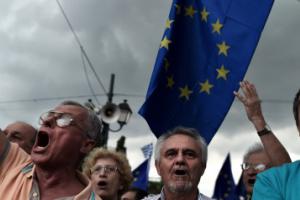
This Sunday, Greek citizens will debate two alternatives: austerity and depression without end, or the possibility of deciding their own destiny in a context of huge uncertainty. None of the options are nice. Both could lead to even worse social disruptions. But while with one of them there is some hope, with the other there is not.
Spread the word