Tidbits - July 3, 2014
Portside
In the 75 years since novelist John Steinbeck published his masterpiece about the Okie migration, the towering Ma Joad has faded from archetype to anachronism. Ever since Steinbeck published his opus on the plight of the Dust Bowl migrants in 1939, readers have warmed to Ma as a paragon of folksy integrity - "an unforgettably vigorous figure, like Mother Courage without the corruption or rapacity," - and, more recently, praised her as a feminist icon...
Developing a democratically oriented alternative to capitalism can’t be done overnight. This work requires a different sense of time and a deep sense of commitment—the bargaining chips are decades of our lives. But the shifts are already happening in places like Cleveland and Boulder. What we’re seeing is the prehistory, possibly, of the next great change, in which a movement is built from the grassroots that becomes the foundation of a new era.
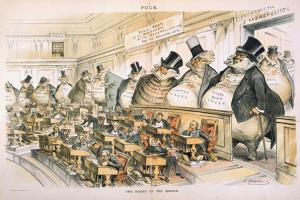
Corporate interests have taken credit for reducing private-sector unions to a fraction of their former strength, and for eroding public-sector collective bargaining, especially since the 2010 “Tea Party midterms.” A resurgence in low-wage worker organizing, sparked by growing inequality in the United States, promises to help defend the rights—and paychecks—of vulnerable workers. But corporations and their paid shills aim to snuff out the movement before it catches fire.
Piketty's central theme is not that inequality of the ownership of wealth is going to skyrocket. The central theme is that the 1% already owns a lot of the capital stock, and the capital stock is going to get gigantic relative to the rest of the economy. Whatever the weakness this meg-tome and mega-best seller, there is no denying - the rich are getting richer, the poor, poorer. (And Piketty is not a Marxist.)
Reason makes possible the calculations, science and technological advances of industrial civilization. But reason does not lift us upward to the heavens. It does not bring us into contact with the sacred. It does not permit us to curb our self-destructive urges. Herman Melville, Fyodor Dostoevsky, Emily Dickinson, Marcel Proust, William Faulkner, James Joyce, Samuel Beckett, Lorraine Hansberry and August Wilson mocked the myth of human progress and the folly of hubris.
Spread the word