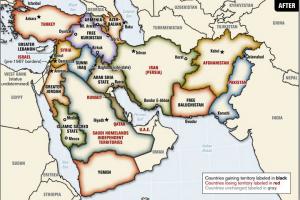
Are the U.S. and Russia Forming 5 New States in the Middle-East?
Foreign Policy in Focus
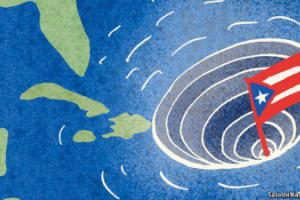
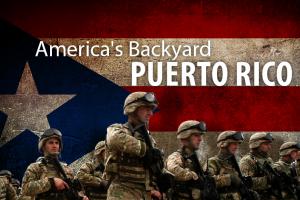
Democracy Now! co-host Juan González addresses the question, "Could Puerto Rico become America’s Greece?" That’s a question many are asking as the island faces a devastating financial crisis and a rapidly crumbling healthcare system.
Puerto Rico is in crisis. But the crisis is not about how to pay Wall Street. It is about the impact of centuries-long economic devastation on the men, women, and children—especially children—that live in Puerto Rico. While failure to pay the banks and the vultures makes headlines in the Wall Street Journal and the New York Times, the human misery caused by five centuries of colonialism does not.
The spread of capitalism as a global system and neoliberalism as its dominant economic policy has its analogue in the triumph of English as its undisputed enabling linguistic. The book under review argues that not only is this single-language sway historically unprecedented in allowing universal communication, but that its flattening effects on native languages and national discourse come with their own disabling downsides.
Today's conflicts in the Middle East is often played out in a language laden with stereotypes. This can also be true of how history is told and understood. Hasan Suroor offers a glimpse of history that breaks through these barriers, in a review of a new book by Seem Alavi. This book focuses on Islam and nationalism in colonial India, but it also offers a nuanced view of relations between Muslims and the West that contests received wisdom.
Although Puerto Ricans were granted US citizenship in 1917, the United States continued to exploit, oppress and eventually launch a "war" on the people of Puerto Rico to gain land and resources. The book, War Against All Puerto Ricans, is a vivid, detailed account of the brutal treatment of a people "liberated" from Spain only to be subjugated by the US.
Spread the word