labor

Black Workers, Unions, and Inequality

Cherrie Bucknor Center for Economic and Policy Research
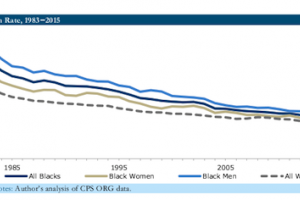
This paper finds that Black union workers of today are very different from Black union workers of the past. In particular, Black union workers today are more likely to be female, older, have more years of formal education, be immigrants, and work in the public sector. Black union workers also enjoy higher wages, and better access to health insurance and retirement benefits than their non-union peers.

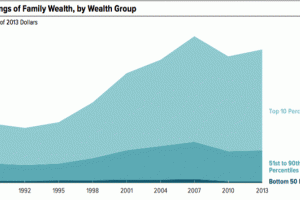
What a Black Lives Matter Economic Agenda Looks Like

Jannell Ross The Washington Post
Even a good job creation/infrastructure bill must include "targeted" language to ensure that funds flow into black communities, and community residents have access to those jobs.

U.S. Democracy Stuck in an "Inequality Trap"

Kavya Vaghul Washington Center for Equitable Growth
The disgraceful history of voter disenfranchisement is no secret. For more than a century, African Americans (and other marginalized groups) were restricted or evendisqualified from voting. Today these practices are formally outlawed, yet we still see patterns in voter turnout that indicate that voting discrimination is alive and well. Non-voters also tend to be younger, less educated, and less affluent than their voting counterparts.

Economic Policy That Doesn't Confront the Rise in Inequality Head-On Will Do Nothing to Help the Vast Majority of American Families

Josh Biven Economic Policy Institute
Using policy to shift economic power and make U.S. incomes grow fairer and faster. Boosting income growth for the bottom 90 percent requires a policy agenda that explicitly aims to halt or reverse the rise in inequality. Finding no relationship between rising inequality and faster growth means raising living standards for the bottom 90 percent can likely be better for overall growth.

Dr. Billionaire, Meet Dr. Salk

Sam Pizzigati Inequality.org
Can we conquer disease without concentrating wealth in a precious few pockets? Not-so-distant history offers a clear and encouraging answer.
Subscribe to economic inequality