Tidbits - November 20, 2014
Portside
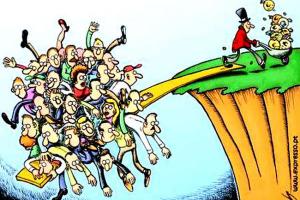
It used to be that economic expansions improved the incomes of the bottom 90 percent more than the top 10 percent. But starting with the “Reagan” recovery of 1982 to 1990, the benefits of economic growth during expansions have gone mostly to the top 10 percent. Since the current recovery began in 2009, all economic gains have gone to the top 10 percent.
Colleges and universities, which receive enormous tax benefits to serve the public interest, should be held to a minimum level of effort to enroll and graduate low-income and working-class students eligible for Pell grants. Governments could also provide financial rewards targeted to universities that commit to increasing socioeconomic diversity and that shift their funds from non-need merit grants to students in actual need.
We feel instinctively that societies with huge income gaps are somehow going wrong. Richard Wilkinson charts the hard data on economic inequality, and shows what gets worse when rich and poor are too far apart.
Though the United States is one of the wealthiest countries, to many Americans this prosperity remains out of reach. Blacks and Hispanics who are striving to make a better life for themselves and their families are not given the same asset building opportunities. Full research here.
Spread the word